
How a Sewer Lift Station Works (and Why They Fail)
Sewage runs downhill until the ground stops cooperating. A lift station is the answer: a wet well that collects flow at the low point, pumps that push it up and over to the next gravity run, and controls that decide when to start. When it works, nobody thinks about it for years. When it stops, the wet well keeps filling at whatever rate the neighborhood is using water, and there is no valve to close. Here is what is in the hole, what normal looks like, and the four things that usually go wrong.
The short answer
Gravity sewers work because pipe runs downhill. Eventually the terrain rises, or the pipe gets so deep that digging further stops making sense. At that point the collection system needs a lift.
A lift station is a chamber at the low point where flow collects, one or more pumps, and a control scheme that starts a pump when the level gets high enough and stops it when the level comes back down. The pumps push the sewage up through a pressurized pipe called a force main, which discharges into a manhole at a higher elevation where gravity takes over again.
That is the whole idea. Everything else is detail about reliability, because the consequence of stopping is specific and unpleasant: the flow does not stop arriving.
What is actually in the hole
- The wet well. The chamber that collects incoming flow. Its size sets how much time you have when something goes wrong, which makes it the most important number at the station that nobody has written down.
- The pumps. Usually two, alternating, so each shares the wear and either can carry the station alone. Submersible pumps sit in the wet well itself. Dry-pit stations put pumps in a separate dry chamber and draw through suction piping.
- The level controls. Float switches on a cable are the traditional method, with a float for pump start, another for stop, and a high float for the alarm; duplex stations often add a fourth that starts the second pump if the level keeps rising past the first. Newer stations use a pressure transducer or an ultrasonic sensor giving a continuous reading rather than a set of on-off points.
- The control panel. Motor starters or variable frequency drives, the alternator that swaps duty between pumps, and the alarm circuit.
- Valves. A check valve on each pump to stop the force main draining back into the well, and isolation valves so one pump can be pulled while the other runs.
- The force main. The pressurized pipe out. Unlike gravity sewer, it stays full between cycles.
- Alarm and communications. Historically an autodialer calling a phone list over a copper line. Increasingly cellular, because carriers are retiring copper.
What normal looks like
A healthy lift station draws a sawtooth. The wet well fills at the rate the collection system is delivering, which is a slow rise. The level reaches the start point, a pump kicks in, and the level drops quickly because the pump moves far more water than is arriving. At the stop point the pump shuts off, and the fill begins again.
Read that shape and you learn the station’s habits. The fill legs get steeper in the morning and evening as the neighborhood uses water, and go nearly flat at three in the morning. The drawdown legs should be consistent, because a pump in good condition moves about the same volume every time; compare them at the same hour, though, since the leg also reflects whatever is flowing in while the pump runs, and the quiet overnight cycles give the cleanest read. Cycles per hour should track the season and the weather, not wander on their own.
Once you know the normal shape, the abnormal ones are readable:
Cycles per hour climbing. More water is arriving than used to. In wet weather that is inflow and infiltration, clean water getting into a sanitary sewer through cracked pipe, bad joints, or illicit connections, and it means you are paying to treat storm runoff. In dry weather it is a different question, and worth chasing.
A slower drawdown leg. The pump used to clear the well in four minutes and now takes seven. It is moving less water than it did. Wear, a partial clog, or a rag ball all look like this, and they look like it weeks before the station actually falls behind.
A level that rises straight through the start point. The pump did not start. This is the one you want a phone call about, and it is the one a simple high-level alarm catches on its own.
The four ways they fail
Blockages
The most common. EPA lists blockages first among the causes of sanitary sewer overflows, and attributes the majority of SSO events to them. At a lift station the blockage is usually grease, rags, or wipes, alone or combined into a rag ball that wraps an impeller or plugs a discharge.
Wipes marketed as flushable are a persistent operator complaint for a simple reason: clearing a toilet and disintegrating in a sewer are different tests, and the label speaks to the first. Grease arrives from kitchens, cools, and coats. The two together are why small systems end up pulling pumps.
A blockage rarely announces itself. It degrades pumping capacity first, which shows up as a slower drawdown leg, and only becomes an emergency when the remaining capacity drops below the incoming flow.
Power loss
A lift station with no power is a tank filling at the rate of the neighborhood. Storms are the compounding case, because the same weather that knocks out power is the weather driving peak inflow. Stations with generators or permanent transfer switches ride it out; many small stations have neither, and depend on somebody arriving with a portable generator or a pump truck before the well fills.
Note that a power failure also takes down whatever was watching the station, unless the monitoring has its own power. That is worth checking on your own setup.
Pump wear and mechanical failure
Pumps are machines in an abrasive, corrosive environment doing the least glamorous job in public works. Seals fail, bearings go, impellers wear, motors burn out. Wear is gradual and shows in the data as a drawdown leg that stretches out month over month. Outright failure is sudden, and the second pump is what stands between that and an overflow, which is exactly why alternating both pumps matters. A standby pump that has not run in a year is a hope, not a backup.
Inflow and infiltration
Not a station failure so much as a system condition the station reveals first. When clean water gets into a sanitary sewer, the lift station sees the whole watershed’s worth of it. Cycles climb, pumps run hot, and a station sized correctly for sanitary flow gets pushed past its capacity by rain that should never have been in the pipe.
The useful thing is that the station’s own cycle history points upstream. If your chart lights up every spring, the problem is not the pumps. Finding where it enters is its own exercise, and the same sensors deployed along the line at multiple points with a dry-season baseline first is how you narrow the search to a stretch of pipe. That method is covered on our sewer inflow and infiltration page.
What a failure actually costs
EPA estimates at least 23,000 to 75,000 sanitary sewer overflows occur per year in the United States, a figure that excludes backups into buildings. Alongside blockages, EPA’s listed causes include line breaks, defects that let stormwater and groundwater overload the system, power failures, improper sewer design, and vandalism.
For a small system, the cost of one is rarely just the cleanup. There is the reportable event and the regulator’s follow-up, the possibility of a basement rather than a manhole, the overtime call-out, and the public conversation afterward. Compared to that, the marginal cost of knowing earlier is small, which is the entire argument for watching the level rather than waiting for the phone.
The level chart is a pump-health chart
The point worth taking away: at a lift station, level is not just a safety threshold. It is the cheapest available proxy for the health of the whole station.
You do not have to instrument the pumps to see them degrading. The drawdown leg already tells you how much water the running pump is moving. The fill leg already tells you what the collection system is delivering. Cycles per hour already tell you whether this season is behaving like last season. All of that comes from one measurement in one chamber, which is a good deal for a small system with a handful of stations and no control room.
Being straight about the limit: level data shows you the symptom and tells you which station to drive to. It does not tell you which pump, and it does not diagnose the failure. That is still your operator or your pump contractor. What it buys is the warning that turns an emergency call-out into scheduled work.
What a small system can actually do about it
Not everything here needs a capital project. Roughly in order of what it costs to start:
- Work out your time-to-overflow at each station and post it. Usable volume above the normal high level, divided by incoming flow. Do it for the worst hour, not the average.
- Alternate the pumps and confirm the standby actually runs. A duty pump doing all the work while its twin sits is a common and quiet problem.
- Know the state of your alarm path. If the station alarms through an autodialer on a copper line, find out whether that line has a retirement date. When the line goes, the alarm goes with it and the station is unwatched.
- Get continuous level and a high-level alarm on the stations that would hurt most. Start with the one that has already cost an overtime call-out, or the one furthest from anybody’s normal route.
- Keep the history. Cycle data over a year is what turns an argument about a capital request into an exhibit.
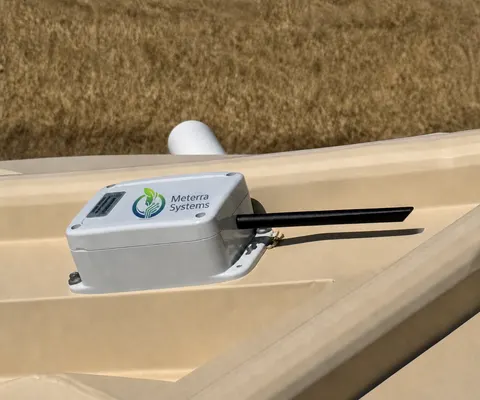
Where a wireless sensor fits is step 4, and lift station monitoring covers what that looks like on the wet well: continuous level, thresholds you set, alerts to several phones at once, and exportable pump-cycle history. It stands alone where there is no SCADA and, where there is one, bridges into it over 4-20 mA or Modbus so operators keep the screens they know.
What this is, and what it is not
Meterra supplies monitoring and alerting. We report level, trend, history, and alarms, and where you want it we hand a reading to your existing control system. We do not control pumps, replace your controls or your certified operators, or satisfy permit monitoring and reporting obligations on our own. Confirm your specific requirements with your permit and your regulator.
Meterra has been in the field for over four years with more than 2,000 devices in service, and we would rather tell you what our gear will not do before you buy it than after.
Start with the station most likely to surprise you
Tell us the station, roughly what the wet well looks like, and what the control panel has in it today. We will confirm cellular coverage at that specific location and lay out what standing alone or bridging into your existing system would each involve.
Call (385) 534-8200 and talk it through with a person, or request pricing below. Every sensor carries a 60-day money-back guarantee and a one-year warranty.
The hardware this guide covers
Every device reports to the same Meterra dashboard and app.
Tell us what you need to keep an eye on and we'll map the right sensors and coverage.
Frequently asked questions
What is the difference between a lift station and a pump station?
Mostly usage rather than engineering. Both move water with pumps. In practice 'lift station' almost always means wastewater, lifting sewage from a low point up to where gravity can take over again, while 'pump station' is used more broadly and often means potable water or booster service. If someone says lift station, assume sewage and assume a wet well.
What is a wet well, and how is it different from a dry well?
The wet well is the chamber the sewage actually collects in. In a submersible station the pumps sit down in it, underwater. A dry well is a separate adjacent chamber, kept dry, holding pumps and motors that draw from the wet well through suction piping. Dry-well stations are easier to service without confined-space entry into sewage, and more expensive to build. Both fill the same way and fail the same way.
How long do I have once the pumps stop?
It is arithmetic specific to your station, and worth working out before you need it. Take the usable volume between the normal high level and the overflow point, then divide by the incoming flow rate at that hour. A station with a large wet well during the small hours of the morning might give you several hours. The same station at 7 a.m., or during a storm with inflow and infiltration running, can give you far less. Run that number for your own stations and post it where the on-call operator sees it.
Why do flushable wipes cause so much trouble?
Because they do not break apart the way toilet paper does. They stay intact through the collection system, then rope together with each other and with grease into a rag ball that wraps an impeller or blocks a discharge. The label describes whether the product clears a toilet, not whether it survives the trip to your pumps. Grease and wipes together are the practical reason most small systems pull pumps.
Do I need SCADA to monitor a lift station?
No. SCADA is a full supervisory control and data acquisition system, and building one is a serious capital project that a lot of small districts cannot justify for a handful of stations. Standalone wireless level monitoring gives you the level, the trend, the alarm, and the history without a control-room build, and if you do add SCADA later the same sensors can feed it. Plenty of stations run for years on nothing more than an alarm and a good operator, which is exactly the situation continuous level data improves most.
How often should a lift station be inspected?
Set by your own O&M plan, your permit, and your regulator rather than by any general rule, and small systems commonly run a weekly or twice-weekly visual round with more frequent checks on problem stations. The honest limitation of any inspection schedule is that it samples. A station visited Tuesday can fail Tuesday night. Inspection catches wear and developing problems; continuous level data catches the thing that happens between visits.
Related Meterra pages
- Lift Station Monitoring: wet-well level, high-level alarms, and pump-cycle history on the station itself.
- Sewer Inflow & Infiltration Monitoring: the same sensors upstream, narrowing down where clean water gets in.
- Wastewater Lagoons: freeboard and high-level alarms on stabilization lagoons.
- Wireless SCADA Integration: feeding a wet-well reading into a control system you already run.
- Water District Monitoring: what small and rural systems watch, and how it stays affordable.
- Tank Level Sensor: the non-contact ultrasonic sensor most wet wells get.