
Remote Monitoring for Ranches
Running cattle means water is scattered across miles of country, and checking it is a daily drive. Meterra puts a wireless sensor on every tank, trough, and dam, reports the level to your phone, and sounds a low-water alarm the moment something fails — so you ride out to fix water, not to find out it's gone.
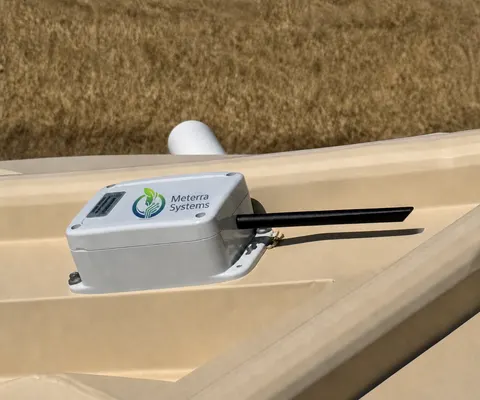
Monitoring built for the way a ranch runs
A ranch spreads water across country that takes time to cover. Stock tanks sit at the end of long two-tracks, dams hold the back pastures, and a windmill or solar pump keeps a trough full a section away from the house. The job of keeping cattle on water is mostly the job of checking water — and that check is a truck, fuel, and hours, every day, whether the tank needed you or not.
Remote monitoring flips that around. A wireless sensor at each point reports the level and warns you the moment something changes, so you drive out to fix a problem instead of driving out to discover one. The cattle never tell you a tank ran dry; the alarm does — while there’s still time.
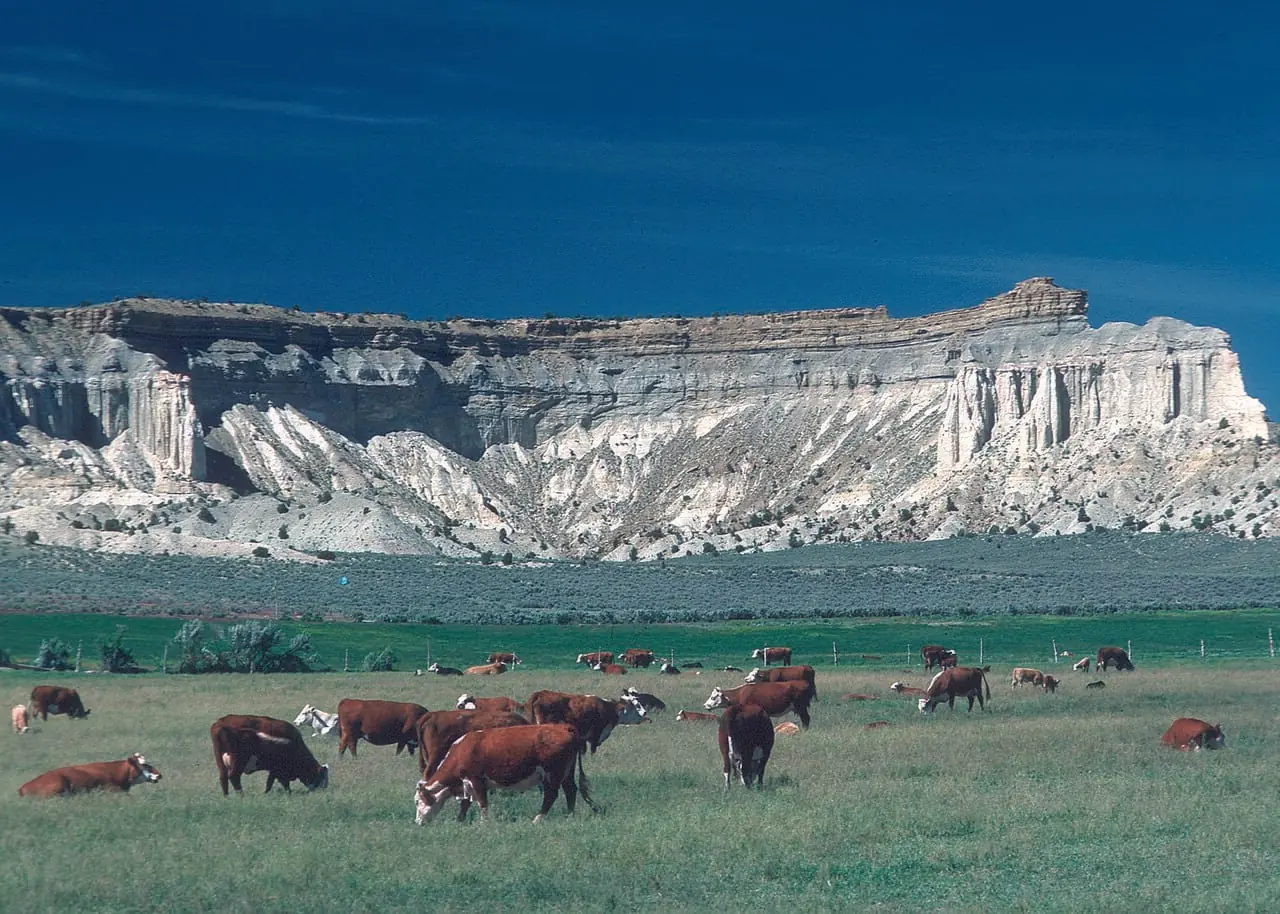
What it costs to check water the old way
The expense of the daily loop is fuel, labor, and risk. University extension estimates put the fuel alone for driving to check remote water sources at well over $1,500 a year on larger operations, before you count the hours behind the wheel or the wear on the truck.
The bigger cost shows up the day a tank is empty and nobody knew. Water is the most important nutrient a cow takes in — extension specialists call it “the forgotten nutrient” — and demand peaks at exactly the moments water systems fail. University of Nebraska and Oklahoma State figures put a dry cow around 12 gallons a day, climbing to 20–24 gallons for a lactating, spring-calving cow (plus another 5–10 for her calf) once temperatures hit 90°F. Cattle off water in that heat lose condition fast, and a single wreck on water can cost far more than a year of monitoring.
- Stop the windshield time. Drive to a tank when a reading tells you to, not on a schedule.
- Protect gains. An empty-tank alarm reaches you long before a visual check would.
- Catch failures early. A stuck float, a cut line, or a pump that didn’t restart shows up as a trend before it becomes a dry tank.
What Meterra watches on a ranch
The same sensor covers every watering point — only the mounting changes. Most outfits start with their most remote or most troublesome water and add from there.
- Stock and supply tanks — level, percentage, and volume, with a low-water alarm on each tank.
- Troughs — catches stuck floats and dry lines before stock go without.
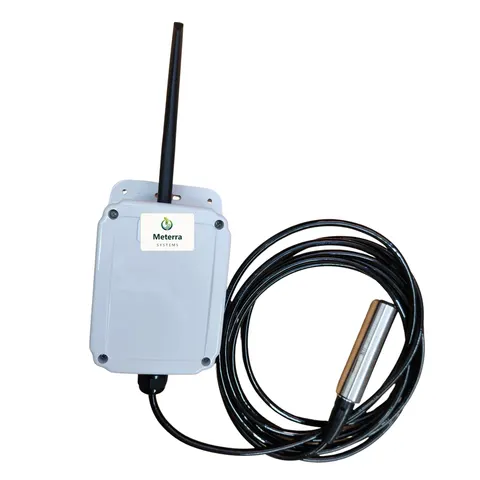
- Dam and pond water level monitoring: a submerged pressure sensor that reads depth on open water and keeps reading under ice.
- Wells and pump-fed systems: a well monitoring system reads the level in the casing, and paired with pumping it keeps you from running a well dry or overflowing a tank.
Every one of them reports into one app, across one ranch or several. See the full picture in livestock water monitoring.
Why ranchers choose ultrasonic
Meterra senses the water from above — the unit mounts over the tank and measures the distance to the surface, so nothing is ever in the water. On a ranch that matters twice over. There’s no probe to corrode in mineral water, foul with algae, or crack when a tank freezes over, and the unit sits up out of reach where cattle can’t rub it off. It runs 2+ years on a battery (solar where you want it to run forever), installs in about 15 minutes with no electrician, and reports over cellular with no Wi-Fi or power at the tank.
Through winter
Winter is when water problems are hardest to see and most dangerous to stock, and it’s when the cheapest monitors fail. A submerged pressure probe can freeze into the ice and crack; a non-contact sensor mounted above the surface has nothing in the water to damage. The honest caveat is that once a tank ices over it reads the ice, not the water below — so it pairs with a tank heater, and open water that freezes over is better served by a submerged depth sensor that reads beneath the ice. Where monitoring earns its keep all winter is the rest: pair it with a low-level alarm and you learn about a quit pump, a leak, or a line that stopped filling from the house, on the coldest morning of the year — not on your next round. There’s more on cold-weather setups in stock tank monitoring.
Getting started
Most ranchers begin with a pilot on the water that costs them the most worry — the far tank, the one fed by a fussy pump, the dam that’s hard to get eyes on. Tell us your watering points and the coverage out there, and we’ll map the right sensors and walk you through what it takes to put your whole operation on one screen.
The hardware for this job
Every device reports to the same Meterra dashboard and app.
Tell us about your operation and we'll map the right sensors and coverage.
Frequently asked questions
How do you monitor water across a whole ranch?
Put a wireless sensor at each watering point — stock tanks, troughs, dams, and ponds. Each one measures the level without touching the water and sends it to your phone over the cellular network on a schedule, plus an alarm when the level drops below a threshold you set. Every point on the ranch shows on one screen, so you check the whole outfit from the truck or the kitchen table instead of driving it.
Do I need cell service at every tank?
You need rural cellular coverage at the watering point, which Meterra sensors use (Verizon NB-IoT) — not Wi-Fi, not mains power, and no hub. Where there's no signal at all, satellite is the alternative. We can check coverage at your specific tanks before you buy so there are no surprises.
Can I run more than one ranch or lease from one account?
Yes. Every sensor across every property reports into the same dashboard and app, so a deeded place and a leased grazing block show up on one screen. You manage water by exception across the whole operation, wherever the cattle are.
Will the sensors hold up to cattle and weather?
They're built to mount above the water, out of reach, where stock can't rub or scratch them — a common reason cheaper float monitors fail. Because the sensing is non-contact ultrasonic, nothing sits in the water to foul, corrode, or crack in a freeze, and the unit shrugs off heat and dust. One winter caveat — once a tank ices over it reads the ice, not the water below, so pair it with a heater — or use a submerged depth sensor on open water that freezes.
How is this better than a float gauge or a windmill sight tube?
A gauge tells you the level only when you're standing there. A monitor tells you the trend and alarms you the moment a float sticks, a line breaks, or a pump quits — from anywhere. It turns the daily water loop into a glance at your phone and catches failures while they're still small.
What does it cost to monitor a ranch?
In our US rollout, sensors start at $299 for the Tank Level Sensor, $399 for the Trough Level Monitor, and $499 for the Dam Level Monitor, each including three months of connectivity and full app access; connectivity is then from $10/month per device, with discounts on annual subscriptions. The more watering points you add, the more sensors you need — send us your points or call, and we can start with a pilot on your most troublesome water.
Related Meterra pages
- Livestock Water Monitoring: how remote water monitoring works across tanks, troughs, and dams.
- Stock Tank Monitoring: the workhorse application, including through winter.
- Tank Level Sensor: wireless ultrasonic monitoring for any stock or supply tank.
- Dam Level Monitor: submerged pressure level for dams and ponds.
- Farms: mixed crop and livestock operations.
- Finding Electric Fence Faults: how to find the break without walking the whole line.
- Meterra vs. LoneStar Tracking: a side-by-side for ranchers comparing the two.
- Weaned Calves Not Drinking: why newly weaned calves miss water and how to spot it early.