
Dam & Pond Water Level Monitoring
Dam water level monitoring tracks the level of a stock dam, pond, or small reservoir and sends it to your phone, with alerts when it drops too low for stock or climbs toward an overflow. Meterra measures it two ways, with a non-contact ultrasonic sensor above the water or a submerged pressure sensor in it, so you can match the technology to your site, including the freeze risk in cold country.
Dam Level Monitor, starting at $499, with three months of connectivity included, then plans from $10/month per device. 60-day money-back guarantee and a one-year warranty on every sensor. In stock in the US. Orders ship within 1–2 business days. 4+ years in the field, 2,000+ devices in service.
What is dam water level monitoring?
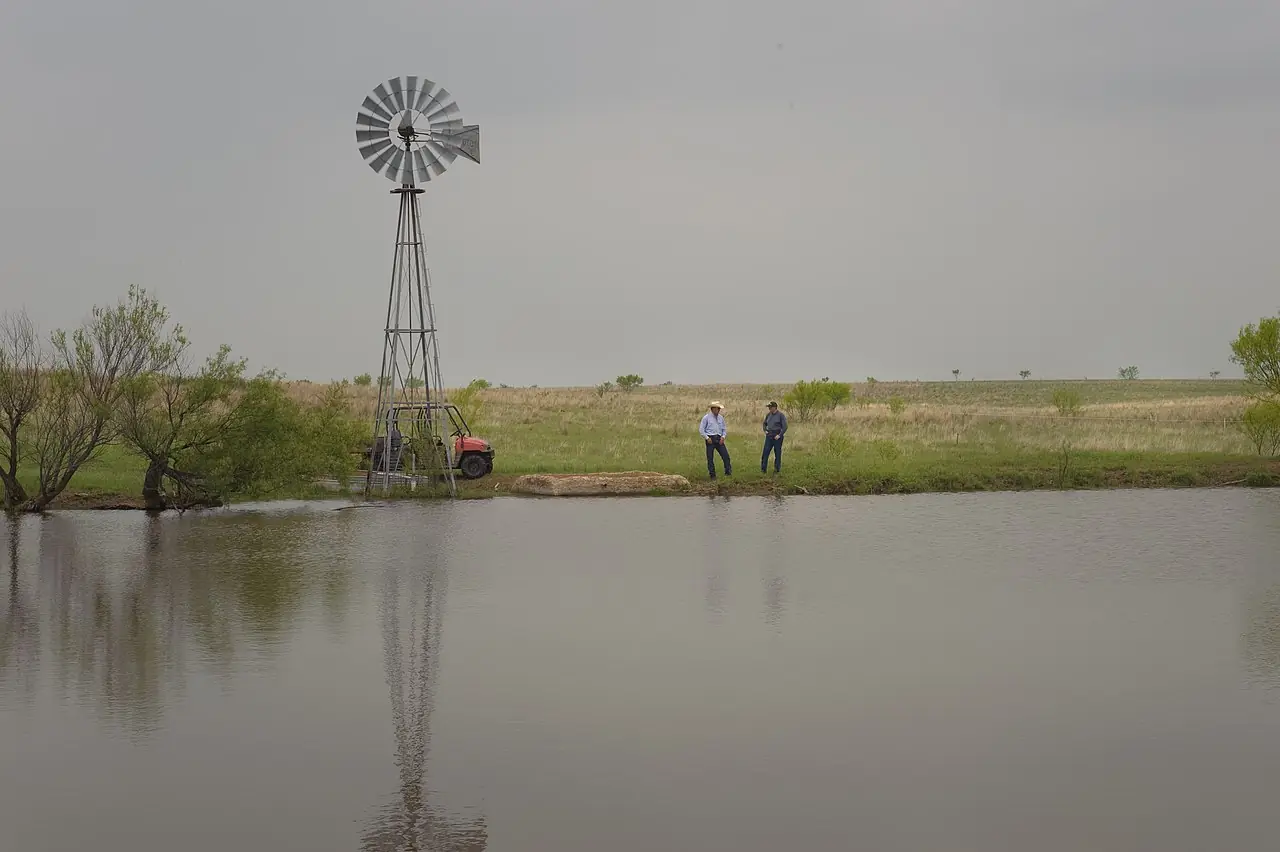
Dam water level monitoring is the continuous measurement of water level in open water (stock dams, farm ponds, and small reservoirs), with that level reported remotely instead of read by hand. A sensor at the site records the level on a schedule and sends an alert when it falls too low or rises too high, so a site that used to need a drive and a staff gauge now reports itself.
It serves two very different concerns from the same reading. For stock and irrigation, the worry is low water: running short in a dry spell. For dam owners, the worry is high water: overflow and spillway pressure during heavy rain, which historically meant sending someone out to each dam in the worst conditions to read a gauge.
Why remote dam and pond monitoring matters
The value is the same as it is for any remote water: you stop spending time and fuel confirming that things are fine, and you find out fast when they are not.
- Stock and irrigation supply. A dam that looks full from the bank can be weeks from trouble. A low-water trend lets you move stock or start pumping while there is still margin.
- Dam safety and overflow. High-water alerts during a storm flag spillway risk without anyone driving out in the weather, the exact problem that pushes dam owners toward remote monitoring.
- Drought and water planning. A season of level history shows how fast a pond draws down, which turns water budgeting from guesswork into a number.
- Multiple sites. Conservation groups and water districts managing many ponds or dams get every site on one screen instead of a route of physical checks.
How a dam monitoring system works
Two ways to sense the level
Meterra measures open water two ways, and you choose by your conditions:
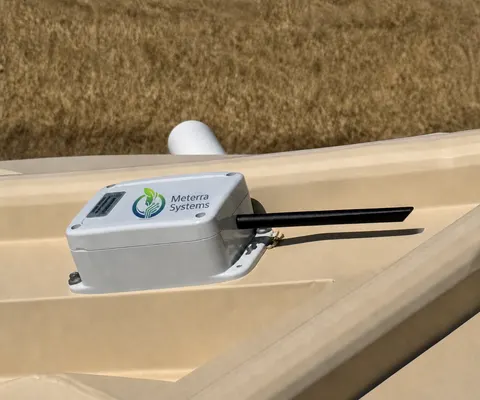
- Ultrasonic (non-contact). The ultrasonic tank level sensor mounts above the water on a post or structure and measures the distance down to the surface. Nothing goes in the water, so there’s nothing to foul, silt up, or pull for cleaning.
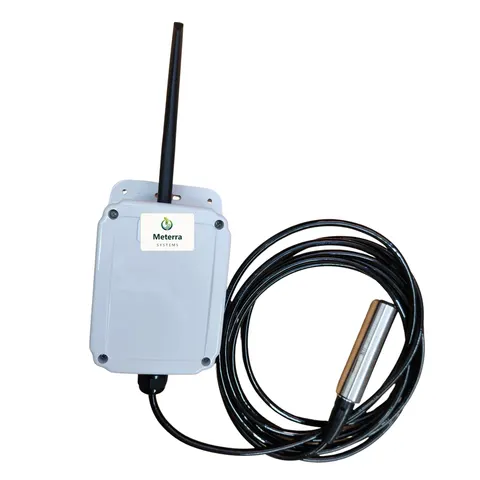
- Submerged pressure. A sealed sensor sits in the water and reads the depth above it. This is the Dam Level Monitor, from $499, Meterra’s dam level sensor. It’s the more reliable choice where winters are hard: surface ice can interfere with an above-water reading, but a below-surface sensor keeps reading the water beneath. It also reaches places an above-water sensor can’t, because the cable brings the reading back to the communication box on dry ground.
Both report the same level, trend, and alarms. Three things decide it: contact, cold-weather behavior, and where you can physically put the sensor. We’ll help you match the sensor to the site.
One thing worth knowing before you order a submerged sensor: cable length is a question of reach, not only depth. The cable runs from wherever the sensor sits in the water back to dry ground where the box mounts, so a shallow pond can still call for a long cable. We are putting a 165 ft cable on a pond only a few feet deep, so the sensor can sit out in the middle while the box stays on the bank. Tell us the spot you actually want measured and we’ll size the cable to it.
Connectivity
The sensor reports over Verizon NB-IoT cellular: no power, no Wi-Fi, no hub at the dam, only rural cell coverage. For genuinely off-grid sites with no signal, satellite is the alternative; coverage at the specific site is the thing to confirm before buying.
Alerts and history
You set low- and high-water thresholds and the sensor alarms the moment the level crosses one. The Meterra app and dashboard hold live level, the trend over days, weeks, or a season, and CSV export, useful for water districts and conservation reporting.
A dam level sensor in the field
At a mountain resort in Utah, a submerged pressure sensor on a 15 ft cable went into the first of the resort’s sewer ponds on July 15, 2026, and has read correctly ever since, feeding the resort’s existing SCADA. For the first time they can see how much runoff a storm puts into the pond and how far the water comes up afterward. The second pond is next, with a 165 ft cable so the sensor can sit near the middle for the most accurate reading, and the plan runs to four ponds in total. The full write-up is the Powder Mountain job.
How to choose a dam monitoring system
- Sensing technology. Non-contact ultrasonic where you’d rather keep nothing in the water; submerged pressure where surfaces freeze. Either covers the same job.
- Cable reach. The spot worth measuring is rarely the bank. Ask what cable length a vendor will build, not just what depth the sensor is rated for.
- Low and high alarms. Confirm the system alarms on both. Stock supply needs low water, dam safety needs high water.
- Connectivity and coverage. Match cellular or satellite to the signal at the actual site, and account for the connectivity plan.
- Power and maintenance. Multi-year battery or solar keeps a remote dam genuinely hands-off.
- Multi-site view. For more than one pond or dam, every site should report into one account.
Why Meterra
For ponds and dams, the practical advantage is choice: Meterra runs the same field-proven level monitoring on open water in whichever form fits your site: non-contact ultrasonic above the water, or a submerged pressure sensor that keeps reading through a freeze. Either one reports level, trend, and low- and high-water alarms over cellular, on its own power, for years, on the same platform ranchers run on tanks and troughs, with every site on one screen.
The winter test
When the surface freezes over, we keep reading.
An ultrasonic sensor reads the first surface it hits, and in a hard freeze that’s the top of the ice. Meterra’s submerged pressure sensors read the water itself, so troughs, ponds, and dams keep reporting straight through winter, and a high-level alarm can still fire before an iced-over pond overflows.
One honest note: extreme cold shortens battery life on any electronics. We’ll help you plan for your climate.
The hardware for this job
Every device reports to the same Meterra dashboard and app.
Tell us your site and we'll map the right sensors and coverage.
Frequently asked questions
How does a dam water level monitoring system work?
A sensor at the site measures the water level and sends it to your phone over the cellular network. You set low- and high-water thresholds and get an alert the moment the level crosses one. Meterra offers two sensing types, an ultrasonic sensor mounted above the water or a submerged pressure sensor in the water, and the right one depends on your conditions.
Does the sensor go in the water?
It depends which you choose. The ultrasonic sensor mounts above the surface and never touches the water, so there is nothing to foul or pull for cleaning. The pressure sensor sits in the water and reads the depth above it, which is often the better choice where surfaces freeze. We help you pick based on the site.
Which is better for cold climates where the dam freezes?
Usually the submerged pressure sensor. Surface ice can interfere with an above-water ultrasonic reading, while a sensor below the surface keeps reading the water beneath. Where freezing isn't a concern, the non-contact ultrasonic sensor avoids putting anything in the water at all.
Can it warn me about high water and overflow, not just low water?
Yes. You can set both a low-water alarm (for stock supply) and a high-water alarm (for overflow or spillway risk during heavy rain), which is the reading dam owners care about most in severe weather.
Will it reach a dam with no power, Wi-Fi, or cell tower nearby?
It is battery or solar powered and reports over Verizon NB-IoT cellular, so it needs no power or Wi-Fi at the site, only rural cell coverage. For locations with no signal at all, satellite is the alternative; we can check coverage at your dam before you buy.
How big a pond or dam can it measure?
Practically, size is rarely the limit. The ultrasonic sensor reads roughly 10 inches to 23 feet to the surface, and the submerged pressure sensor reads up to about 330 feet of water above it, deeper than nearly any farm pond or dam will ever ask of it. The number that usually decides the order is cable length, and that is reach rather than depth. The cable runs from wherever the sensor sits in the water back to dry ground where the communication box mounts, so a shallow pond can still need a long cable. We build cable to any length up to about 330 feet. Tell us where the sensor needs to sit and where the box can mount, and we'll confirm the sensor, the mounting, and the cable length before anything ships.
How accurate is the reading?
Both sensors report level and percentage and, on a defined pond or reservoir, estimate volume. Readings update on a schedule and on alarm, so you see the trend, not just a single number.
Who uses remote pond and dam monitoring?
Ranchers and farmers managing stock water and irrigation reservoirs, landowners watching recreation or fish ponds, and conservation groups and water districts tracking levels across multiple sites, anyone who would otherwise drive to read a gauge.
How long does it run on its own?
2+ years on a battery, or indefinitely on solar. There is nothing to wire, so maintenance is minimal.
How much does pond or dam monitoring cost?
Most remote level systems run from a few hundred dollars per site plus a connectivity plan; industrial dam-safety systems cost far more. Meterra's Dam Level Monitor starts at $499 in our US rollout (the Tank Level Sensor is $299), each including three months of connectivity and full app access, with connectivity then from $10/month per device and discounts on annual subscriptions. Every sensor is backed by our 60-day money-back guarantee and a one-year warranty.
Related Meterra solutions
- Dam Level Monitor: the submerged pressure sensor for dams and ponds.
- Tank Level Sensor: the non-contact ultrasonic sensor, also used on open water.
- Livestock Water Monitoring: the full picture for ranch water, with tanks, troughs, and dams together.
- Stock Pond Drying Up?: figuring the days of water left in a shrinking pond.
- Pond Losing Water: Leak or Evaporation?: telling the two apart from a week of level data.
- Blue-Green Algae in Stock Ponds: spotting a toxic bloom before cattle drink it.
- Video: The Pressure Sensor, Explained On Site: the dam level sensor and how submerged pressure sensing works.
- Video: Pressure Sensor Cable Lengths: the cable lengths available and why length matters.
- Reservoir Level Monitoring: irrigation and district reservoirs, with cable built to the site.