
Prove your fire water supply is ready, not just on a map.
Outside hydrant territory, firefighting runs on static water — dry-hydrant ponds, cisterns, draft sites, and tanks that have to be full and drawable when an engine or tender arrives. Meterra puts a wireless sensor on each one and reports the level, usable volume, and a ready/low/dry status to a dashboard, with alerts before a designated supply drops below draft depth — so a fire district or landowner can show a source is ready, and keep a record to prove it.
A water supply is a system, not a spot on the map
Where pressurized hydrants don’t reach — most of rural and wildland-urban-interface America — firefighting runs on static water: dry-hydrant ponds, cisterns, draft and fill sites, and storage tanks that a fire engine or tender drafts from. These sources get surveyed, designated, and mapped, and then they sit, unwatched, through the dry months. The map says “water here.” It doesn’t say whether the water is still deep enough to draft today.
That’s the gap. A dry-hydrant pond drawn down below its strainer, a cistern quietly leaking, a draft site silted in — each looks fine from the road and fails at the worst moment. Continuous level monitoring turns a designated source into a known, documented quantity: ready when it’s ready, and an alert the moment it isn’t.
What Meterra monitors
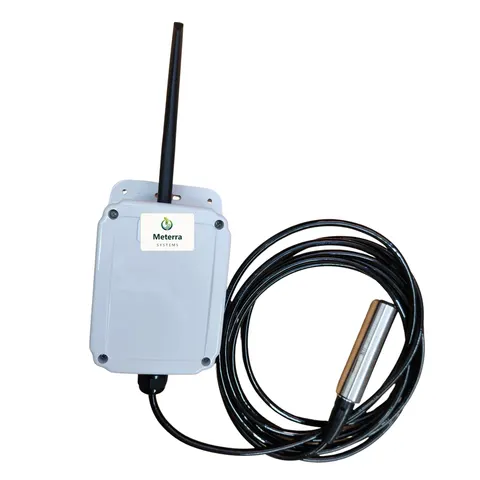
- Dry-hydrant ponds and draft sites — a submerged pressure sensor reads the depth above it and keeps reading under ice, so you know there’s enough water over the strainer to draft.
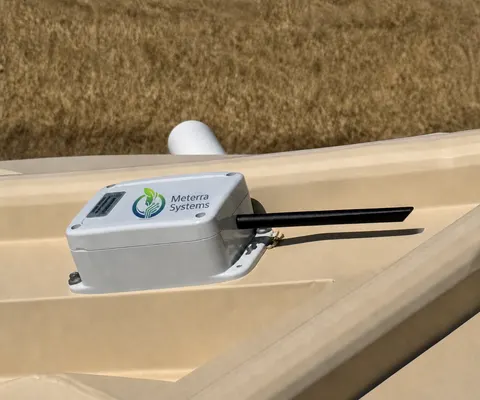
- Cisterns and storage tanks — a non-contact ultrasonic sensor mounts above the water, nothing inside the tank.
- Fill sites and tender shuttles — confirm a fill source is topped up before a tanker shuttle leans on it.
Each source reports level, estimated volume, and a ready / low / dry status to one dashboard, with low-level alerts by app and supported channels, multi-user access for the department and the landowner, and CSV export of any source’s full history.
NFPA 1142 and ISO: why a proven supply matters
Two standards drive how rural water supply is judged, and both reward a source you can demonstrate:
- NFPA 1142, the Standard on Water Supplies for Suburban and Rural Fire Fighting, sets minimum water-supply expectations where hydrants don’t reach. A designated source only meets the intent if the water is actually present when it’s needed.
- ISO’s Public Protection Classification (PPC) — which influences fire-insurance ratings across a community — gives significant weight to water supply, and credit depends on being able to demonstrate available water.
Meterra doesn’t set, grade, or certify any of this. What it does is produce the evidence those conversations run on: a continuous record that a source holds its required volume, and alarms when it doesn’t. Confirm the specific requirements with your authority having jurisdiction and rating bureau.
Beyond water level: fire weather on the same dashboard
The same Meterra ecosystem runs an industrial wireless weather station that reports temperature and humidity, wind speed and direction, rainfall and season-to-date totals, a fire-behaviour / fire-danger index, and Delta-T — all into the same app, alongside your water sources. For a district, that’s hyperlocal fire-weather awareness next to your supply readiness, on one screen. (It supports situational awareness; it isn’t a certified RAWS or a substitute for official fire-weather products.)
Where your data lives
Your readings are held on Meterra’s own protected servers, and the data is yours — every source’s history exports to CSV today. Deeper integration into agency GIS and mapping systems (for example KML/GeoJSON or an API feed) is something our team can provision for an agency deployment; it’s a capability we build to the engagement, not a box that’s switched on by default. Tell us what your people already use and we’ll scope it honestly.
Funding help
Readiness equipment is often grant-eligible. Rural and volunteer departments commonly fund through the FEMA Assistance to Firefighters Grant (AFG) and, via state forestry agencies, USDA Forest Service Volunteer Fire Assistance (VFA) and the Community Wildfire Defense Grant (CWDG). Landowners maintaining a designated source may find help through state water-conservation programs. See our Grants & Funding page for the full list of programs and links. Eligibility and allowable costs are set by each program — confirm with them before you count on it.
A note on what this is and isn’t
Meterra supports water-supply readiness, situational awareness, and documentation. It does not set, certify, or guarantee NFPA, ISO, or AHJ compliance, and it does not replace on-scene size-up or a pump operator’s own assessment of a draft. It’s offered as monitoring capability — vendor-neutral and retrofit to any existing source.
Getting started
Start with the designated source you most need to trust — the dry-hydrant pond at the end of the district, the cistern you can’t easily check. We’ll confirm coverage and set a pilot on one site, and we’re glad to be an early agency or department partner. Tell us the source and location and we’ll map the right sensor. Every sensor is backed by a 60-day money-back guarantee and a one-year warranty.
The hardware for this job
Every device reports to the same Meterra dashboard and app.
Tell us your site and we'll map the right sensors and coverage.
Frequently asked questions
What is a dry hydrant, and why monitor the source behind it?
A dry hydrant is a non-pressurized pipe set into a static water source — a pond, cistern, or stream — that lets a fire engine or tender draft water by suction. The hydrant only works if the source behind it actually holds enough water at the right depth to draft. Monitoring the level continuously, with an alert when it drops below usable draft depth, is how you keep a designated dry-hydrant source from being a surprise on the worst possible day.
How does this relate to NFPA 1142?
NFPA 1142, the Standard on Water Supplies for Suburban and Rural Fire Fighting, sets minimum water-supply expectations where pressurized hydrants don't reach. A designated static source only meets the intent if the water is actually there. Meterra documents that a source holds its required volume over time and alerts you when it doesn't — it supports readiness and recordkeeping, but it doesn't set or certify compliance. Confirm requirements with your authority having jurisdiction.
Can this help our ISO rating?
Water supply is a major component of the ISO Public Protection Classification (PPC) that influences fire-insurance ratings in a community, and credit depends on being able to demonstrate available water. Continuous level history and alarms give you the kind of documentation a rating review looks for. We can't promise a specific class — the rating is ISO's call — but a proven, monitored supply is exactly the evidence that conversation runs on.
Which sensor goes on a fire pond, cistern, or tank?
Open-water sources like dry-hydrant ponds and draft sites use a submerged pressure (hydrostatic) sensor that reads depth above it and keeps reading under ice — useful in cold country. Steel or buried cisterns and tanks use a non-contact ultrasonic sensor mounted above the water. Both report the same level, volume, and alerts to one dashboard.
Will it work at a remote source with no power or cell service?
Usually. Sensors are battery or solar powered and install in minutes with no wiring or hub. Primary connectivity is Verizon's NB-IoT low-power cellular network, used for most sites; for sources with no cellular coverage, low-earth-orbit (LEO) satellite is the alternative. Coverage is confirmed for the specific site before install — never assumed everywhere.
How much does it cost, and can grants help?
In our US rollout, sensors start at $299 for the Tank Level Sensor and $499 for the Dam Level Monitor, each including three months of connectivity and full app access; connectivity is then from $10/month per device, with discounts on annual subscriptions. Rural fire departments often fund readiness equipment through programs like the FEMA Assistance to Firefighters Grant and USDA Forest Service Volunteer Fire Assistance — see the funding note below, and confirm eligibility with the program. Every sensor is backed by a 60-day money-back guarantee and a one-year warranty.
Related Meterra solutions
- What NFPA 1142 Requires: how the minimum gallons are calculated, and who actually decides.
- Fire Pond Monitoring: the landowner-facing view of keeping a fire or suppression pond ready.
- Wildfire Water-Source Monitoring: the same readiness data for aerial water sources and dip tanks.
- Fire Districts & Wildfire Agencies: monitoring many sources across a district, in one exportable dashboard.
- Dam Level Monitor: the submerged pressure sensor for ponds and draft sites, which reads under ice.
- Tank Level Sensor: the non-contact ultrasonic sensor for cisterns and steel tanks.
- Fire-Season Water Readiness Checklist: what to check on ponds, tanks, and hydrants before the season starts.