
Six dosing tanks, five states, one dashboard.
Waste Water Innovations keeps treatment plants running with enzyme and bacteria blends that are dosed from bulk tanks at each site it serves — tanks spread from Hawaii to Colorado. Every refill used to be a long drive and a run-time guess. Six Meterra ultrasonic sensors later, every tank reports its exact level to one dashboard, and refills happen on data.
- Customer
- Waste Water Innovations (WWI)
- The sites
- Six dosing tanks across Hawaii, Idaho, Montana, Utah & Colorado
- Hardware
- Meterra ultrasonic Tank Level Sensors — non-contact, sealed tanks stay sealed
- Outcome
- Refills on live data — no surprise-empty tanks, no wasted drives
The product that can’t be allowed to run out
Waste Water Innovations supplies the biology that makes treatment plants work better — blends of enzymes and live bacteria dosed into wastewater systems so the resident microbes break down waste faster and more naturally. That product lives in bulk tanks at the sites it serves, and it only earns its keep while there’s product in the tank. A tank that quietly runs dry means a plant missing its dose.
Six tanks, five states, one truck
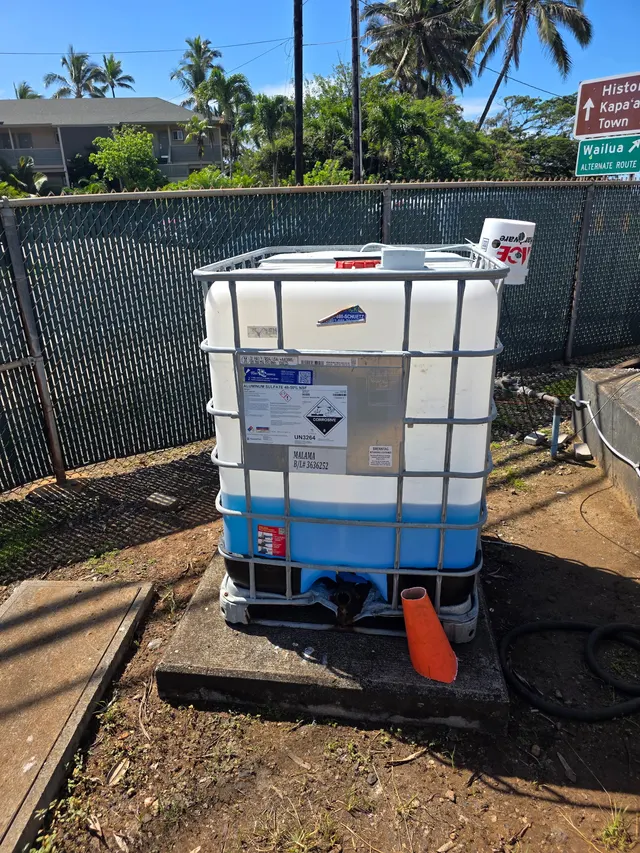
Troy at WWI managed those tanks the only way he could: by driving to them. His six active tanks are spread across Hawaii, Idaho, Montana, Utah, and Colorado, so every check was a trip and every refill was a guess based on expected run-time. The guess was usually wrong in one of two expensive directions — he’d arrive to find a tank already empty, meaning the plant had been short on product, or still weeks from empty, meaning a long trip for nothing.
The install
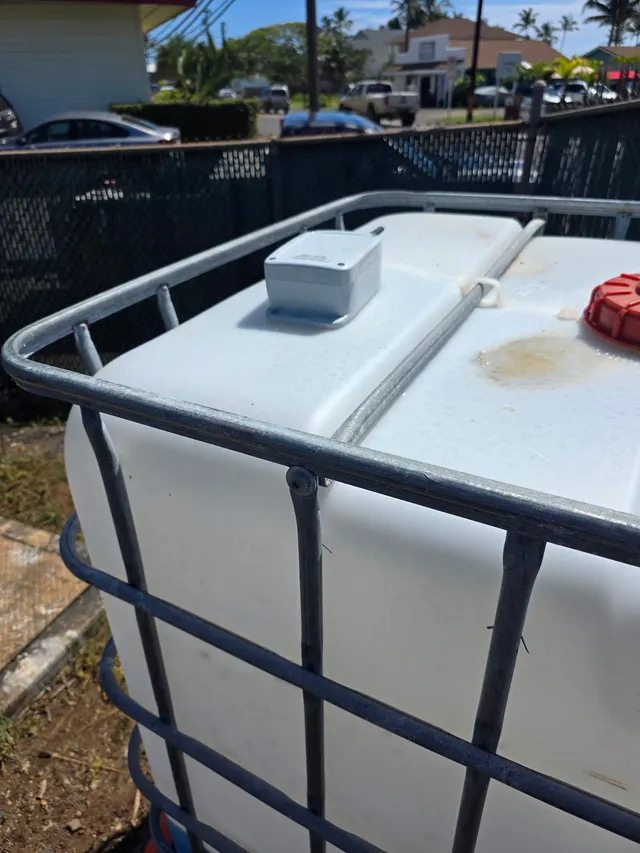
Each tank got a Meterra ultrasonic Tank Level Sensor — the non-contact option that suited his sealed tanks. The sensor mounts on top and reads the level from above, so nothing sits in the product and the tank stays sealed. There’s no wiring and no power needed at the tank; the sensor connects itself over the cellular network.
Refilling on data instead of a calendar
Now Troy sees the exact level of all six tanks — depth, volume, and percentage — from his phone, with the drawdown trend that says when each one will actually need a refill. A tank in Hawaii and a tank in Colorado sit side by side on the same dashboard, each with its own low-level alarm.
The wasted drives are gone, and so are the surprise empties: each tank gets topped up when it needs it — not before, and not too late. The plants downstream get their dose, and the truck rolls when the data says so.
Why it worked
Nothing about this setup is exotic — that’s the point. A $299 sensor, a 15-minute mount, no wiring, and a dashboard that treats six tanks in five states like one property. The advantage compounds with every tank added: the network tells you where to go next, instead of you driving out to find out.
Running dosing or supply tanks across multiple sites? Tell us how many points you manage and where they sit — we’ll confirm coverage and map a setup that puts every one of them on one screen.
The hardware behind this result
Every device reports to the same Meterra dashboard and app.
Tell us your site and we'll map the right sensors and coverage.
Related Meterra pages
- Chemical & Dosing Tank Monitoring: the full solution page for dosing, supply, and treatment tanks.
- Wastewater & Lagoon Monitoring: level and freeboard on treatment lagoons and basins.
- Lift Station Monitoring: wet-well level, high-level alarms, and pump-cycle history.
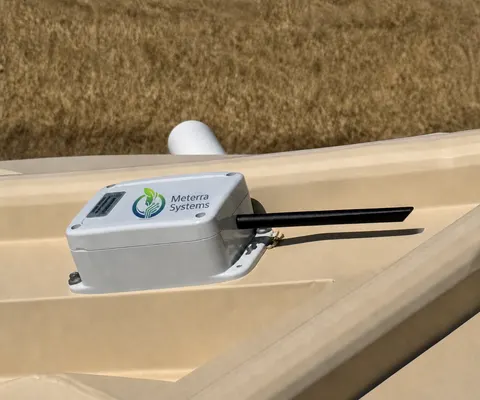
- Tank Level Sensor: the non-contact ultrasonic sensor WWI uses on every tank.