
Watch the wet well. Get the call before it overflows.
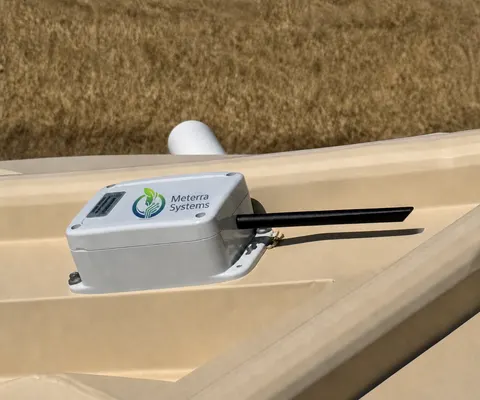
A lift station fails at 2 a.m., on a holiday weekend, with nobody standing next to it. The wet well fills, the pumps do not keep up, and the next place the sewage goes is a basement, a manhole lid, or a creek. Meterra puts a wireless level sensor in the wet well, sends a high-level alarm to several phones at once, and keeps the pump-cycle history the old alarm panel never kept. It stands alone where there is no SCADA, and it feeds the SCADA you already own over 4-20 mA or Modbus where there is one.
The failure nobody is standing next to
A lift station is a hole in the ground with pumps at the bottom and a whole collection system feeding into it. When the pumps keep up, nobody thinks about the station for years. When they stop keeping up, the wet well fills at the rate the neighborhood is using water, and there is no valve to close.
Small systems usually find out one of three ways. An operator drives the round and sees it. A resident calls. Or an alarm panel dials a phone number and hopes somebody answers. All three are slower than the well fills, and the last one assumes a phone line that, at a lot of stations, is on borrowed time.
What you want is the same thing every operator asks for: the call while the level is still climbing, not after it has gone over.
What Meterra puts on the wet well
- Wet-well level, continuously. A wireless sensor reads the level and reports it to a dashboard and phone app. No field wiring, no power run, no control-room build.
- A high-level alarm with margin. You set the threshold. When the level crosses it, the alert goes to as many people as you want, by phone and email, day or night.
- A rising-trend view. Not just the threshold, but how fast the level is getting there, which is the difference between a nuisance page and a station that is genuinely losing the race.
- Pump-cycle history. Every start and stop the well has drawn, on a chart you can range over any period, exportable.
- CSV export. For operating records, for a board packet, and for the engineer who asks what the station has actually been doing.
What the level chart tells you about the pumps
This is the part most operators do not expect: the same level record that drives the alarms doubles as the station’s health history. Changes in the cycle pattern surface mechanical trouble weeks before the station falls behind, from a pump quietly losing capacity to water arriving that should never have been in the pipe. The FAQ below covers the three patterns worth watching, and how a sewer lift station works walks through reading each one in detail. The practical point for a small system: one measurement in one chamber is the cheapest pump-health check a station can have, no instrumentation on the pumps themselves required.
When the phone line under the alarm panel goes away
Plenty of lift stations are still alarmed the way they were alarmed in 1995: an autodialer wired into an alarm panel, calling out over a copper POTS line. It worked for decades. The problem is that carriers are retiring copper, and when that line is disconnected the dialer stops being an alarm system and starts being a box on a wall. Some systems find out the hard way.
A disconnect notice on that line is worth treating as an opportunity rather than a forced expense. Cellular alerting is not just a like-for-like swap for the dialer. The old panel could tell you a contact closed. It could not tell you the level, the trend, how long the pumps ran last night, or what the station did during the last storm. A level sensor gives you the alarm and the record behind it.
Meterra reports over Verizon NB-IoT low-power cellular, with LEO satellite for sites that have no coverage at all, and we confirm coverage at your specific station before you buy anything. One note on scope: this is a monitoring and alerting layer. Confirm your own permit, state, and insurance requirements for alarm and control equipment before you retire anything that is required to be there.
Feeding the SCADA you already own
If the station is already tied into a SCADA system, you do not have to choose between the wireless sensor and the system your operators already know.
A small bridge computer at the panel that serves the station takes the wireless wet-well reading and hands your system the signal it already expects, either a current loop into the input the old transmitter used, or Modbus when several stations’ worth of readings have to arrive through one connection. Your control logic, your screens, and your operator workflows stay where they are. How that bridge is built, scoped, and mapped by your integrator is spelled out on our wireless SCADA integration page, so we will not repeat it here.
What matters at a lift station specifically is the alternative quote. It is usually trench new signal cable to the wet well, expand the panel I/O, or replace the control system, and often more than one of the three. Bridging answers the same problem without putting a station your operators know how to run back on the table.
We are proposing exactly this setup for Huntsville Town, Utah. The buried line that carried their storage-tank level into SCADA was cut, so the SCADA no longer receives that reading and can no longer run the fill pumps on it. A wireless Meterra sensor already put the tank level back on screen on the Meterra dashboard, and that part is done and running. Bridging the same reading back into the town’s SCADA, so the automation gets its input again, is a proposal at this point rather than delivered work, and we will keep describing it that way until it is installed and running.
Or stand alone, where there is no SCADA
Plenty of lift stations have no SCADA at all, and no realistic budget to build one. That is a perfectly good place to start.
The sensor runs on battery or solar, mounts in about 15 minutes with no electrician and no trenching, and reports straight to the dashboard and app. One station or fifteen, they all land on the same screen with their own alarm thresholds. That is a complete lift station alarm monitoring system on its own terms: a measured level, a threshold you set, an alert that reaches people, and the history sitting behind it. If you build a SCADA system later, the sensors you bought now feed it through the same bridge. Nothing gets thrown away.
The same sensors upstream, finding where the water gets in
If your cycles-per-hour chart lights up every spring, the station is telling you something about the collection system rather than about itself. Clean runoff water getting into a sanitary sewer gets treated as sewage, and treating clean water is expensive.
The same ultrasonic sensors go along the sewer line at multiple points, each one reading the depth of water in the pipe. Capture a dry-season baseline first, then compare point to point during runoff, and the first point climbing above its own dry-weather record tells you the water joined the line just above it. That turns a search across miles of buried pipe into a stretch a camera crew can cover in a single visit. That line study is part of the Powder Mountain job, a Utah mountain resort community, where the pond side is already live: a sensor has been reporting into their legacy SCADA since July 15, 2026. There are no savings figures or repair results on this page because there are not any yet, and there will not be until a dry-season baseline and the runoff season that follows it have both run. The method itself is explained in detail on our sewer inflow and infiltration page.
The same approach applies to storm-water drains and, broadly, anywhere dirtier water needs to be measured for flow. For clean water in a pipe, the right tool is a turbine water flow monitor instead.
Sensor prices are posted. The bridge is not.
We post our prices, so here they are. $299 for the Tank Level Sensor, $399 for the Livestock Trough Level Monitor, from $499 for the Dam Level Monitor, each with three months of connectivity and full dashboard and app access in the box, then from $10/month per device, discounted annually. Tank sensors ship from US stock in 1 to 2 business days. Every sensor carries a 60-day money-back guarantee and a one-year warranty. Compare those numbers to anyone.
The integration bridge is the one item on this page without a posted price, and we would rather explain why than bury it. It is engineered to your control system: which SCADA or PLC you run, what signal it expects, where the panel is, how many points you are handing it. That is a scoped project, not a catalog item, so it gets quoted per site before anything is ordered. We will not print a product price on a project, and you should be suspicious of anyone who does.
What this is, and what it is not
Meterra is a monitoring and alerting layer for a lift station. It reports level, trend, history, and alarms, and where you want it, it hands a reading to your existing control system. It does not control pumps, it does not replace your pump controls or your certified operators, and it does not satisfy permit monitoring or reporting obligations on its own. Confirm your specific requirements with your permit and your regulator.
Meterra has been in the field for over four years with more than 2,000 devices in service, and we would rather tell you what our gear will not do before you buy it than after.
Start with the station most likely to surprise you
Pick the one that has already cost you an overtime call-out, or the one whose dialer is on a copper line with a disconnect date. Tell us the station, the wet well, and what the control panel looks like today, and we will confirm cellular coverage there and lay out what standing alone or bridging into your SCADA would each take.
Call (385) 534-8200 and talk it through with a person, or request pricing below. If you just want the sensor on the well, the Tank Level Sensor is $299 and ships from US stock.
The hardware for this job
Every device reports to the same Meterra dashboard and app.
Tell us your site and we'll map the right sensors and coverage.
Frequently asked questions
What does lift station monitoring actually measure?
The level in the wet well, continuously, reported to a dashboard and phone app with alarm thresholds you set. Level is the measurement that matters most at a lift station, because every failure mode at the station ends the same way. The water goes up and it does not come down. From that same level record you also get the station's pump-cycle pattern over time, which is the closest thing to a health chart a small system gets without instrumenting the pumps themselves.
How does a level sensor tell me something is wrong with a pump?
A healthy lift station draws a sawtooth on the level chart. The well fills at the rate of incoming flow, a pump starts, the level drops fast, the pump stops, and it repeats. Three things in that pattern are worth watching. Cycles per hour climbing without a storm means more water is arriving than used to. A drawdown leg that gets slower over weeks means the pump is moving less water than it did, which points at wear, a partial clog, or a rag ball. And a level that rises straight through the normal start point means the pump did not start at all. The chart shows you the symptom and points you at the station; the diagnosis is still yours or your pump contractor's.
Can I get a remote alarm for a lift station that has nothing on it today?
That is the most common way a station starts with us. A remote alarm for a lift station needs three things. Something measuring the wet well, a path off site that does not depend on a phone line at the station, and a list of people it reaches. A wireless level sensor on the well covers the first, Verizon NB-IoT cellular covers the second, and the alert goes to as many phone numbers and email addresses as you want. It installs in about 15 minutes with no electrician and no trenching. Because the alarm is driven by a measured level rather than a float contact, you also get the trend behind it, so the alert tells you how fast the well was filling and not just that a switch closed.
Will an ultrasonic sensor survive a wet well?
The sensor we usually specify for a wet well is non-contact ultrasonic. It mounts above the water and reads the surface from a distance, so nothing sits in the flow to foul with rags, grease, or grit, and there is nothing in the well to pull and clean. Submerged pressure sensing is available where a site needs it. Wet wells vary a lot, so we scope the mounting and the sensor choice for your specific station before anything ships.
Our alarm dialer runs on a copper phone line the carrier is retiring. Can this replace it?
Often, yes, and copper retirement is a common reason this question reaches us. A lot of stations still alarm through an autodialer on a POTS copper line, and as carriers retire copper those lines are going away, sometimes with little notice. When the line goes, the alarm goes with it, and the station is unwatched. Meterra alarms ride Verizon NB-IoT low-power cellular, with satellite where there is no coverage, and go to as many people as you like by phone and email, with the level history behind them. Treat it as your monitoring and alerting layer, and confirm your own permit and state requirements for alarm and control equipment before you retire anything.
Can this feed our existing SCADA?
Yes, and it is a large part of why we built this. A small bridge computer at the facility takes the wireless reading and hands it to your existing system in the language that system already speaks, either as a 4-20 mA current-loop output your SCADA or PLC reads exactly as if a hardwired transmitter were connected, or over Modbus. Your control logic, your screens, and your operators stay exactly as they are. That bridge is engineered and quoted per site, because it has to match the system you actually run. See our page on wireless SCADA integration for how it works.
Does Meterra control the pumps?
No. At a lift station we supply monitoring and alerting, meaning level, trend, history, alarms, and, where you want it, an input into your existing control system. Pump control decisions stay in your controls, under your operators. This is a layer that tells you what is happening, not a layer that runs the station.
What does it cost?
The field sensors carry our posted US prices. They are $299 for the Tank Level Sensor, $399 for the Livestock Trough Level Monitor, from $499 for the Dam Level Monitor, each including three months of connectivity and full dashboard and app access, then from $10/month per device with a discount on annual plans. Every sensor carries a 60-day money-back guarantee and a one-year warranty. The integration bridge into an existing SCADA is the one thing here we cannot post a price for, because it is engineered to your control system rather than pulled off a shelf, so it is scoped and quoted per site before anything ships. Tell us what you run and you will get a real number.
Related Meterra solutions
- How a Sewer Lift Station Works: the wet well, the sawtooth cycle, and the four common failure modes.
- Wireless SCADA Integration: how the 4-20 mA and Modbus bridge into an existing control system works.
- Sewer Inflow & Infiltration Monitoring: the same sensors upstream, locating where clean water enters the sewer.
- Wastewater Lagoons: freeboard and high-level alarms on stabilization lagoons.
- Water District Monitoring: what small and rural systems watch, and how it stays affordable.
- Tank Level Sensor: the non-contact ultrasonic sensor most wet wells get, $299 posted.
- Huntsville Town, Utah: a cut SCADA line, a million-gallon tank, and the trench that was avoided.