
Find out where the runoff is getting into your sewer.
Every spring, clean water finds its way into sanitary sewer lines and you pay to treat it as sewage. Everyone knows it is happening. Almost nobody knows exactly where. Meterra places wireless ultrasonic sensors at several points along the line, records a dry-season baseline first, then compares the same points during runoff. The stretch where the water jumps above its own baseline is the stretch worth opening up.
You are paying to treat rainwater
Inflow and infiltration is the quiet line item on a small utility’s budget. Snow melts, the ground saturates, and clean water finds every crack, bad joint, failed lateral, and leaking manhole lid in the collection system. It arrives at the plant looking like sewage, and it gets billed like sewage: pumped, treated, and discharged at full cost, all spring, every spring.
The frustrating part is that the fix is well understood. You repair the pipe. Public works directors do not need to be sold on lining, grouting, or replacement. What stops the project is one question nobody can answer cheaply: where is the water getting in? A collection system is miles of buried pipe. Smoke testing, dye testing, and camera crews all work, but pointing them at the whole system is expensive, and pointing them at the wrong stretch is worse.
Multi-point level monitoring answers the question first, so the expensive tools go straight to the right block.
How measuring at several points localizes the source
Start with the one fact that makes this work: water can only join the pipe between two measuring points.
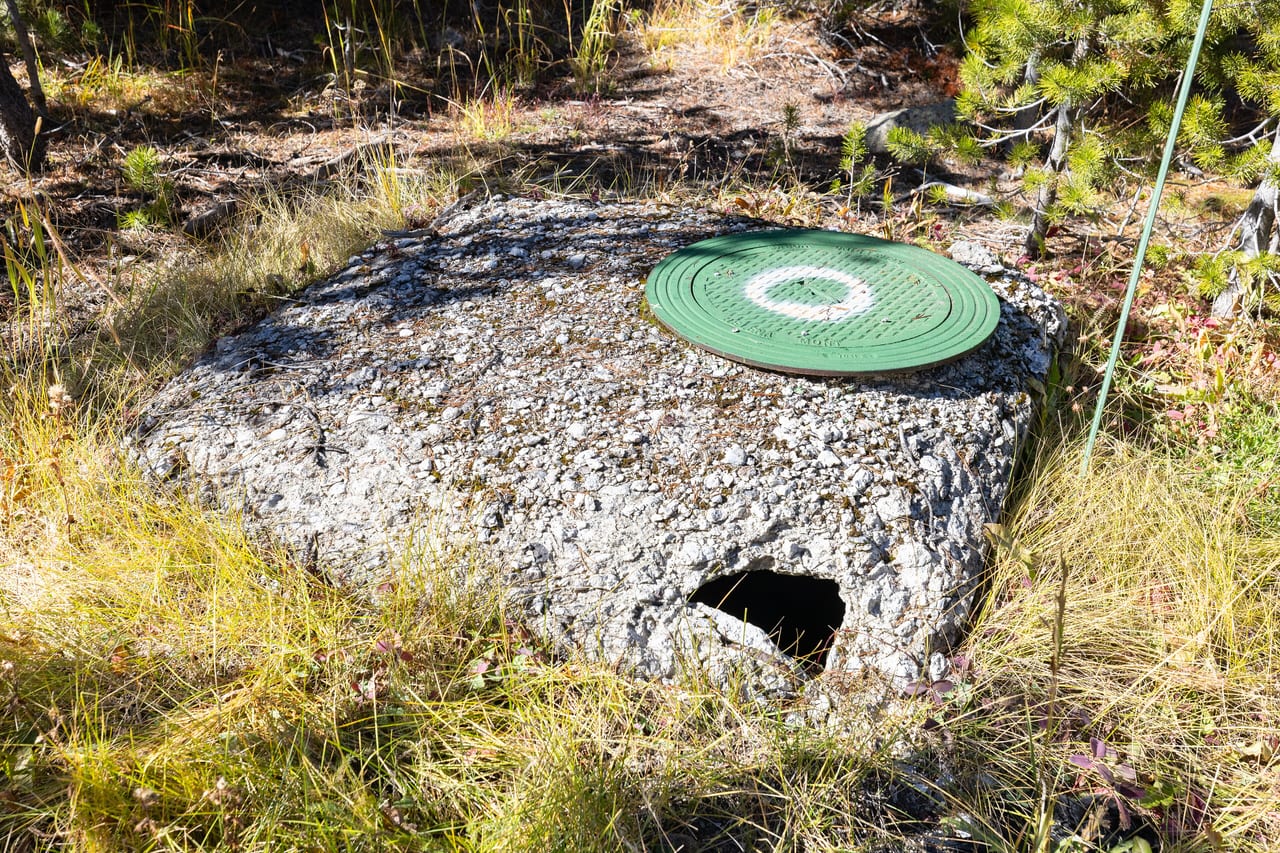
Put a wireless sensor at a manhole near the top of the run, another farther down, another below that, and so on down the line. Each sensor reads the depth of water in the pipe, hourly, and reports on its own over cellular. Now, during a runoff event, you are not looking at one number at the plant. You are looking at a row of numbers down the length of the line.
Read them in order:
- Points one and two are behaving normally for the conditions. Nothing unusual has joined the pipe above them.
- Point three is running well above its own normal. Something joined the line between point two and point three.
- Points four and five are elevated by roughly the same amount as point three, and no more. They are just carrying what point three already had.
That is the whole method. The jump between two neighbors is the signature of water entering in the stretch between them. You have gone from “somewhere in miles of buried pipe” to “between these two manholes,” which is a length a camera crew can cover in a single visit.
Tighten it by adding points. Bracket the suspect stretch with sensors closer together and the search area halves again. It is the same logic a plumber uses to isolate a leak, applied to a whole collection system, with the sensors doing the walking.
Be clear about what is on the screen: depth, not gallons. Each sensor reports how deep the water is in the pipe at that point. We are not deriving a flow rate from velocity and pipe geometry at every hole, and the localization does not need one. What points at the defect is the change at each location against its own dry-weather record, and where that change jumps between neighbors. If a permit or an engineer needs volume figures, say so during scoping and we will tell you plainly what this data can and cannot support.
The dry-season baseline is what makes the comparison honest
Skip this step and the data is close to meaningless.
Depth in a pipe depends on slope, diameter, how much real sewage that section carries, and what time of day it is. A manhole on a flat run naturally sits deeper than one on a steep run. Comparing raw depth between two points tells you about the pipe, not about infiltration.
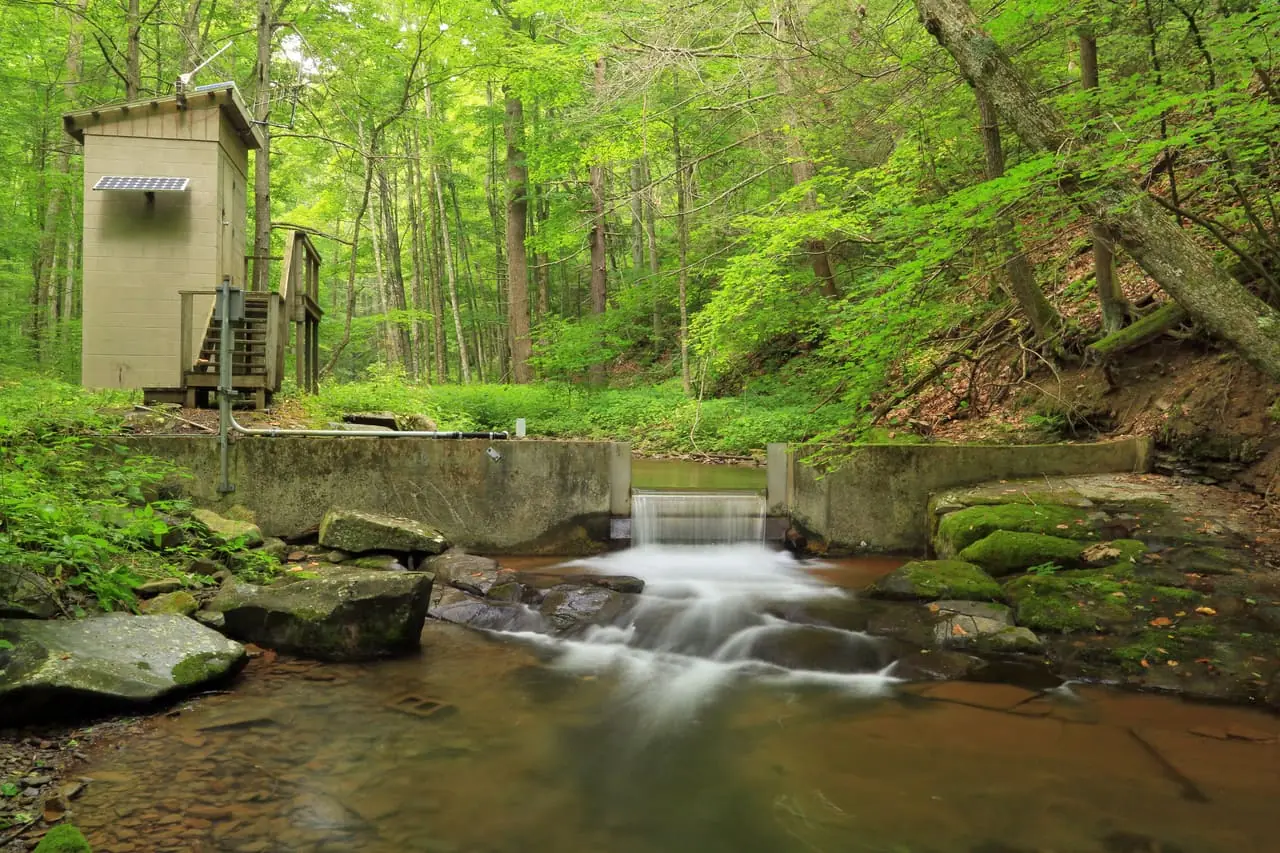
So the first thing we install for is summer. Through the dry season, when the only thing in the line is what the town actually flushes, every point builds its own record: normal depth, the daily rhythm, the morning and evening peaks. That record is the reference.
When runoff season arrives, each point is compared against its own baseline, not against its neighbors’ raw numbers. Now the question is clean: how much has this point risen above what it does in dry weather, and how much more has it risen than the point above it? Increases that stand out from the baseline are the ones that point at a defect. Everything else is just the system doing what it always does.
This is why an I&I study is not a one-week rental. It is a season of quiet reference data, then the event you were waiting for, and both halves have to come from the same sensors in the same holes.
Dirty water is why the sensor never touches it
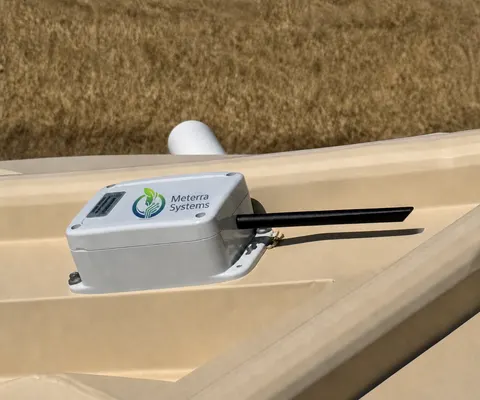
Meterra reads these lines with non-contact ultrasonic sensing. The sensor mounts above the water and measures the distance down to the surface. Nothing goes in the flow.
That matters more in a sewer than anywhere else we work. Sewage carries solids, grease, grit, and rags. Storm water carries sand and leaf litter. Anything you suspend in that stream is on a clock: impellers bind, probes foul, and floats end up wrapped in whatever came down the pipe last week. A sensor reading the surface from above has nothing in the water to clog, corrode, or wrap, which is what makes a full season of unattended baseline data realistic.
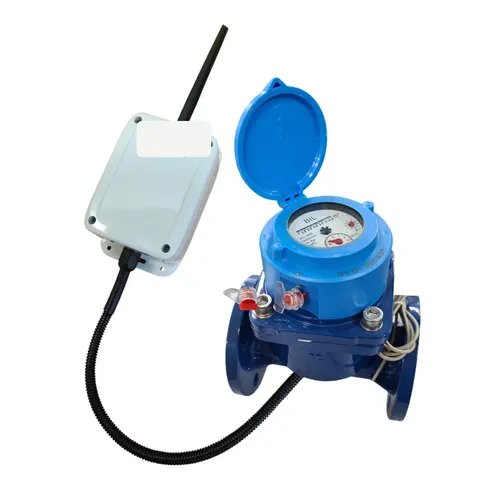
Clean water is a different job, and we are straightforward about it. Pressurized, potable, clean supply lines are where a mechanical turbine meter belongs, and where you want gallons totalized rather than depth trended. That is our Water Flow Monitor, and for a filled supply line it is the better instrument. Non-contact ultrasonic is for the dirty side: sanitary sewers, storm-water drains, culverts, ditches, and open channels.
The same sensor design has been in the field for 4+ years, with 2,000+ devices in service, on Verizon NB-IoT low-power cellular, with satellite where coverage will not reach. Sensors run on their own battery, so there is nothing to wire at the manhole. Mounting and cellular signal at each specific point are confirmed during scoping, before anything is quoted.
Where this stands today, stated plainly
The Powder Mountain job is a resort-community sewer system above Eden, Utah, and it brought us exactly the problem this page describes: spring runoff getting into the sanitary line. Clean water that joins a sanitary line still has to be collected, moved, and handled like sewage. What no single reading at the bottom of the run can tell you is which stretch let it in. That is the question the sensors are there to answer.
The method described on this page is the one this job uses: Meterra ultrasonic sensors at multiple points along the line, dry-season baseline first, then point-to-point comparison during spring runoff to localize the infiltration zone.
The pond side of the same job is already live. A level sensor went into the first evaporative pond on July 15, 2026 and has been reporting into their legacy SCADA ever since, showing them runoff amounts and how far the water comes up after a storm, neither of which they had been able to see before.
Here is the honest status: a real customer, a real system, work in progress. There is no measured savings figure, no repair outcome, and no finished number, because the sequence that produces them, a dry-season record at every point and then a runoff event to compare it against, has not run its course. That is the nature of the method, not a hedge. When the season delivers those numbers they will go on this page, and they will be theirs, not ours. See it for yourself: the install footage and where the job stands today are on the Powder Mountain job’s case study.
Getting the readings into the system you already run
Plenty of utilities want this data where their operators already look. Meterra builds a small bridge, a Raspberry-Pi-class computer, that takes the wireless reading and emulates the signal your existing control system expects. For a legacy input, that signal is a 4-20 mA current loop, so a legacy SCADA or PLC reads the wireless sensor exactly as if a hardwired transmitter were sitting on the end of a wire pair. Modbus is the other path, for when one connection has to carry many readings.
No trenching, no new I/O panel, no rip-and-replace of a SCADA that works. That is the whole point of the bridge, and it is covered in detail on Wireless SCADA Integration. Like the line study itself, it is engineered and quoted per site.
If the rest of your collection system needs eyes too, lift station monitoring covers the wet wells and wastewater lagoons covers freeboard, both on the same dashboard and the same account.
What it costs, and why one number is posted and one is not
Our level sensors are posted, and we like being compared on them. The Tank Level Sensor is $299, the Trough Level Monitor is $399, and the Dam Level Monitor starts at $499. Each includes three months of connectivity, then plans run from $10/month per device, with a 60-day money-back guarantee and a one-year warranty on every unit. Sensors ship from US stock, tank sensors in 1 to 2 business days. No quote call to find out the hardware price.
The line study is different, and we will say why instead of hiding it in a form. Placing sensors down a sewer run is a scoped project: how many points, where they can mount, what the cellular coverage is at each hole, how long the baseline needs to run, and whether the readings have to land in your SCADA. Those decisions are made about your line, so the price is made about your line. We are not going to print a number that pretends otherwise. The sensor that does the measuring carries a price tag you can read right now. The study around it gets a scope and a real quote, in writing, before anything is built.
Next step
Tell us the run that worries you most: roughly how long it is, how many manholes are accessible, and what your plant sees when the snow goes. We will tell you how many points it takes to bracket it and what it costs to find out.
Request pricing below or call (385) 534-8200 and talk it through with a person. If you want to see the sensor first, it is the Tank Level Sensor, $299, posted.
The hardware for this job
Every device reports to the same Meterra dashboard and app.
Tell us your site and we'll map the right sensors and coverage.
Frequently asked questions
What are inflow and infiltration?
Inflow is clean water that enters a sanitary sewer through a direct opening, like a bad manhole lid, a cross connection, or a downspout tied into the wrong pipe. Infiltration is groundwater that seeps in through cracked pipe, bad joints, or failed laterals. Both send water to the treatment plant that never needed treating, and both peak when the ground is saturated with snowmelt or rain.
How can level sensors tell me where water is entering?
Water can only join the line between two measuring points. Put a sensor at several manholes down the run and each one gives you a depth reading. If the upstream point is sitting near its normal dry-weather depth and the next point downstream is running well above its own baseline, the extra water joined the pipe in the stretch between them. Add points and the stretch gets shorter. You are narrowing a search area, not guessing at a whole system.
Why record a dry-season baseline first?
Because depth by itself tells you very little. A manhole on a flat run sits deeper than one on a steep run for reasons that have nothing to do with infiltration. What matters is the change at each point against how that same point behaves in dry weather, when the only thing in the pipe is real sewage. Summer gives you that clean reference. When runoff arrives you compare each point to its own summer record, and the increases stand out.
Why ultrasonic instead of a flow meter?
Because the water is dirty. Our ultrasonic sensors read the surface from above and never touch what is in the pipe, so there is no impeller, no probe, and nothing sitting in sewage or grit to foul, clog, or corrode. Mechanical turbine meters are the right tool for clean water in a pressurized pipe, and we sell one for that, the Water Flow Monitor. For sewage, storm water, and anything with solids in it, non-contact is the design that survives.
Do you report gallons per minute, or depth?
Depth. Each sensor reports how deep the water is in the pipe at its own location, hourly. We are not converting that into a flow rate, because doing it honestly takes velocity and exact pipe geometry at every measuring point, and the localization does not depend on it. What narrows the search is the change at each point against its own dry-weather record, compared with the point upstream. If a permit or your engineer needs volume numbers, tell us during scoping and we will say plainly what this data can and cannot support.
Does this work on storm drains too?
Yes. The same setup works on storm-water drains, sewer drains, and basically anywhere dirtier water needs to be measured for flow. The method does not care what is in the pipe, because nothing touches it. The same multi-point comparison shows which branch of a storm system is carrying the load.
Can the readings feed our SCADA?
Yes. Meterra builds a bridge that hands wireless sensor readings to an existing SCADA or PLC, either as a 4-20 mA current loop that your system reads exactly like a hardwired transmitter, or over Modbus. That work is engineered and quoted per site. See our Wireless SCADA Integration page for how the bridge works.
What does the hardware cost?
Our level sensors are posted, not quoted. The Tank Level Sensor is $299, the Trough Level Monitor is $399, and the Dam Level Monitor starts at $499. Each includes three months of connectivity, then plans run from $10/month per device. Every sensor carries a 60-day money-back guarantee and a one-year warranty. Sensors ship from US stock, tank sensors in 1 to 2 business days.
And what does a multi-point study cost?
That one is quoted, and we will tell you why. A line study is a scoped project, not a boxed product. The number of points, where they can physically mount, cellular coverage at each manhole, how long you need the baseline to run, and whether the readings have to reach your SCADA all change the job. We price it after we understand the line. Tell us the run you are worried about and we will scope it.
Has Meterra done this before?
We are doing it now. A Utah mountain-resort sewer system brought us the exact problem this page describes, and the work is underway on their system. What we will not do is call the result in early. There are no savings numbers and no repair outcome here yet, because the runoff comparison that produces them has not run. When it does, the numbers go on this page, and they will be theirs, not ours.
Related Meterra solutions
- Tank Level Sensor: the non-contact ultrasonic sensor that reads depth at each point.
- Wireless SCADA Integration: get the readings into the SCADA or PLC you already run.
- Wastewater Lagoons: freeboard and high-level alarms on stabilization lagoons.
- Lift Station Monitoring: wet-well level, overflow alarms, and pump-cycle history.
- Water Flow Monitor: the turbine meter for clean water in a pressurized line.
- Stormwater Compliance: rainfall and basin level, time-stamped for the record.
- Water Level Monitoring: how remote level sensing works across every Meterra site.
- How a Sewer Lift Station Works: the wet well, the pumps, and the usual ways they fail.
- Video: Ultrasonic Flow Monitoring on a Sewer Job: reading depth in a sewer line from above, without touching the flow.
- Video: The Powder Mountain Job Overview: the custom monitoring job, explained on site.