
Know every dosing tank's level across every site.
Bulk chemical, dosing, and treatment tanks fail you in two expensive directions — a tank runs dry and a process misses its dose, or a pond climbs toward overflow while nobody's watching. Meterra matches the sensor to the liquid: a rugged submerged pressure sensor built for harsh, even acidic media that reads depth right through ice, or a simpler, lower-cost non-contact ultrasonic unit. Either way, depth, volume, and low- and high-level alarms land on one dashboard — so you refill on data and catch a rising level before it spills.
The tank that has to be there
A dosing or supply tank only earns its keep when the product is in it. Run one dry and the process it feeds misses its dose — a treatment plant falls behind, a line runs on nothing, a customer gets a call. Watch it too conservatively and you burn trips and hours refilling tanks that were still half full. Both failures come from the same root cause: you can’t see the level until you’re standing in front of it, and the tanks are usually the hardest things to get in front of. Oilfield and industrial operators know the same vessel as a chemical injection tank — different name, same two failure modes.
Remote level monitoring removes the guesswork. The right sensor on each tank or pond reports the exact level continuously, alarms before it runs low — or climbs too high — and puts every point across every site on one screen. You stop dosing by calendar and start dosing by data.
Two sensing options, matched to the liquid
Meterra measures these tanks and ponds two ways, and the right one depends on the liquid and the vessel:
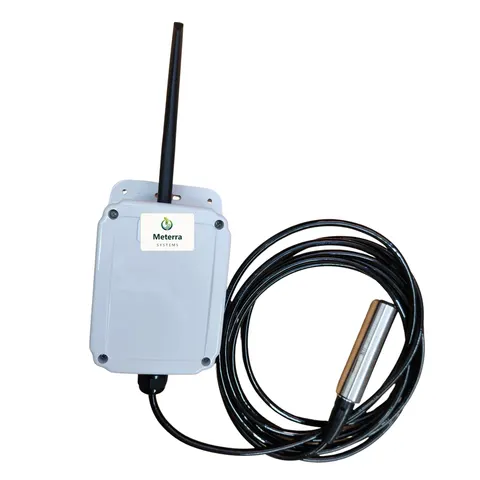
- Submerged pressure — built for the hard cases. A sealed sensor sits in the tank and reads the depth of liquid above it. It’s engineered for extreme environments — it holds up in aggressive, even acidic media that would wreck an ordinary probe — and because it reads from below, it keeps reporting the true level straight through ice. For most demanding liquids, and for any open pond that freezes, this is the stronger tool. It’s the same technology behind our Dam and Trough sensors.
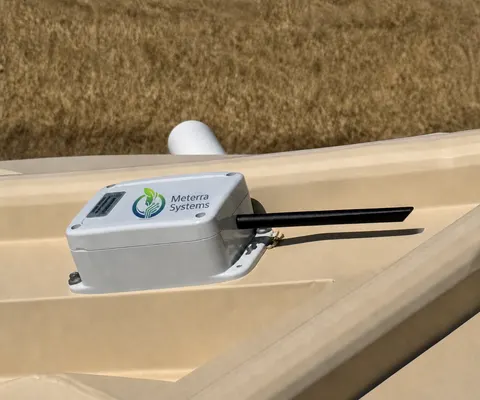
- Non-contact ultrasonic — the simple, lower-cost option. A unit mounts above the tank and reads the surface without touching anything, so nothing sits in the product. It’s easier to fit and cheaper to run, and it suits enclosed dosing and supply tanks you’d rather keep sealed — which is exactly what Waste Water Innovations chose, below.
In plain terms: for liquids, the pressure sensor is usually the best answer; ultrasonic is the easy, economical one. We match the sensor to your media, your tank, and your climate.
Reading a freeze-prone pond before it overflows
Open evaporation and waste ponds — common across Utah and the Mountain West — freeze over in winter, which is exactly when the reading matters most. An ultrasonic sensor reads the surface from above, so once the pond ices over it measures the ice, not the water beneath, and can miss a level climbing toward the top. A submerged pressure sensor reads the depth from below the ice and keeps reporting the true level, with a high-level alarm before a lined pond overflows — a spill that turns into a costly cleanup and a reportable environmental incident. For any pond that freezes, that below-the-ice reading is the difference between a warning and a mess.
Case study: Waste Water Innovations
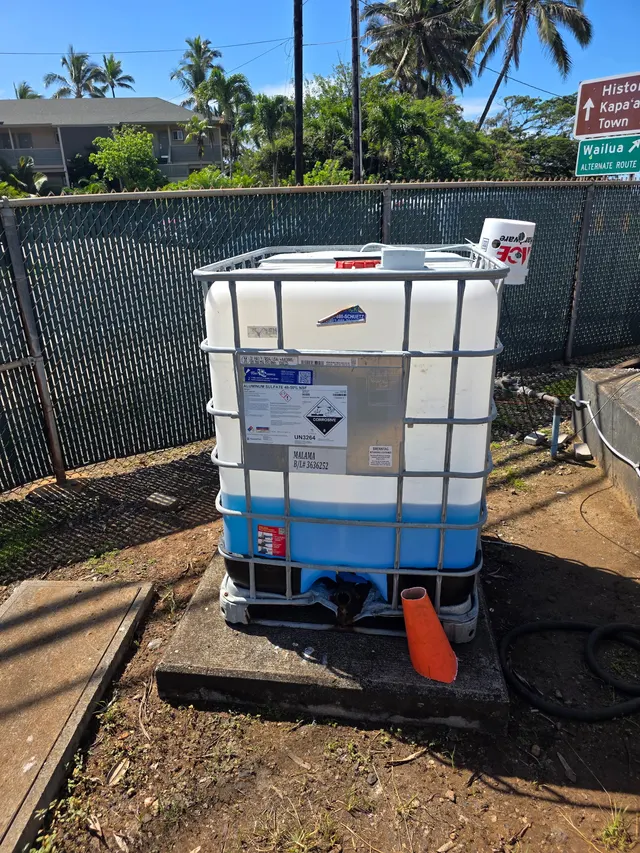
Waste Water Innovations (WWI) supplies the biology that makes treatment plants work better: blends of enzymes and live bacteria that are dosed into wastewater systems so the resident microbes break down waste faster and more naturally. That product lives in bulk tanks at the sites it serves — and a tank that runs dry means a plant misses its dose.
Troy at WWI used to manage those tanks the only way he could: by driving to them. His six active tanks are spread across Hawaii, Idaho, Montana, Utah, and Colorado, so every one was a trip, and every refill was a guess based on expected run-time. The guess was usually wrong in one of two costly directions — he’d arrive to find a tank already empty, meaning the plant had been short on product, or still holding weeks of solution, meaning a long trip for nothing.
He fit each tank with a Meterra ultrasonic Tank Level Sensor — the non-contact, lower-cost option that suited his sealed tanks, reading the level from above with nothing to fit inside the vessel. Now Troy sees the exact level of all six tanks — depth, volume, and percentage — from his phone, and refills on real data instead of a calendar. The wasted drives are gone, and so are the surprise empties: each tank gets topped up when it actually needs it, not before and not too late.
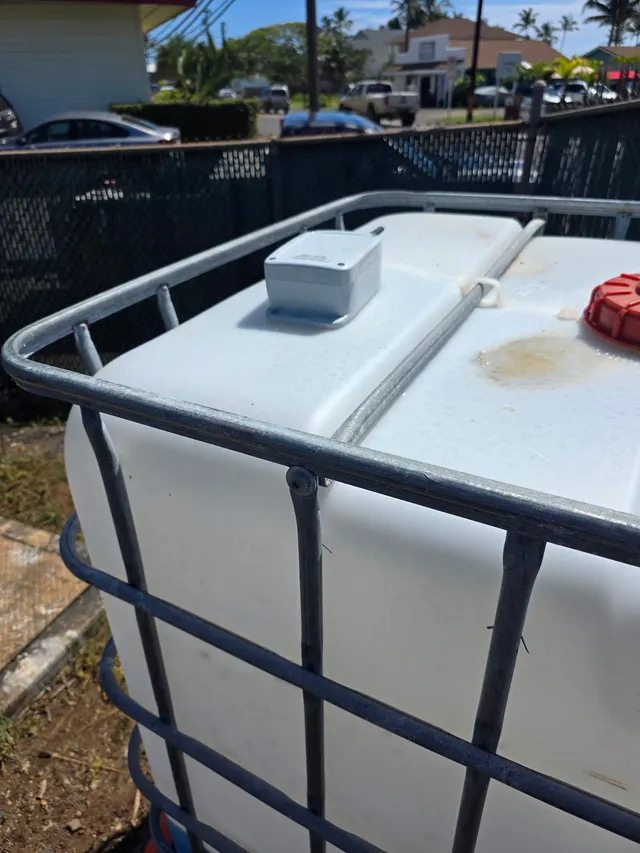
Read the full Waste Water Innovations case study →
What Meterra monitors
- Dosing, metering, and chemical injection tanks — bioaugmentation product, polymer, coagulant, and treatment chemical feeding a process, watched so the feed never runs dry.
- Bulk chemical and supply tanks — the drums, verticals, and yard tanks you reorder against, tracked on data instead of a dipstick; a pressure sensor for the aggressive stuff, ultrasonic for the rest.
- Evaporation and waste ponds — open ponds and lagoons, watched with a submerged pressure sensor that reads beneath ice and alarms before an overflow.
- IBC totes and portable tanks — the same sensor works on a tote you move between sites.
- Multi-site networks — dosing or supply points spread across a region, all reporting to one dashboard grouped by location.
The whole network on one screen
The advantage compounds the moment you have more than one tank. Every sensor reports into one account, so a tank in Hawaii and a tank in Colorado sit side by side on the same dashboard — live level, volume, percentage, and the drawdown trend that tells you when each one will need a refill. Set a low-level alarm per tank and the network tells you where to go next, instead of you driving to find out. Every reading exports to CSV for your records.
Built for a remote site
There’s rarely power or a network where these tanks sit. Meterra doesn’t need either: the sensor runs on battery or solar, installs in about 15 minutes with no wiring or electrician, and reports over Verizon NB-IoT cellular — with satellite for sites that have no cell coverage at all. Confirm coverage at the location and it’s monitoring from the day it’s mounted.
A note on scope
Meterra monitors the level in the tank — depth, volume, percentage, trend, and alarms. It doesn’t dose, meter, or certify the product, and it doesn’t replace your process controls or required testing. What it does is make sure you always know how much you have and when to refill, so the equipment and people downstream of that tank never get surprised.
Getting started
Start with the tank that’s cost you the most — the one that ran dry, or the one on the longest drive. Tell us how many dosing or supply points you run and where they sit, and we’ll confirm coverage and map a setup that puts every tank on one screen.
The hardware for this job
Every device reports to the same Meterra dashboard and app.
Tell us your site and we'll map the right sensors and coverage.
Frequently asked questions
Can Meterra monitor bulk chemical and dosing tanks?
Yes — with two sensor options matched to the liquid. A submerged pressure sensor sits in the tank and is built for harsh, even acidic media, reading depth directly and even beneath ice; a non-contact ultrasonic sensor mounts above and touches nothing, the simpler, lower-cost choice for many enclosed tanks. Either reports depth, volume, and percentage and alarms before a tank runs low, so a dosing line never quietly runs dry.
Which sensor should I use for aggressive chemicals or a live biological product?
Both work — the pick depends on the liquid and the vessel. Our submerged pressure sensor is built for extreme environments; it holds up in aggressive, even acidic media and reads the depth directly, which also lets it keep reading beneath ice on a freeze-prone pond. The non-contact ultrasonic sensor never touches the product at all, which suits enclosed dosing tanks you'd rather keep sealed and keeps the cost down. For most demanding liquids the pressure sensor is the stronger tool; for simple enclosed tanks, ultrasonic is the easy, economical option. We measure level only — we don't test or certify the product.
Can it watch an evaporation or waste pond that freezes over?
Yes, and this is where the submerged pressure sensor earns its place. An ultrasonic sensor reads the surface from above, so once a pond ices over it measures the ice, not the water, and can miss a level climbing toward the top. A submerged pressure sensor reads the depth from below the ice and keeps reporting the true level, with a high-level alarm before a lined evaporation or waste pond overflows — a spill that becomes a costly environmental incident. For freeze-prone open ponds, common across Utah and the Mountain West, pressure is the right tool.
Can I watch tanks across multiple sites and states from one place?
Yes. Every sensor reports into one account and one dashboard, grouped by site, so a tank in one state and a tank in another sit on the same screen. That is the point for operators running dosing or supply tanks across many locations — the whole network is legible without visiting it.
What exactly does it report?
Live level as depth, estimated volume, and percentage full, plus the trend over time and a low-level alarm at the threshold you set. Some operators also watch the drawdown rate to predict a refill date. Everything exports to CSV for records.
Does it need power or internet at the tank?
No. Sensors are battery or solar powered and report over Verizon NB-IoT cellular, so a tank at a remote treatment site or an outlying yard needs no mains power, no Wi-Fi, and no hub. Where there's no cellular coverage, satellite is the alternative.
How much does it cost?
In our US rollout the Tank Level Sensor is $299, including three months of connectivity and full dashboard and app access; connectivity is then from $10/month per device, with discounts on annual subscriptions. Costs scale with the number of tanks — tell us how many points you dose or supply and we'll size it.
Related Meterra solutions
- Dam Level Monitor: the rugged submerged pressure sensor that reads under ice, for ponds and harsh liquids.
- Tank Level Sensor: the simpler non-contact ultrasonic sensor for enclosed tanks.
- Lift Station Monitoring: wet-well level and high-level alarms for sewer lift stations.
- Wastewater & Lagoon Monitoring: level and freeboard on treatment lagoons and basins.
- Water Tank Monitoring: the same approach for supply, storage, and cistern tanks.
- Water Level Monitoring: how remote level sensing works across all liquids.