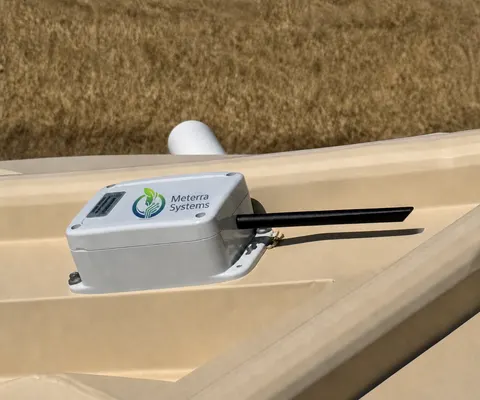
Freeboard, dewatering, and discharge: watched between site visits.
A mine or quarry runs a lot of water it has to account for — sediment and settling ponds tied to a discharge permit, dewatering sumps that can't be allowed to back up, and process and storage ponds that need their freeboard. Meterra puts a wireless level sensor on each and reports level, trend, and alarms to one dashboard, so water management is documented and watched between visits to a remote pit.
A lot of water to account for, spread across a big site
Mines and quarries are water-management operations as much as anything else. Sediment and settling ponds carry a discharge permit. Dewatering keeps a pit workable and can’t be allowed to back up. Process and storage ponds need their freeboard. All of it is spread across a large site and a haul road, and most of it gets checked when someone happens to drive past.
A level sensor on each pond and sump makes that water a continuous, documented number instead of an occasional glance — level, trend, and an alarm when something approaches a threshold you set.
What Meterra watches
- Sediment and settling ponds — level and trend tied to discharge, with exportable history for records.
- Dewatering sumps and pit water — a high-level alarm before water backs up where it shouldn’t.
- Process and storage ponds — freeboard awareness with low- and high-level alerts.
Everything reports to one dashboard with CSV export and multi-user access across the operation.
Built for a remote pit
No power, no Wi-Fi, no hub. Sensors run on battery or solar, install in minutes, and report over Verizon’s NB-IoT low-power cellular network, with LEO satellite for sites with no coverage — confirmed first.
A note on what this is and isn’t
Meterra supports water-management monitoring and recordkeeping. It is supplemental awareness — it does not replace permit sampling, engineering controls, or, for a regulated tailings storage facility, the engineered dam-safety instrumentation and professional oversight that role requires. Confirm your obligations with your regulator and engineer of record.
Getting started
Start with the pond or sump that carries the most risk or the most paperwork. Tell us the site and coverage, and we’ll set the sensor and the alarm thresholds with you.
The hardware for this job
Every device reports to the same Meterra dashboard and app.
Tell us about your operation and we'll map the right sensors and coverage.
Frequently asked questions
What water can Meterra monitor at a mine or quarry?
The water-management ponds and sumps a site has to keep track of — sediment and settling ponds tied to a discharge permit, dewatering sumps and pit water, and process or storage ponds that need freeboard. A level sensor on each reports level and trend continuously, alarms on a high or low threshold, and exports history for records — so you're not driving the haul road to read every pond.
Can it help with discharge and freeboard records?
It gives you the continuous, timestamped level data those records are built on, and alerts when a pond approaches a level you set. That supports your environmental monitoring and recordkeeping — but it doesn't replace your permit's required sampling, your engineering controls, or the authority's requirements. Confirm those with your regulator.
Can it monitor a tailings storage facility?
For a regulated tailings storage facility, dam safety is an engineered program with instrumentation and professional oversight, and Meterra is not a substitute for that. Where it fits is supplemental pond-level and freeboard awareness on water-management and sediment ponds, as an extra, independent set of eyes — not the primary geotechnical safety system. We'll be clear about that fit for your site.
Will it work at a remote pit with no power or cell service?
Usually. Sensors are battery or solar powered and report over Verizon's NB-IoT low-power cellular network, with LEO satellite where there's no coverage. No mains power, no field network, no hub — coverage confirmed for the specific location first.
What does it cost?
In our US rollout, sensors start at $299 for the Tank Level Sensor and $499 for the Dam Level Monitor, each including three months of connectivity and full app access; connectivity is then from $10/month per device, with discounts on annual subscriptions. Tell us your ponds and sumps and we'll size it. Every sensor is backed by a 60-day money-back guarantee and a one-year warranty.
Related Meterra pages
- Pond & Dam Monitoring: open-water level sensing for ponds and sumps.
- Water Level Monitoring: how remote level sensing works.
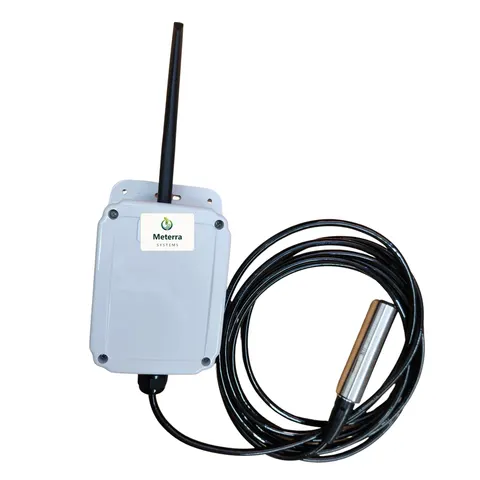
- Dam Level Monitor: the submerged pressure sensor for ponds and sumps.
- Flood & Low-Water-Crossing Monitoring: rising-water alerts for site drainage and channels.
- Stormwater Compliance: rainfall and basin monitoring for discharge documentation.