
Remote Monitoring for Farms
A farm doesn't just run on water — it runs on diesel, fertilizer, and the supply ponds and tanks feeding the field. Meterra puts a wireless, non-contact sensor on any of them, reports the level to your phone, and alarms you before you run out or run over — so a tank never costs you a planting window or a spray day.
Monitoring for a working farm
A farm is a collection of tanks and water that all matter on different days. There’s the supply or nurse tank that has to be full before a crew rolls, the irrigation pond you’re drawing down through the season, the diesel that can’t run dry mid-field, and the liquid fertilizer you don’t want to guess at. Checking each one is a walk or a drive, and the cost of getting it wrong lands at the worst possible time — a dry tank during planting, a leak found a week late, a spray day lost to an empty nurse tank.
Water is also the farm’s biggest resource line. Agriculture accounts for roughly 80% of the nation’s consumptive water use, and irrigation is the single largest draw, according to USDA’s Economic Research Service — and every gallon costs fuel or power to move. A leak, an overflow, or a pond drawn down faster than you planned is money leaving the place quietly.
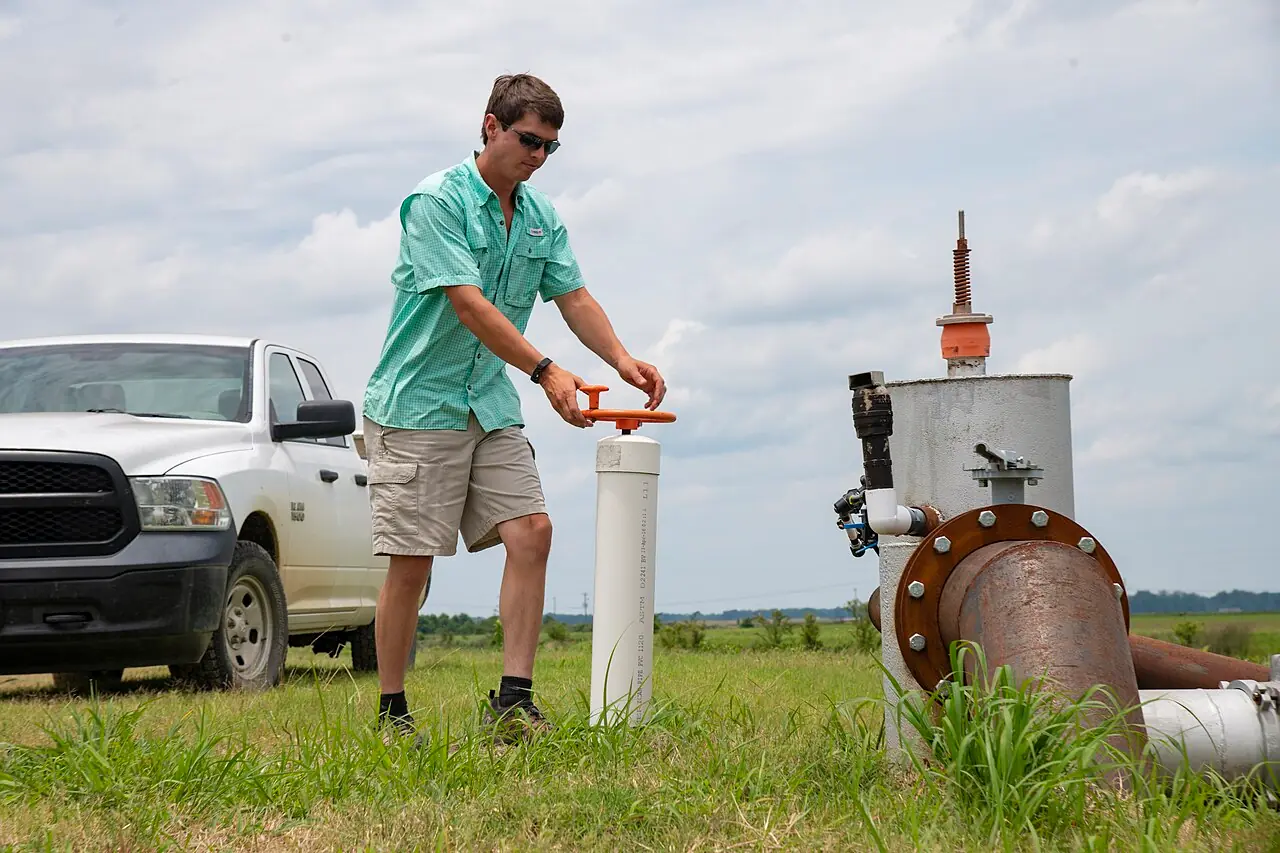
Meterra puts a wireless sensor on any of those and sends the level — plus an alarm — to your phone. You manage the whole yard and the far field by exception, on one screen, instead of eyeballing tanks on a schedule.
One sensor for water, diesel, and fertilizer
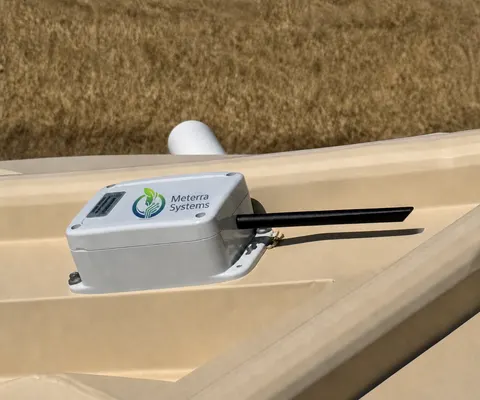
The advantage on a farm is that Meterra’s sensing is non-contact. The unit mounts above the tank and measures the distance to the surface with ultrasonic sensing, so it never touches the liquid. That’s what lets the same hardware read water, diesel, and liquid fertilizer — and it’s why there’s nothing to corrode in fertilizer, clog in dirty water, or gum up in fuel. One product, one app, every tank in the yard.
Where farms put it to work
- Supply and nurse tanks — know a tank is full before the crew needs it; get an alarm if it drains or won’t fill. See water tank monitoring.
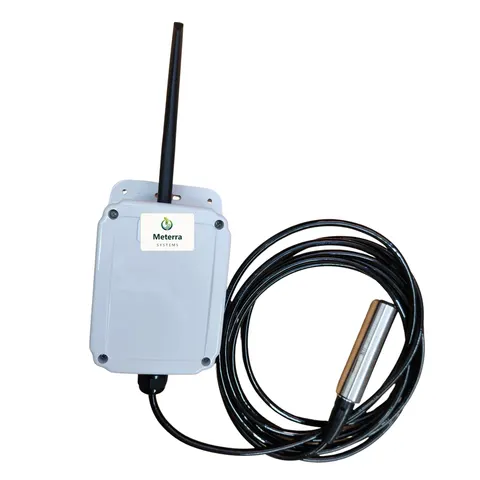
- Irrigation ponds and reservoirs — submerged pressure level and trend on open water, reading under ice, so you can plan pumping and spot a fast drawdown.
- Diesel and liquid fertilizer tanks — track yard inventory and reorder on data, not a dipstick, and catch a slow loss early.
- Livestock water. If you run stock too, the same system covers their tanks and troughs. See livestock water sensors.
Earns its keep at the busy times
Monitoring pays off most in the weeks the farm is flat out. At planting and harvest, an unplanned run to check a tank is time you don’t have, and a dry diesel or nurse tank can stop a crew cold. Live readings let you refill on your own schedule and keep what the field needs staged and ready; alarms catch a leak, a stuck float, or a quit pump before it costs you a day. The rest of the year it’s the quiet leak and the slow drain it flags early — water, fuel, and chemical that would otherwise just disappear.
Built for the field
There’s no power or internet to run to a reservoir or a back-forty tank, so Meterra doesn’t need any. The sensors report over Verizon NB-IoT cellular, run 2+ years on a battery (solar where you want indefinite runtime), and install in about 15 minutes with no electrician. Everything lands in one app — live level, percentage and volume, the trend over days or weeks, CSV export for records, and the alarms that actually change what you do that morning.
Funding help
Many states and federal programs cost-share on-farm water efficiency. In Utah, for example, the state’s water-funding portal (including the Agricultural Water Optimization Program) supports on-farm projects, and USDA NRCS EQIP / WaterSMART provides cost-share for irrigation and water management. Meterra’s per-point pricing makes a monitoring line easy to include — confirm eligibility with each program. See our Grants & Funding page for the full list.
Getting started
Start with the tank that would hurt most to run dry or overflow — the nurse tank, the fuel, the reservoir you’re drawing down. Tell us what you’d put a sensor on and the coverage where it sits, and we’ll map the right setup and, if you’d like, start you on a pilot.
The hardware for this job
Every device reports to the same Meterra dashboard and app.
Tell us about your operation and we'll map the right sensors and coverage.
Frequently asked questions
What can I monitor on a farm?
Any tank or body of water you care about the level of — supply and nurse tanks, irrigation ponds and reservoirs, livestock water, and the diesel and liquid fertilizer tanks in the yard. One sensor per point, each reporting level, percentage, and volume to the same app, with an alarm when it crosses a threshold you set.
Can the same sensor monitor diesel and fertilizer, not just water?
Yes. Because the sensing is non-contact ultrasonic — the unit reads the surface from above and never touches the liquid — it works on water, diesel, and liquid fertilizer with the same hardware. That means one product and one app for the whole yard, instead of a different gauge on every tank.
Do I need power or internet out in the field?
No. Meterra sensors are battery or solar powered and report over Verizon NB-IoT cellular, so they need no mains power, no Wi-Fi, and no hub. That's what lets them sit on a reservoir or a remote supply tank at the far end of the place and still reach your phone.
How does monitoring help at planting and harvest?
Those are the weeks you can least afford an unplanned trip or a dry tank. A live reading and a low-level alarm mean you refill diesel and nurse tanks on your schedule, keep spray water ready, and catch a leak or a stuck valve before it stops a crew — without sending someone to eyeball every tank.
Will it work for irrigation ponds and reservoirs?
Yes. Non-contact level works on open water just as it does on a tank, with nothing submerged to foul or clog. Track a pond or reservoir's level and trend over time so you can plan pumping and see a problem — a leak, a stuck inlet, a fast drawdown — early.
What does farm monitoring cost?
In our US rollout, sensors start at $299 for the Tank Level Sensor, $399 for the Trough Level Monitor, and $499 for the Dam Level Monitor, each including three months of connectivity and full app access; connectivity is then from $10/month per device, with discounts on annual subscriptions. Costs scale with how many tanks and ponds you add — tell us what you'd put a sensor on, starting with a pilot if you'd like.
Related Meterra pages
- Water Tank Monitoring: how remote level monitoring works on supply and storage tanks.
- Water Level Monitoring: the umbrella on remote level sensing across all your water.
- Tank Level Sensor: wireless ultrasonic monitoring for any tank.
- Dam Level Monitor: submerged pressure level for ponds and reservoirs.
- Ranches: cattle operations with scattered water.
- Delta-T and Spray Windows, Explained: when conditions are right to spray, read from a local weather station.
- Soil Moisture for Irrigation Decisions: using probe readings to decide when and how much to water.