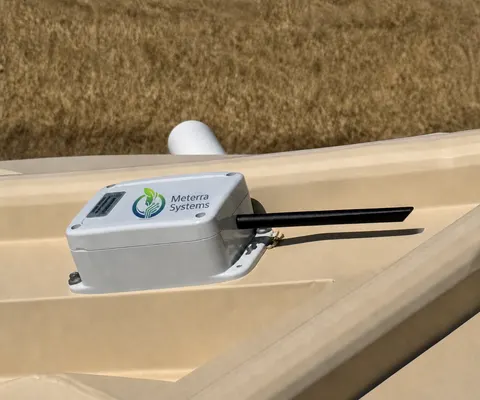
Soil Moisture for Irrigation Decisions
Irrigation timing mostly gets decided by eye and by calendar — the surface looks dry, or it's been a week, so the water goes on. Both cues lie. Ground that looks parched can hold a full profile a foot down, and a calendar doesn't know what last night's shower did. Buried probes read what the root zone actually holds, hour by hour and depth by depth, which turns "is it time?" into a number you can watch coming. Here's how to read that data and put it to work.
The two lies irrigation runs on
Most irrigation timing rests on one of two signals, and both mislead. The surface dries in hours and says nothing about the foot of soil below it — ground can look bone dry over a full profile, and look fine over a dry one after a shower that never soaked in. The calendar assumes every week draws the profile down the same amount, which heat waves, cool spells, and rain all quietly break.
Miss high and you’re watering ground that didn’t need it — pumping cost, leached nutrients, and disease pressure. Miss low and the crop spends days in stress before it shows. The profile knew either way; nobody was reading it.
The numbers that frame the decision
Soil water lives between two limits. Field capacity is the most water the soil can hold against gravity — fill past it and the surplus drains below the roots, gone. Wilting point is the level below which roots can no longer pull water out. The usable water sits between the two, and irrigation management is the art of keeping the root zone inside that band.
The working number is the refill point — the level at which you put water on, set safely above wilting point. Textbook values exist for different soils, but the practical method is simpler: watch the probe trace against the crop, note where stress starts to show, and set the refill point a margin above it. From then on the decision is mechanical — the trace drifts down, crosses the line, the water goes on.
Why depth and trend beat a snapshot
A single shallow reading answers today’s question badly. Probes at two depths, logged hourly, answer the questions that matter:
- When to start: the root-zone probe drying toward the refill point — visible days out, so irrigation gets scheduled instead of triggered.
- When to stop: the deep probe starting to climb, which means water is moving past the roots — anything more is drainage, not irrigation.
- What the rain was worth: a shower that wets the shallow probe but never reaches the deep one bought you a day, not a week. The trace tells you which.
- How the season is running: week-over-week draw-down rates show demand rising and falling — the same profile that dropped two points a week in May drops five in July.
Soil temperature rides along for planting and turnout timing, and the EC reading watches for salt building up on irrigated ground — a slow riser worth catching early.
Rounding out the water balance
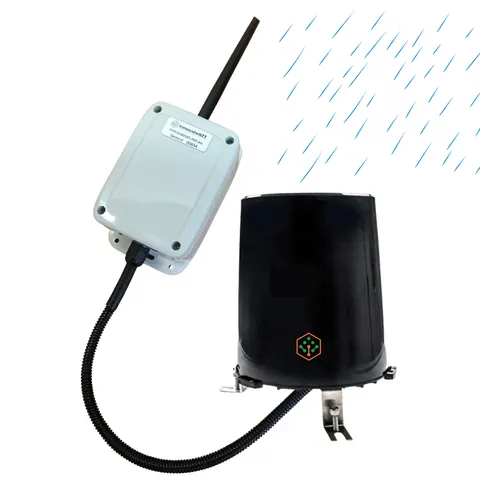
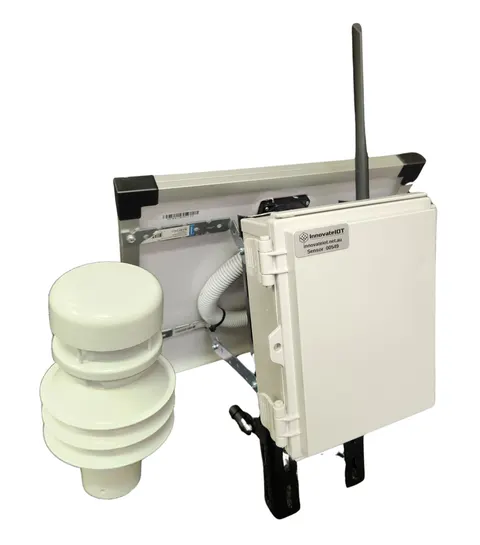
Probes read the ground’s side of the story. A rain gauge on the same site reads what fell, and a weather station reads what the atmosphere is demanding — heat, wind, and dry air pulling moisture out. On one dashboard the three add up to a complete water balance: what arrived, what the soil is holding, what the week ahead will take out. That’s the picture irrigation calls get made on — and it beats the look of the surface every time.
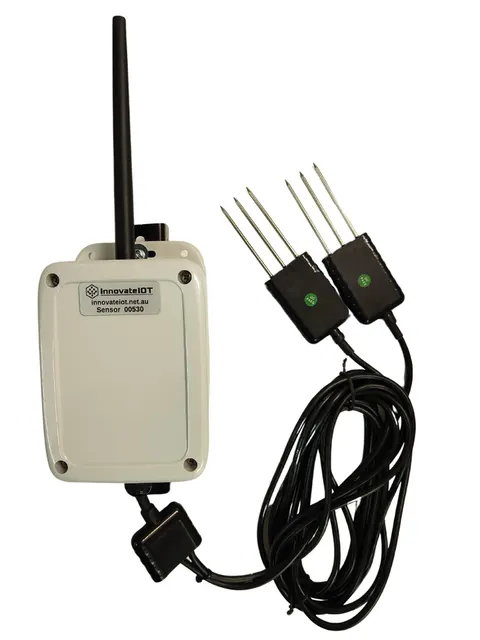
The hardware this guide covers
Every device reports to the same Meterra dashboard and app.
Tell us what you need to keep an eye on and we'll map the right sensors and coverage.
Frequently asked questions
How do soil moisture sensors improve irrigation timing?
They replace the two unreliable cues — surface appearance and the calendar — with the actual number. You see the profile dry down toward your refill point and irrigate when the root zone needs it, not before. That avoids both errors at once — watering ground that's still wet at depth, and trusting a shower that never soaked past the top few inches.
What depths should soil probes be buried at?
In the root zone and below it. A common two-probe layout puts one in the heart of the active root zone and one beneath it — the shallow probe drives the "when to irrigate" call, and the deep probe tells you when water is moving past the roots, which means you've applied more than the profile can hold.
What is a refill point?
The moisture level at which you choose to irrigate — comfortably above wilting point, below field capacity. In practice most growers set it empirically off the probe trace itself, watching where the crop starts to show stress against what the probe read, then irrigating a margin ahead of that number the rest of the season.
What does the EC reading add?
Soil electrical conductivity tracks with salinity and nutrient conditions in the root zone. On irrigated ground it's an early flag for salt accumulating — a slow rise in EC across a season is a signal to review water quality and leaching — and it helps explain patchy performance that moisture alone doesn't.
Related Meterra pages
- Soil Moisture Probes: dual-depth moisture, temperature, and EC probes.
- Rain Gauge: what fell, the other half of the water balance.
- Weather Station: the demand side (temperature, wind, and humidity).
- Vineyard & Orchard Monitoring: where multi-depth soil data earns its keep.
- Remote Weather Monitoring: rainfall and conditions from the same station network.