
Water Tank Monitoring
Water tank monitoring uses a wireless sensor to track how much is in a tank (storage, cistern, rainwater, or off-grid supply) and send the level, plus a low-water alarm, to your phone. It tells you a tank is running low while you can still do something about it, instead of finding out when the taps run dry.
Tank Level Sensor, $299, with three months of connectivity included, then plans from $10/month per device. 60-day money-back guarantee and a one-year warranty on every sensor. In stock in the US. Orders ship within 1–2 business days. 4+ years in the field, 2,000+ devices in service.
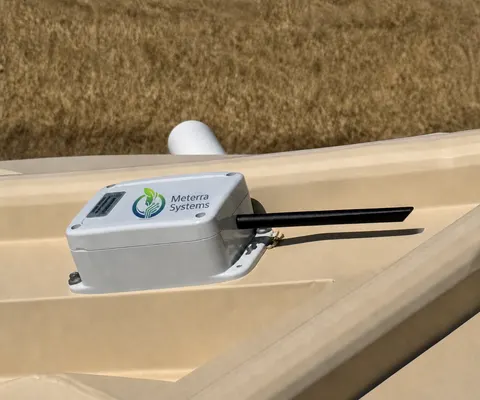
What is water tank monitoring?
Water tank monitoring is the remote measurement of how full a tank is, with the level reported to a phone or computer instead of read by hand. A sensor on the tank records the level on a schedule and sends an alert when it drops too low, so a storage tank, cistern, rainwater system, or off-grid supply tells you its status instead of needing a climb and a look.
The need is the same whether the tank waters a house, a herd, or a crop: running dry is disruptive and sometimes damaging: a pump run dry, a system without water, a delivery you didn’t schedule in time. A monitor replaces the guesswork with a number and a trend.

Why monitor a water tank
- Avoid running dry. A low-water alarm gives you time to refill, switch sources, or schedule a delivery before the tank is empty and the pump is pulling air.
- See usage, not just the moment. The trend over days shows how fast a tank draws down, which turns water planning, especially on rainwater or hauled supply, into a number you can rely on.
- Cut the checks. Stop climbing to look or driving out to read a gauge. Check every tank from your phone.
- Catch leaks. Volume dropping faster than normal use explains it flags a leak or a stuck valve early.
The market runs from simple consumer monitors (float-and-reed-switch units and hydrostatic-pressure sensors on a cable popular for cisterns and wells) up to cellular systems that report from anywhere. The trade-off is usually range and what sits in the tank.
How it works, and why non-contact matters
Most affordable tank monitors put something in the water: a pressure probe on a weighted cable, or a float on a reed switch. They work, but submerged hardware corrodes, fouls, and has to be pulled for service, and on a potable or rainwater tank, many owners would rather nothing sat in the supply at all.
Meterra reads the surface with non-contact ultrasonic sensing from above. Nothing is submerged, nothing touches the water, and there is nothing to clean or replace inside the tank. The reading travels over Verizon NB-IoT cellular, no Wi-Fi, no hub, no power at the tank, and lands in the Meterra app with live level, volume, the trend, and the low-water alarm you set.
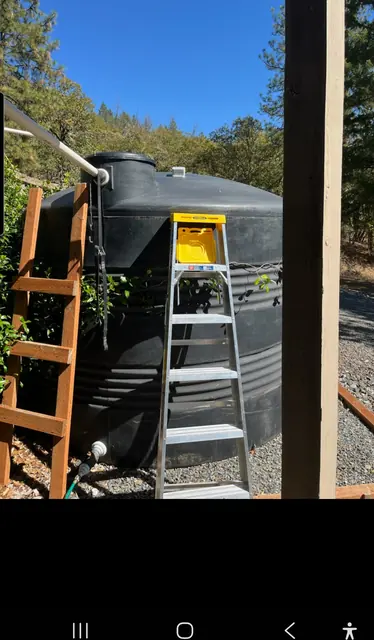
Choosing a water tank monitor
- In-tank vs. non-contact. A surface sensor avoids the corrosion and fouling of submerged probes and floats, and keeps potable supplies clear.
- Range and connectivity. Short-range RF units need a receiver within reach of the tank; cellular works anywhere there is coverage. Match the technology to where the tank actually is.
- Power. Multi-year battery or solar, with no wiring to run.
- Volume, not just level. Look for percentage and gallons calculated for your tank, plus history, not just a low-level light.
- Multiple tanks. One account should hold every tank on the place.
Why Meterra
For water storage of any kind, keeping the sensor out of the tank is the practical difference: non-contact ultrasonic means nothing to corrode, foul, clean, or contaminate, and nothing to wire. It mounts on top, reports level, volume, trend, and low-water alarms over cellular on its own power for years, and puts every tank on one screen. It’s the same proven sensor used across farm and ranch water, set up for the tank you store in.
The hardware for this job
Every device reports to the same Meterra dashboard and app.
Tell us your site and we'll map the right sensors and coverage.
Frequently asked questions
How does remote water tank monitoring work?
A sensor mounts on top of the tank and measures the distance to the water surface, then sends the level to your phone over the cellular network. You set a low-water threshold and get an alert the moment the tank drops below it, with no trip out to read a gauge.
Does the sensor go inside the tank or touch the water?
No. Meterra uses non-contact ultrasonic sensing from above the surface. There is no submerged pressure probe, float, or cable to corrode, foul, or pull for cleaning, which is the usual weak point of in-tank sensors, especially on potable and rainwater systems.
Will it work on a cistern, rainwater tank, or off-grid supply?
Yes. The same sensor works on poly and steel storage tanks, cisterns, rainwater collection, and spring- or well-fed off-grid supply. Only the mounting changes.
Does it need power or internet at the tank?
No. It is battery or solar powered and reports over Verizon NB-IoT cellular, so it needs no mains power and no Wi-Fi, only cell coverage at the tank. Coverage can be confirmed before you buy.
How accurate is the reading, and can it show gallons?
Ultrasonic sensing measures the surface distance and converts it to level, percentage full, and volume for your tank's dimensions. It reads roughly 10 inches to 23 feet of range, which covers most household and farm tanks.
Can I monitor more than one tank?
Yes. Every tank reports into the same app and dashboard, so a property with several tanks, or several properties, shows on one screen.
Is it safe for drinking water?
Because nothing contacts the water, a non-contact ultrasonic sensor avoids introducing anything into a potable or rainwater tank, unlike a submerged probe sitting in the supply.
How much does water tank monitoring cost?
Consumer wireless tank sensors start low but often trade off range or rely on a base station and floats; cellular systems cost more but work anywhere with coverage. Meterra's Tank Level Sensor is $299 in our US rollout, including three months of connectivity and full app access, with connectivity then from $10/month per device and discounts on annual subscriptions. Send your details or call and we'll size the setup.
Related Meterra solutions
- Tank Level Sensor: the non-contact sensor behind this application.
- Stock Tank Monitoring: the same approach for livestock stock tanks.
- Water Level Monitoring: the broader category of tanks, dams, ponds, and more.