
Livestock Water Sensors & Monitoring
Livestock water monitoring uses a wireless sensor on each tank, trough, or dam to track the water level and send it, plus a low-water alarm, straight to your phone. It replaces the daily drive to check water, and it warns you about an empty tank, a stuck float, or a leak while there is still time to fix it. Sensors start at $299 with the price posted, and every one of them connects into a larger system when you're ready.
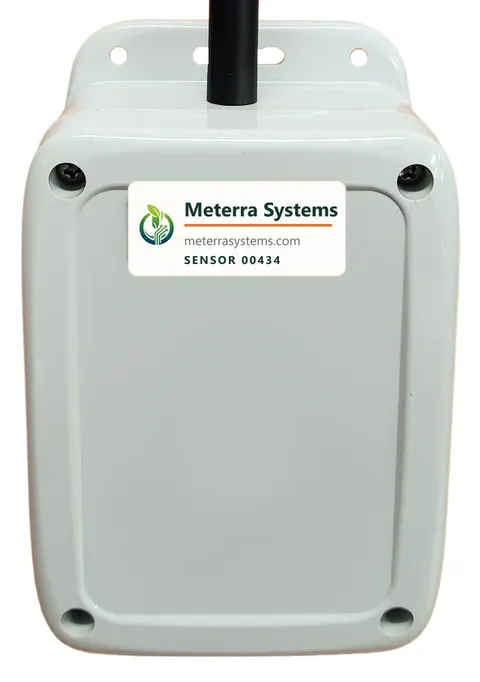
What is a livestock water sensor?
Livestock water monitoring is the practice of measuring the water level at every watering point on a property (stock tanks, troughs, dams, and ponds) and sending that reading to a phone or computer in real time. A livestock water sensor at each point reports the level on a schedule and triggers an alert when the water drops below a level you set, so you manage water by exception instead of by windshield time.
On most operations it answers the same question a rancher otherwise drives miles to check: is there water in the tank, and is it still going where it should? Where a dipstick or a daily loop gives you one data point a day, a monitor gives you the trend and tells you the moment something changes.
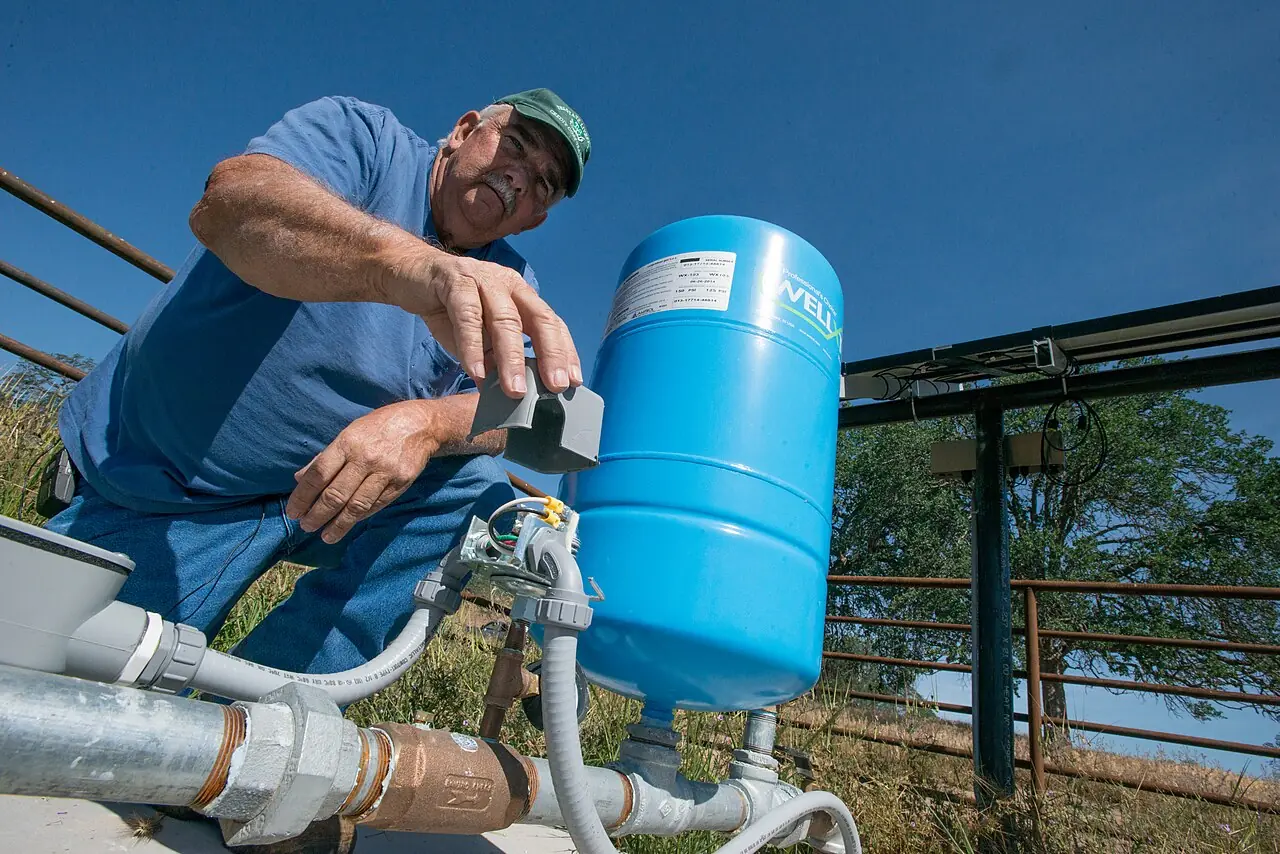
The price, posted
Meterra puts its numbers on the table first. The Tank Level Sensor is $299, the Trough Level Monitor is $399, and the Dam Level Monitor starts at $499. Each includes three months of connectivity, then plans run from $10/month per device, and every sensor carries a 60-day money-back guarantee and a one-year warranty. Sensors ship from US stock, tank sensors within 1 to 2 business days.
Most systems in this category are priced by quote. Ours is priced in public, because a vendor who’s proud of the total posts it. Get the other company’s whole bill in writing, hardware plus the monthly service for every watering point, and run both columns. If theirs genuinely comes back better for your sites, buy theirs. We post ours because we like how that math ends.
Why monitoring livestock water pays off
The cost of checking water is mostly fuel, labor, and risk. University extension estimates put the fuel alone for driving to check remote water sources at well over $1,500 a year on larger operations, before you count the hours or the truck wear. Monitoring turns that daily loop into a glance at your phone.
- Labor and fuel. Stop driving to tanks that are fine. Drive out only when a reading or an alarm tells you to.
- Animal welfare and weight. Cattle off water lose condition fast in heat. An empty-tank alarm protects gains and prevents losses long before a visual check would.
- Catching failures early. A broken float valve, a cracked line, or a pump that quit can drain or overflow a tank in hours. An alarm reaches you while it is still a small problem.
- Water and pump costs. A leak that runs for a week is water, power, and a dry well. Volume-over-time data flags it early.
What goes wrong between water checks
Monitoring earns its keep on the days something fails. The common failure modes on a livestock water system are predictable, and each one is a case for an alarm:
- Stuck or failed float valves: the tank stops filling, or never stops, and you find out on your next round.
- Leaks and broken lines: slow leaks drain a tank quietly; a burst line empties it fast and can dry the well behind it.
- Pump and power failures: a solar pump that didn’t restart, or a bore that lost prime, leaves troughs dropping with no obvious cause.
- Freeze events: frozen lines and iced troughs in winter, when water problems are hardest to spot and most dangerous to stock.
- Data gaps: float gauges and manual checks give you one reading at one moment; the trend in between is where the warning signs live.
How remote water monitoring works
A complete livestock water monitoring system has four parts. Understanding them is most of what you need to compare options.
The livestock water sensor
Meterra builds its livestock water sensors around two sensing technologies, matched to the watering point. On tanks, a non-contact ultrasonic sensor mounts above the water and measures the distance to the surface, so nothing is submerged to corrode or foul. Because it never touches the liquid, the same unit reads diesel and liquid fertilizer too (dry feed in a bin takes the Silo Level Sensor). On troughs, dams, and ponds, a sealed submerged pressure sensor sits in the water and reads the depth above it, which keeps working beneath the ice in winter, when those sources are most likely to freeze and most critical to watch.
Connectivity
Readings travel over Verizon NB-IoT cellular, a low-power network built for exactly this kind of device. There is no Wi-Fi to reach the tank and no hub to power. Cellular keeps costs down and works wherever there is rural coverage, and Meterra adds satellite wherever a site has no signal at all. Check coverage at your specific watering points before you buy; we can do that with you.
Alerts and reporting
Each sensor reports on a schedule and sends an alarm the moment a level crosses a threshold you set. Everything lands in the Meterra app and web dashboard: live level, percentage and volume, the trend over days or weeks, and CSV export for records. Every tank, trough, and dam shows on one screen, including across multiple properties.
Where ranchers use it
The same hardware covers every watering point. Most operations start with their most remote or most troublesome water and add from there:
- Stock tank and supply tank monitoring: the workhorse application; one sensor per tank, level and alarms to your phone.
- Livestock trough monitoring: catches stuck floats and dry lines before stock go without water.
- Dam water level monitoring: a submerged pressure sensor that reads depth on open water and keeps reading under ice.
- Wells and pump-fed systems: a well monitoring system watches the level in the casing; pair it with a pump controller to automate filling and stop a well from being run dry.
One sensor is the start, not the ceiling
This is where Meterra separates from monitor-only systems. Every Meterra device works on its own; buy one sensor, put it on the worst tank, and it just works. But each sensor is also a door into a fourteen-product ecosystem: tank, trough, dam, and silo levels, flow, rain, weather, soil probes and a handheld soil analyzer, fence, and power monitoring, plus cameras and pump and valve controllers, all reporting to the same app, and all of it interconnects.
Connect them and the system stops just watching and starts working. A tank sensor can run a pump controller off the level you set, so the tank refills itself and the pump never runs a well dry. A rain gauge can hold irrigation valves shut after a storm. The water monitoring you buy today becomes the nervous system of the whole operation, one device at a time, with nothing thrown away along the way. That is headroom a ranch-water-only lineup cannot offer; see water system automation for how far it goes.
How to choose a livestock water monitoring system
The systems on the market differ in ways that matter once they are in the field. These are the criteria worth weighing:
- Sensing method. Non-contact ultrasonic keeps nothing in the water on a tank; a sealed submerged pressure sensor reads depth on troughs, dams, and ponds, including beneath the ice. Match it to the vessel and the freeze risk.
- Connectivity and coverage. Confirm cellular signal at your actual watering points; choose satellite only where there is none. Insist on the monthly or yearly connectivity plan in writing, not just the hardware price. Ours is posted, from $10/month per device.
- Battery and power. Look for multi-year battery life and a solar option, so there is no wiring and no annual battery chase.
- Durability and mounting. A tank sensor mounts above the water, out of reach of stock that rub and scratch anything they can; a trough, dam, or pond sensor is a sealed unit that sits in the water on its cable. Either way it has to survive heat, dust, and freeze.
- Installation. A 15-minute, no-electrician install means you can deploy across a property yourself in a day.
- Multi-site management. If you run more than one place, every sensor should report into one account and one screen.
- Room to grow. A monitor that only ever monitors is a dead end. Look for a system where the same platform can add flow, rain, weather, and pump or valve control later, so the first sensor is a foundation, not a throwaway.
Weighing Meterra against another brand? Our honest Meterra vs. RanchBot comparison lays out connectivity, pricing, sensing depth, and where each system fits.
Monitoring water through winter
Winter is when water monitoring matters most and when most systems are weakest. On a tank, Meterra’s non-contact ultrasonic sensor sits above the water with nothing submerged to crack. Once a tank ices over it reads the ice, not the water below, so a tank pairs with a heater that keeps the water liquid. On troughs, dams, and ponds, Meterra uses a sealed submerged sensor that reads beneath the ice, exactly the tool open water that freezes over needs. Where it earns its keep all winter is the failures that don’t depend on ice. Pair it with a low-level alarm and you learn about a quit pump, a leak, or a line that stopped filling from the house, on the coldest morning of the year, instead of on your next round.
Why Meterra
Meterra builds the kind of monitoring that holds up in the field, not just the catalog. Two sensing technologies cover every watering point, non-contact ultrasonic on tanks and a sealed submerged sensor on troughs, dams, and ponds that reads beneath the ice, all on one app and one platform, so you learn one system. Everything reports the level, the trend, and the alarms that actually change what you do that morning. This is not a startup’s first sensor: Meterra has spent four-plus years in the field with 2,000+ devices in service, built for the way rural operations run. No wiring, no Wi-Fi, no electrician, and coverage out where the water actually is. The prices are posted, the guarantee is 60 days money-back with a one-year warranty, and every sensor you buy today plugs into the pump and valve control you may want tomorrow.
Put your watering points into the savings calculator and see what the checking drives cost you each year, or pick the sensor for your first tank and have it reporting within the week.
The hardware for this job
Every device reports to the same Meterra dashboard and app.
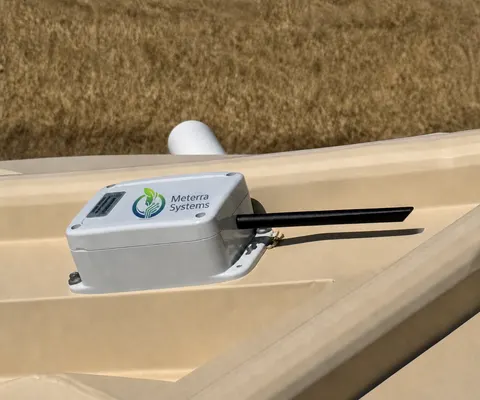
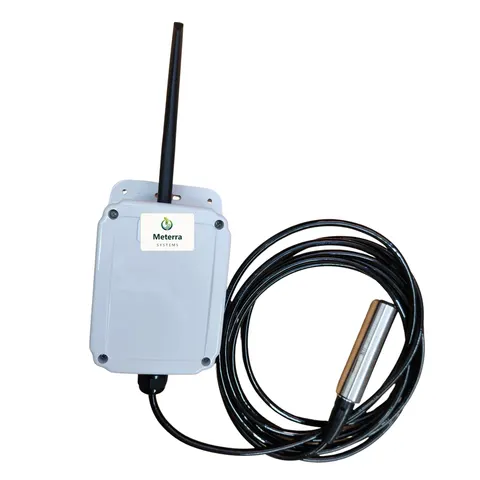
Tell us your site and we'll map the right sensors and coverage.
Frequently asked questions
Which livestock water sensor do I need for each watering point?
It comes down to whether the sensor should sit above the water or in it. A stock tank or supply tank takes the $299 Tank Level Sensor, a non-contact ultrasonic unit that mounts above the surface, so nothing is submerged for cattle to wreck or for winter to foul. A trough takes the $399 Trough Level Monitor, and a dam or pond takes the Dam Level Monitor (from $499); both use a sealed submerged pressure sensor that reads depth from in the water and keeps reading beneath ice. Most properties end up with a mix, and all of them report into the same account and the same screen.
How do you monitor livestock water remotely?
A sensor at each tank, trough, or dam measures the level and sends it to your phone over the cellular network, using a non-contact ultrasonic sensor above a tank or a sealed pressure sensor in a trough, dam, or pond. You set a low-water threshold and get an alarm the moment the level drops below it, so you find out about an empty tank before your cattle do.
Does a livestock water monitor need power or internet at the tank?
No. Meterra sensors are battery or solar powered and report over Verizon NB-IoT cellular, so they need no mains power, no Wi-Fi, and no hub at the tank. That is what lets them work on the far side of a property where nothing else reaches.
Will the sensor survive cattle rubbing on the tank?
It should be mounted above the water and out of reach, where stock cannot rub or scratch it, which is a common reason cheaper float-based monitors fail. Meterra reads the surface from above with ultrasonic sensing, so the unit sits clear of the water and the animals.
Does the same system work on dams and troughs, not just tanks?
Yes. Meterra monitors stock tanks, livestock troughs, and dams or ponds from one app. A non-contact ultrasonic sensor covers tanks, and a sealed submerged pressure sensor covers troughs, dams, and ponds, reading the depth from in the water and continuing to read beneath ice in winter. Every watering point on one screen.
Will it work in freezing weather?
The sensor itself handles the cold. On a tank, nothing is submerged to freeze, foul, or crack the way in-water pressure probes can. Just know what it reads. Once a tank freezes over, it measures the ice surface, not the water beneath, so pair it with a tank heater to keep the water liquid. For open water that ices over, like a dam, Meterra's submerged depth sensor reads beneath the ice, which is exactly the tool that job needs.
How accurate is the water level reading?
Ultrasonic sensing measures the distance to the water surface and converts it to level, percentage full, and volume for your tank dimensions. It reads from roughly 10 inches to 23 feet of range, which covers most farm tanks, troughs, and dams.
How long does the battery last?
Meterra sensors run 2+ years on a single battery thanks to ultra-low power draw, with solar an option where you want indefinite runtime. There is no wiring to maintain.
How much does livestock water monitoring cost?
The prices are posted, not quoted. $299 for the Tank Level Sensor, $399 for the Trough Level Monitor, and from $499 for the Dam Level Monitor, each including three months of connectivity and full app access. Connectivity is then from $10/month per device, with discounts on annual subscriptions, and every sensor carries a 60-day money-back guarantee and a one-year warranty. That is the whole bill in writing, so run it against any quote you're handed. Multi-tank setups scale per sensor. Send your details or call and we'll size the whole property for you.
How is cellular monitoring different from satellite?
Cellular (NB-IoT) is lower cost and works wherever there is rural cell coverage; satellite reaches truly off-grid sites with no signal at all but usually costs more. Meterra defaults to Verizon NB-IoT cellular and adds satellite where a site needs it. The right choice depends on coverage at your specific watering points, which we can check before you buy.
How many tanks can I monitor from one account?
As many as you put sensors on. Every tank, trough, and dam reports into the same dashboard and app, so you check the whole property, or several properties, from one screen instead of driving each one.
Related Meterra solutions
- Meterra vs. Trough D Tech: a sourced, price-for-price comparison with SensorTech's trough monitor.
- Trough Level Monitor: empty-trough alarms for watering points.
- Tank Level Sensor: wireless ultrasonic monitoring for any stock or supply tank.
- Dam Level Monitor: submerged pressure level for dams and ponds.
- Stock Tank Monitoring: the cattle stock tanks specifically, including through winter.
- Water Level Monitoring: how remote level sensing works across all your water.
- How Much Water Do Cattle Drink Per Day?: the demand math behind sizing tanks and troughs.
- Finding Electric Fence Faults: how to find the break without walking the whole line.
- Meterra vs. Gallagher Water Monitoring: a side-by-side for ranchers comparing the two.