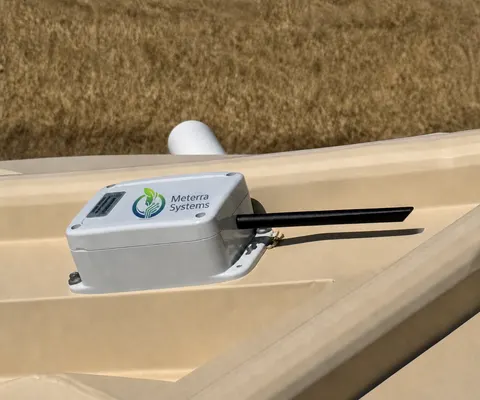
Dam level sensor. Watch the water without the drive out.
A wireless sensor that sits in your dam or pond and reports the water level to your phone, with a low-level alarm before it drops too low for stock. From $499 with three months of connectivity included. No mains power, no weekly drive to check.
Price depends on cable length. Includes 3 months of connectivity and full dashboard + mobile app access. Connectivity then from $10/month per device; discounts on annual subscriptions.
Early adopter US launch pricing, expected to rise as the rollout grows. The price you order at is the price you pay.
In stock in the US. Orders ship within 1–2 business days.
$25 flat shipping per order by USPS (free when you order 2 or more), 2–5 business days in transit within the US. Shipping & returns
60-day money-back guarantee and a one-year warranty on every sensor.
Stop guessing how much water is left
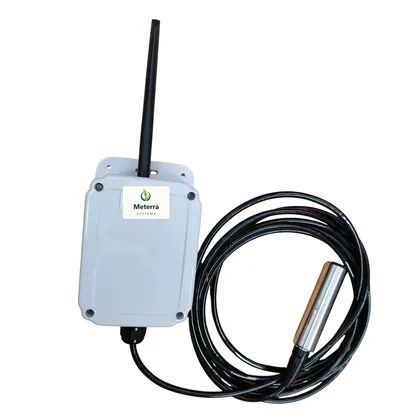
A dam can look full from the bank and be weeks from trouble. That’s what dam water level monitoring is for: the Meterra Dam Level Monitor, our dam level sensor, gives you the real number, measured by a sealed pressure sensor in the water, reported to your phone every hour, and backed by a low-level alarm that reaches you while there’s still time to move stock or start pumping. It starts at $499 with three months of connectivity included, then plans from $10/month per device. That’s the whole system, priced in writing, before you’ve talked to a single salesperson.
It’s made for open water out where there’s no power and no Wi-Fi. The sensor sits in the dam, runs for years on its own battery, and connects over the Verizon NB-IoT cellular network by itself; where a site has no cell coverage, we add satellite. And because it reads from below the surface, it keeps working when the dam is hardest to check and most important to watch: in freezing weather, an above-water sensor is looking at an ice cap, while the submerged pressure sensor keeps reading the water underneath. If your winters are hard, this is the technology built for them.
Rated to about 330 feet. Compare that spec anywhere.
Most remote water sensors are built for tanks and troughs, so their rated depth stops within a few feet of the surface. The Dam Level Monitor reads open water to about 330 feet (100 m) of water column above the sensor. From a stock dam to a deep reservoir or catchment basin, one product line covers it. When you compare systems, put rated depth in the table next to price. Ours are both posted.
Cable length is reach, not just depth
Here is the part most spec sheets never explain. The cable does two jobs: it lowers the sensor to the water, and it carries the reading back to the communication box, which has to sit on dry ground. So the length you need is the whole path, not the depth of the water.
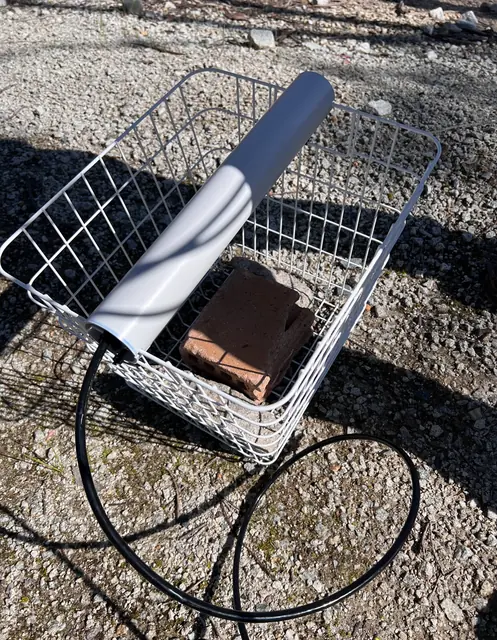
That is why a shallow pond can still need a long cable. We are putting a 165 ft cable on a pond only a few feet deep, because the right place for the sensor is out in the middle of the pond and the right place for the box is back on the shoreline. Depth had nothing to do with the order.
It also means you get to monitor the spot that actually matters instead of the spot that happens to be convenient: the deep hole, the far corner, the inlet that always silts up, the side of the dam you can’t drive to. Pick the spot, and we build the cable long enough to bring the reading back to shore. We stock 10, 50, and 165 ft, and we build any length up to about 330 ft (100 m).
The hourly readings do more than trigger alarms. They build a history, so through a dry summer you can see exactly how fast the dam is falling and decide, weeks early, whether to move stock, start hauling, or start pumping. And the reading doesn’t have to stop at your phone: the monitor is one of fourteen Meterra products that share a dashboard, so a dropping dam can trigger a pump controller and start a transfer pump on its own. That’s water system automation, and it’s the difference between a sensor and a system.
Submerged pressure is one of two sensing technologies Meterra runs, alongside the non-contact ultrasonic sensor for sites where you’d rather keep nothing in the water. Both are backed by more than four years in the field and 2,000+ devices in service. Tell us about your dam and we’ll put the right one on it.
The whole bill, in writing
From $499, depending on cable length, the Dam Level Monitor comes with three months of connectivity in the box; after that, plans start at $10/month per device. It ships from US stock and is backed by a 60-day money-back guarantee and a one-year warranty. If you’re pricing dam monitoring, get every vendor’s total in writing: hardware, monthly service, and rated depth, for every dam you’ll watch. A vendor who’s proud of the total posts it, and ours is posted. If another column genuinely comes back better for your water, buy it. We’re comfortable saying that next to our price.
Run your dams through the savings calculator to see what the drive-out routine is costing you, then order the Dam Level Monitor and get the real number on your phone.
What you get
Low-water alarms before stock run dry
Set a level that triggers an alert, so you know a dam is getting low while there's still time to move stock or start pumping.
Submerged pressure sensing, reliable in the cold
The sealed sensor sits in the water and measures the depth above it. Because it reads from below the surface, it's often the better choice where winters are hard: surface ice can interfere with an above-water sensor, but a submerged sensor keeps reading the water beneath.
Self-powered, no mains wiring
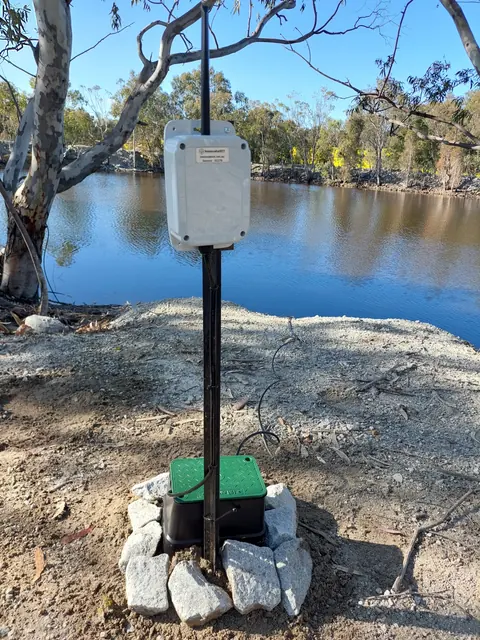
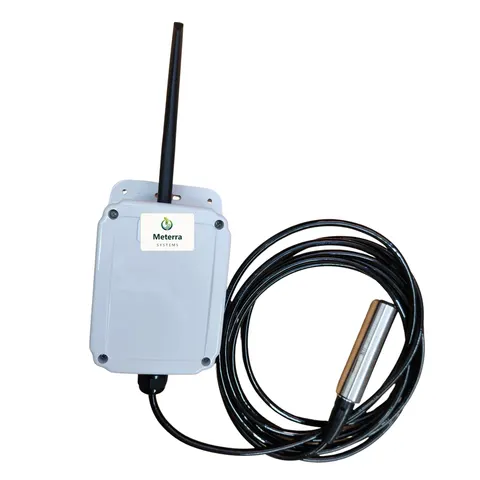
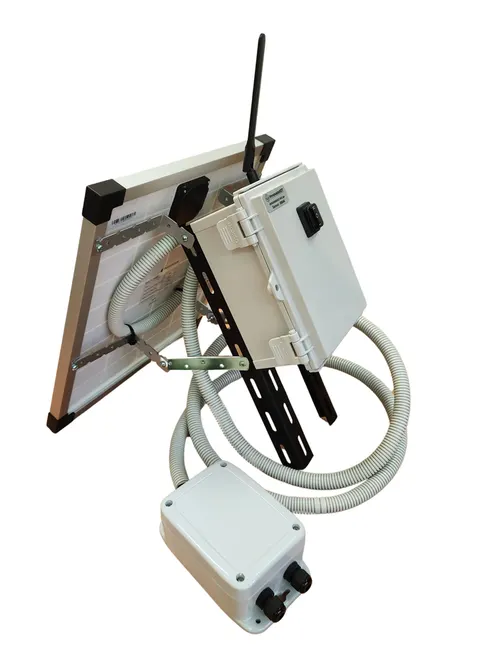
Solar or long-life battery means there's no power to run out to the dam. Just the sealed sensor on its cable in the water, and the communication box up on the bank.
See the trend, not just the number
Hourly readings build a history so you can see how fast a dam is dropping through a dry spell.
How it works
Set the sensor, mount the box
Lower the sealed pressure sensor into the water where the level matters, then run the cable back to the bank where the communication box mounts on dry ground. No post or frame to build over the water.
It connects itself
The sensor joins the cellular network on its own and starts reporting. No Wi-Fi or hub at the dam.
Check it from anywhere
Open the app for the live level, the trend, and the alarms you've set.
Watch them work together
The dam calls for its own refill.
Every Meterra device is complete on its own. But the dam sensor and a pump controller share one platform, so a falling level can start a transfer from another storage — set the rule once, and it refills without anyone driving out. Here’s the loop, sped up:
Sped-up example — you set the start and stop levels in the Meterra app. Every rule stays a manual button in the app too, and a separate high-level alarm can back the stop rule up.
The products in this simulation
Every device reports to the same Meterra dashboard and app.
Send us your site details and we'll send back pricing and the right setup.
Specifications
| Sensing technology | Submerged pressure (hydrostatic) sensor |
|---|---|
| Measurement range | Up to 330 ft (100 m) of water column above the sensor |
| Cable length | Stocked in 10, 50 & 165 ft (3 / 15 / 50 m); any length built to order up to ~330 ft (100 m). Sized for the run from sensor to shore, not just the water depth |
| Battery life | 2+ years, ultra-low power |
| Alarms | Low level, configurable thresholds |
| Mounting | Submerged. Sits below the water surface, no post or frame |
| Reporting | Hourly data to the Meterra app, plus instant alarms |
| Warranty | 60-day money-back guarantee, one-year warranty |
| Connectivity | Verizon NB-IoT cellular (coverage confirmed for your location) |
| Compliance | FCC compliant |
| Price | Starting at $499 (price depends on cable length) |
| Connectivity plan | 3 months included, then from $10/month per device (discounts on annual subscriptions) |
Price includes the sensor and 3 months of connectivity. US connectivity plans from $10/month per device after the bundled period; discounts on annual subscriptions. Prices exclude any required taxes.
Guides & documentation
- Installation guide Dam & Well Level Sensor installation guide
Placing the sensor in a dam or down a well, running the cable, mounting the communications unit on a post, entering the depth in the app, and setting alarms.
- Installation guide Submersible Tank Level Sensor installation guide
The pressure sensor for tanks: the hole to make, waking the unit, mounting the communications box on top, and the cable lengths available.
All guides and sheets: Support.
The winter test
When the surface freezes over, we keep reading.
An ultrasonic sensor reads the first surface it hits, and in a hard freeze that’s the top of the ice. Meterra’s submerged pressure sensors read the water itself, so troughs, ponds, and dams keep reporting straight through winter, and a high-level alarm can still fire before an iced-over pond overflows.
One honest note: extreme cold shortens battery life on any electronics. We’ll help you plan for your climate.
Questions
Does the sensor go in the water?
Yes. This is a submerged pressure sensor: it sits in the dam and measures the depth of water above it. That's deliberate. A below-surface sensor keeps reading in freezing weather, when surface ice can interfere with an above-water ultrasonic unit. If you'd rather nothing sat in the water, our non-contact Tank Level Sensor is the ultrasonic option.
Which should I use, the pressure sensor or the ultrasonic one?
They're two sensing technologies that do the same job, so you choose by your conditions. Ultrasonic mounts above the water and never touches it; the pressure sensor sits in the water and is often the better fit where surfaces freeze. Tell us about your site and we'll help you pick.
Will it reach a dam with no power or Wi-Fi nearby?
Yes, that's exactly what it's built for. It's self-powered and reports over the cellular network on its own, so it works out at the dam with nothing else around.
How deep a dam can it measure?
Up to about 330 feet (100 m) of water column above the sensor, which is deeper than nearly any farm dam or pond will ever ask of it. Send the depth and we'll confirm the fit before anything ships.
What cable length should I order?
Measure the whole path, not just the depth. The cable has to reach from wherever the sensor sits in the water back to dry ground where the communication box mounts, so a shallow pond can still need a long cable. We are putting a 165 ft cable on a pond only a few feet deep, because the sensor belongs out in the middle and the box belongs back on the shoreline. We stock 10, 50, and 165 ft and build any length up to about 330 ft (100 m). Tell us where the sensor needs to sit and where the box can mount, and we'll size it for you.
What does it cost?
The Dam Level Monitor starts at $499 in our US rollout (the price depends on cable length), and that includes three months of connectivity plus full access to the dashboard and mobile app: live depth, history, trends, and alarms. After that, connectivity plans start at $10/month per device, with discounts on annual subscriptions. That's the whole bill, posted in writing; if you're pricing other systems, ask each vendor for its total in writing too. It ships from US stock within 1–2 business days and is backed by our 60-day money-back guarantee and a one-year warranty.
A practical place to start
Request pricing & availability
Share a few details and we’ll recommend the simplest setup that fits your operation, with clear pricing and coverage information.
60-day money-back guarantee and a one-year warranty on every sensor. In stock in the US. Orders ship within 1–2 business days.