Monitoring Stock Water Through Winter
Winter is when stock-water failures are most dangerous and hardest to spot — a quit pump, a split line, a trough that's stopped filling. Remote monitoring helps you catch those from the house, before cattle go without. One honest limit to know up front: a sensor that reads the surface from above sees the top of the ice once a tank freezes over, so it won't track water under the ice. That's why winter monitoring works best paired with a tank heater — which keeps the water liquid and the reading true — and why, for open water that ices over, a sensor that reads beneath the surface is the better tool.
Why winter is the hard season
Cold weather stacks the deck against water. Demand stays high — cattle still need to drink, and dry winter feed actually raises water needs — while everything that delivers water gets more fragile. A line that’s fine in October splits in January; a float that sticks freezes in place; a pump doesn’t restart in the cold. And the conditions that cause these failures are the same ones that make checking water miserable and slow, so problems sit longer before anyone finds them.
That combination — higher stakes, more failures, harder to check — is where remote monitoring helps most. But it helps in specific ways, and it’s worth being honest about what it can and can’t see.
What monitoring can and can’t see in a freeze
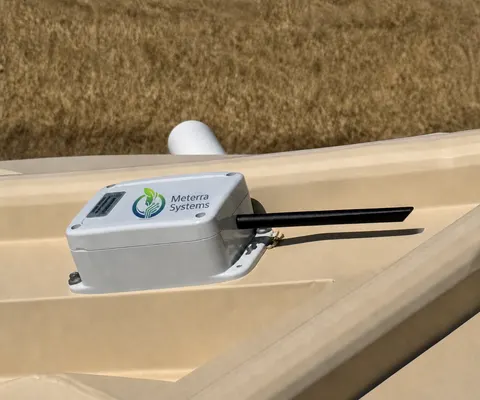
A non-contact ultrasonic sensor mounts above the water and measures the distance down to the surface. In winter that has one real advantage and one real limit:
- The advantage: there’s no probe sitting in the water, so nothing freezes into the ice and cracks. The hardware comes through the cold fine.
- The limit: once the surface freezes over, the sensor reads the top of the ice, not the water beneath it. So it will not track the water level dropping under a sheet of ice. Anyone who tells you a surface sensor “keeps reporting the water level straight through a freeze” is overselling it.
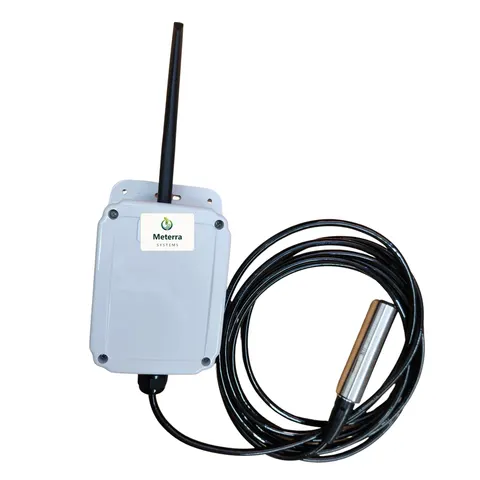
For open water that genuinely ices over — dams, ponds, deeper tanks — the better tool is a sensor that reads beneath the surface. A submerged depth sensor keeps reading the water under the ice, which is exactly what a surface sensor can’t do.
Where monitoring still earns its keep in winter
Most winter water emergencies aren’t the tank surface icing over — they’re the things that stop water from reaching the trough in the first place, and those a monitor catches well:
- A quit pump or frozen line shows up as a tank that stops refilling — a level that drops and doesn’t recover.
- A leak or a split line shows up as a faster-than-normal drop.
- A stuck float or iced-over surface shows up as a flat level while cattle are still drinking — the number looks “fine,” but it isn’t moving when it should be.
- An empty tank trips the low-level alarm you set, year-round.
Set a low-water threshold and learn to read a flat line in the cold, and you catch both the empty tank and the one that’s quietly stopped working — from the house, on the morning it matters.
How to set it up for winter
- Pair it with a heater. A tank heater or energy-free waterer keeps the water liquid so the sensor reads the real level instead of an ice cap — and the monitor tells you the moment the heater can’t keep up.
- Set a low-level alarm for the leaks and pump failures that happen all year.
- Watch the trend, not just the number. In hard cold, a level that won’t move while stock are drinking is your flag to go break ice or check the waterer.
- Use the right sensor for the water. Above-surface sensing for heated tanks and troughs; a beneath-surface depth sensor for dams and ponds that ice over.
Winter is the season water problems hurt the most, and honest monitoring — a sensor that catches the failures it can see, paired with a heater for the ones it can’t — keeps you ahead of them without a 5 a.m. drive. Tell us your setup and the kind of water at each point, and we’ll map the right sensors.
The winter test
When the surface freezes over, we keep reading.
An ultrasonic sensor reads the first surface it hits, and in a hard freeze that’s the top of the ice. Meterra’s submerged pressure sensors read the water itself, so troughs, ponds, and dams keep reporting straight through winter, and a high-level alarm can still fire before an iced-over pond overflows.
One honest note: extreme cold shortens battery life on any electronics. We’ll help you plan for your climate.
The hardware this guide covers
Every device reports to the same Meterra dashboard and app.
Tell us what you need to keep an eye on and we'll map the right sensors and coverage.
Frequently asked questions
Do water level sensors work in freezing weather?
The hardware does — a non-contact ultrasonic sensor mounts above the water, so there's no submerged probe to freeze into ice and crack. But be clear on what it reads — once the surface freezes over, it measures the top of the ice, not the water underneath, so it won't track the water level through a hard freeze. It still catches the failures that don't depend on ice — leaks, a quit pump, a line that's stopped filling — and pairs with a tank heater that keeps the water liquid.
Can a sensor tell me a tank has frozen over?
Indirectly. An iced-over surface reads as a flat, unchanging level. So a level that won't move while cattle are still drinking is your cue that the surface has frozen, the line has stopped filling, or a float has stuck — time to go break ice or check the waterer. Set a low-level alarm as well and you catch the empty tank too.
What works better for water that freezes over, like a dam or pond?
A sensor that reads beneath the surface — a submerged depth sensor — keeps reading the water under the ice, which a surface-reading sensor can't. For dams, ponds, and deeper open water that ices over on top, that's the better tool. Tell us the site and we'll recommend the right sensor for it.
Does monitoring replace a tank heater or energy-free waterer?
No — it works alongside them. Heaters and energy-free waterers keep water liquid; monitoring tells you when one has failed or a line has frozen anyway, so you find out from the house instead of on your next round.
Will the sensor's battery last through the cold?
Meterra sensors are built for the field with multi-year battery life and a solar option. Cold does reduce battery performance generally, which is one more reason the ultra-low-power design matters — it leaves plenty of margin for a hard winter.
Related Meterra pages
- Stock Tank Monitoring: monitoring cattle stock tanks year-round.
- Livestock Water Monitoring: the full picture across tanks, troughs, and dams.
- Ultrasonic vs. Pressure Sensors: which sensing type suits which water, including under ice.
- Dam Level Monitor: level monitoring for dams and ponds.