
Wireless sensors into the 4-20 mA input your SCADA already has.
Your PLC or SCADA reads its sensors over 4-20 mA current loops, and those inputs are already wired, scaled, mapped, and trusted. Meterra puts a wireless sensor at the tank, pond, or manhole and bridges the reading back to that same input. A small computer at your panel emulates the 4-20 mA loop, so your system reads the number exactly as if a hardwired transmitter were still connected. Modbus is there too, for when one connection has to carry many readings. Your SCADA, your screens, and your control logic do not change.
Yes, it can feed the 4-20 mA input you already have
That is the question almost everyone arrives with, so here is the answer before anything else. A Meterra wireless sensor can deliver its reading to your existing 4-20 mA input. Not a replacement input, not a new panel, not a different control system. The one that is already landed on your terminal block and already scaled in your PLC or SCADA.
And the second question, which always follows: no, you do not have to replace anything. Your control logic, your operator screens, your alarms, your historian, and your integrator’s work all stay where they are. We are adding a source of readings, not taking over a control system.
What the bridge actually is
There is no mystery in the hardware, so we will just describe it.
The sensor goes wireless. A Meterra ultrasonic or submerged pressure sensor mounts at the tank, pond, lagoon, or manhole and reports over low-power cellular, Verizon NB-IoT by default, with satellite for sites that have no signal at all. No trench, no conduit, no new wire run to the field.
A small computer sits at your facility. It is a single-board computer, Raspberry Pi class, in an industrial enclosure. It receives the wireless readings.
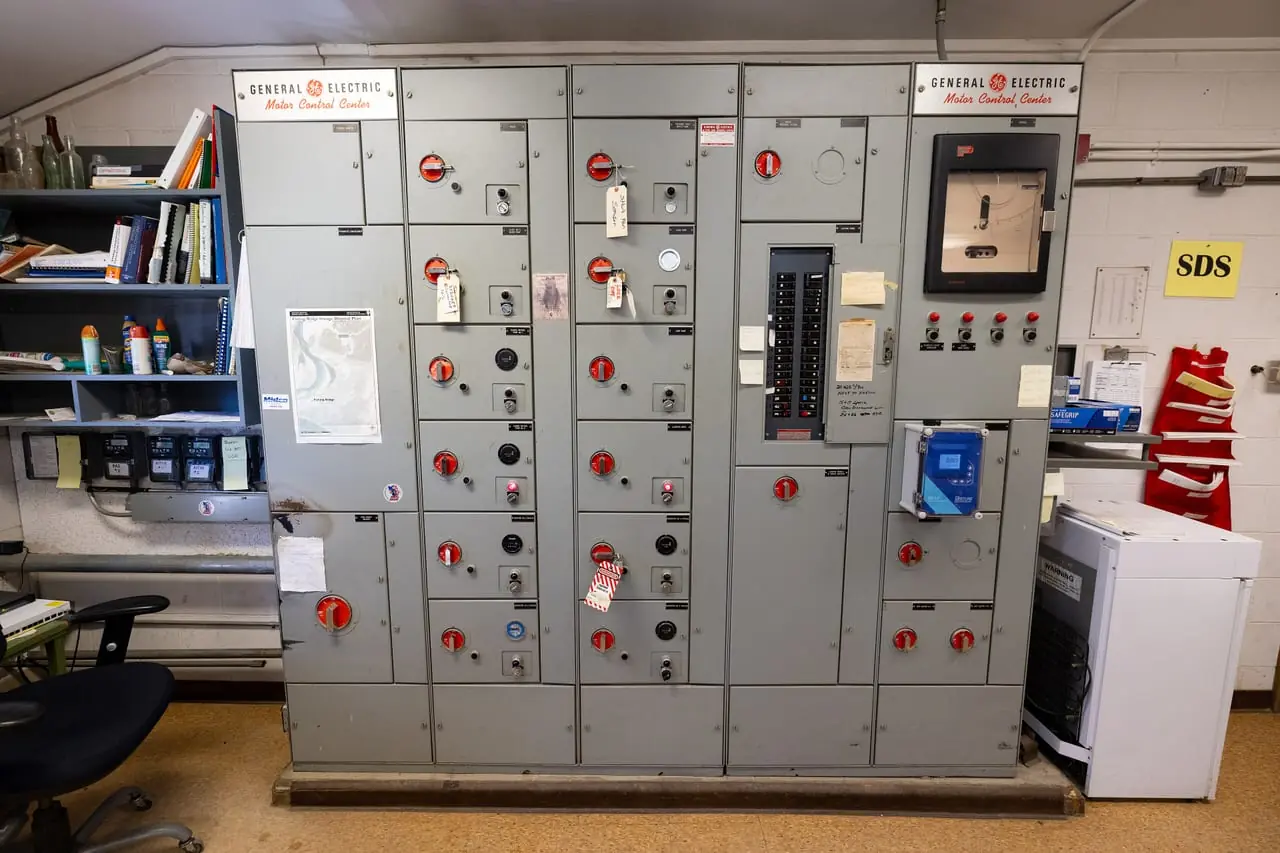
That computer emulates the signal your system expects. For a legacy input, it drives a 4-20 mA current loop output, scaled to your range. Your PLC or SCADA reads current on a pair of wires, which is exactly what it has always read. It cannot tell, and does not need to know, that the measurement arrived over a cellular network instead of a mile of buried cable.
Or it speaks Modbus, when the job is many readings rather than one loop. More on that below.
Both paths are engineered to your site. Which input, what range, how it is scaled, where the panel is, and what your integrator needs mapped are all questions we work through with you before anything is built.
Modbus, when one connection has to carry many readings
4-20 mA is one lane per sensor. It is perfect for restoring a specific signal or adding a couple of tanks, and it is terrible arithmetic when you need twenty new values and the panel has two channels left.
Modbus is the other path, and nearly every SCADA system already speaks it. Where 4-20 mA is one lane, Modbus is a numbered mailbox wall: one connection, many addressed values. Your SCADA polls the bridge the same way it polls any local device, and one input port becomes capacity for hundreds of readings instead of one. When your panel is full and the capital plan says “I/O expansion,” this is the line item that can replace it.
Most projects end up using both. The loop restores or extends the signals your logic already depends on. Modbus carries the wider set of readings you want on screen.
Scenario: a severed signal, and pumps back on manual
A buried control line fails the way buried things always fail: suddenly, invisibly, and somewhere along a length you cannot inspect. What the system loses is not just a number on a screen. It is the automation that ran on that number. Tank level stops arriving, so the fill pumps stop starting and stopping on their own, and an operator goes back to running them by hand and by eye.
We have watched this from the inside. Huntsville Town, Utah lost the wired signal from its million-gallon tank, a mile up a steep hill, when the line was cut. The quote to trench a replacement came in at $50,000 to $80,000. A wireless Meterra sensor put the tank level back on screen for a fraction of that, and that part is done and running.
The next step for that system is exactly what this page describes: bridging the wireless reading back into the town’s SCADA so the pumps can run on automation again instead of by hand. That work is proposed, not delivered. We are not going to write it up as a finished result until it is one.
If your situation looks like that, a dead input and automation running on human attention, this is the fix that does not involve a backhoe.
Scenario: finding where clean water gets into a sewer
Spring runoff has a way of finding cracks in a sanitary sewer line. The water that gets in is clean, but once it is in the pipe it is sewage as far as the treatment bill is concerned. Everyone involved knows it is happening. What nobody knows is where, and you cannot dig up a whole line to find out.
Meterra answers that question by measurement: wireless ultrasonic sensors at multiple points along the line, a dry-season baseline recorded first, then the same points compared during runoff. Those readings can land on the Meterra dashboard, in your existing SCADA through the bridge described above, or in both.
That method has its own page, including where our mountain-resort sewer project actually stands today, stated plainly: Sewer Inflow & Infiltration Monitoring.
This isn’t theoretical. On the Powder Mountain job in Eden, Utah, a pond level sensor on a 15 ft cable has been reporting from an evaporative sewer pond into the community’s legacy SCADA since July 15, 2026, completely wireless:
Where else this fits
The same setup works anywhere dirtier water needs to be measured for flow or level: storm drains, sanitary sewer lines, lift stations, lagoons, and treatment basins. Non-contact ultrasonic reads the surface from above, so nothing sits in the flow to foul or corrode, and the reading can go to a control system, to the Meterra dashboard, or to both.
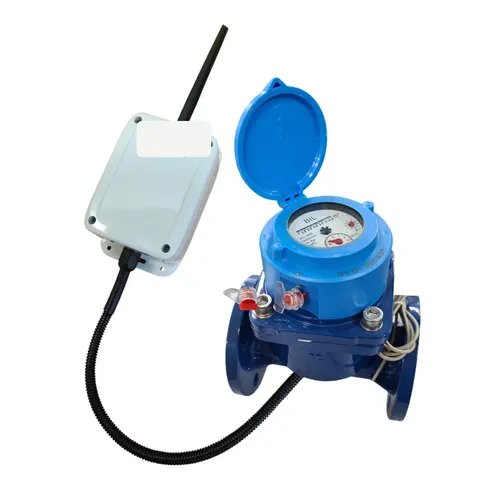
For clean water inside a pipe, surface level is the wrong measurement, so we do not use this approach. That job belongs to the Water Flow Monitor, an in-line turbine meter that reports gallons used every hour. Chemical and dosing tanks are covered on Chemical & Dosing Tank Monitoring, and they can feed the same bridge.
What it costs, and why this one is quoted
The sensors this runs on have their prices printed on the page. The bridge does not, and we would rather explain that exception than hide it.
The level sensors are posted. The Tank Level Sensor is $299, the Trough Level Monitor is $399, and the Dam Level Monitor starts at $499, reading open water to about 330 ft. Each includes three months of connectivity, then plans run from $10/month per device. Every sensor carries a 60-day money-back guarantee and a one-year warranty, and tank sensors ship from US stock in 1 to 2 business days.
The bridge is quoted per site, and here is why. It is engineered to your system, not pulled off a shelf: which input it feeds, how that input is scaled, where the panel sits, how many readings you need and over which path, what your integrator has to map, and whether cellular reaches the sensor locations. That is a scoped project. You get the number in writing before anything is built. What you will never get from us is a project priced like a catalog part, or a catalog part priced like a project.
The number worth putting ours next to is the alternative you are probably already holding: a trenching and I/O quote, or a proposal to replace a control system that is doing its job fine. Get both totals in writing and compare them honestly. We are comfortable with how that comparison usually ends, which is why we are telling you to run it.
What changes on your side
Less than you would think, and we will not pretend it is nothing.
Your SCADA vendor or integrator maps what arrives, whether that means confirming the scaling on a restored 4-20 mA loop or telling the system that a given Modbus register is the hilltop tank level. That is a configuration change, parameters rather than construction, and we coordinate it with them directly rather than leaving you in the middle. Every project starts with a conversation about what you run, what the panel looks like, and whether cellular coverage reaches your sites, before anything is quoted or shipped.
One boundary, stated plainly: this supplies monitoring inputs to your system. Control decisions stay in your SCADA, under your operators, exactly as they are now.
Tell us what you run
If your input panel is full, a signal line is down, or a rewire is sitting on the capital plan, that is worth a phone call before it is worth a backhoe.
Call (385) 534-8200 and describe the panel and the sites you need to see, or send the details and request a quote and we will come back with what the bridge would take on your system. If the field sensor is the piece you already know you need, the Tank Level Sensor at $299 is usually the one that ends up on the tank.
Meterra has been putting sensors in the field for over four years, with 2,000+ devices in service across a fourteen-product ecosystem. Old control systems and new sensors get along better than most people are told.
The hardware for this job
Every device reports to the same Meterra dashboard and app.
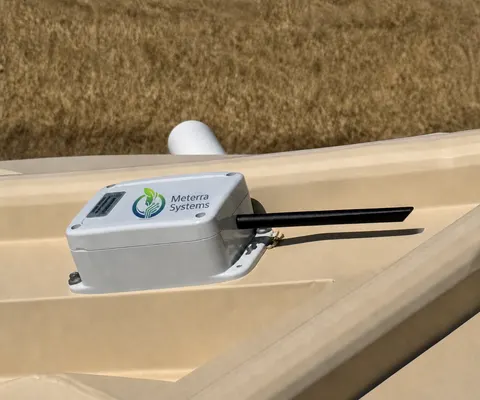
Tell us your site and we'll map the right sensors and coverage.
Frequently asked questions
Can your wireless sensor feed the 4-20 mA input we already have?
Yes. That is the whole point of this page. The wireless sensor reports over cellular to a small computer we place at your facility, and that computer drives a 4-20 mA output into your existing input. Your PLC or SCADA sees a current loop, scaled the way it has always been scaled, so the tag, the trend, the alarms, and any control logic running on that tag keep working. From the control system's side of the terminal block, nothing has changed.
What does "4-20 mA" actually mean?
It is how most older SCADA and PLC systems read a sensor. Each sensor gets its own pair of wires, and the amount of electrical current flowing on them, between 4 and 20 milliamps, is the reading itself. 4 mA means empty or zero, 20 mA means full, and everything in between scales in proportion. It is simple and nearly bulletproof, which is why it is still everywhere. The catch is that every sensor needs its own dedicated wire run, and the control panel only has so many input channels.
Do we have to replace our SCADA, our PLC, or our operator screens?
No. Your control system stays exactly as it is, including the logic and the screens your operators already know. We are not selling you a new control platform. We are handing your existing one a signal it already knows how to read, from a sensor that no longer depends on buried wire. You avoid both the cost of an I/O expansion and the risk of a rip-and-replace project. Get every total in writing, ours included, and compare them honestly. We are comfortable with how that comparison usually ends.
What is Modbus, in plain terms?
Modbus is a simple industrial language from 1979 that almost every SCADA system still speaks. Instead of one pair of wires per sensor, one connection carries many addressed readings. The SCADA asks "device 12, what is your level?" and gets a number back. That is the trick that turns a single port into room for hundreds of values instead of one. We use 4-20 mA when a system wants a loop and Modbus when a system needs many readings through one connection.
Can this restore automation after a signal line is cut or fails?
That is one of the main cases we built it for. When a buried sensor line fails, a system does not just lose a number on a screen. It loses the automation that ran on that number, which is how fill pumps end up on manual and how a treatment step stops starting and stopping on tank level. Putting a wireless sensor on the tank and bridging the reading back to the input the loop used to feed gives the existing automation its input back, with no trench.
How many sensors can one bridge carry?
Over Modbus, hundreds of readings can move through a single connection, with the practical number set by your SCADA software and how often it polls. Over 4-20 mA it is one loop per value, the same as any wired transmitter, which is fine when you are restoring or adding a handful of specific signals. Part of scoping the project is deciding which of the two paths fits each reading.
Does this work on sewer, storm drains, and dirty water?
Yes, and that is where a lot of the demand is. Non-contact ultrasonic reads the surface from above, so there is no probe sitting in the flow to foul, and the same bridge delivers the reading to a control system or a dashboard. Storm drains, sanitary sewer lines, lift stations, and lagoons all fit. For clean water inside a pipe, we use a turbine water flow monitor instead.
What does it cost?
The level sensors are posted, not quoted. $299 for the Tank Level Sensor, $399 for the Trough Level Monitor, from $499 for the Dam Level Monitor, each including three months of connectivity, then from $10/month per device. The bridge and the integration work are the exception on this site, and we will say why plainly. They are engineered to your existing system, so they are scoped and quoted per site, in writing, before anything is built. We will not price a project like a catalog part.
Related Meterra solutions
- Sewer Inflow & Infiltration Monitoring: the full baseline-and-compare method for finding where runoff enters a line.
- Lift Station Monitoring: wet-well level and high-level alarms, standalone or fed to your SCADA.
- Huntsville Town, Utah: the town whose wired tank signal was cut, and what it cost to avoid the trench.
- Water System Automation: when there is no SCADA at all, and the site runs on the Meterra platform.
- Water District Monitoring: the wider story for small and rural water systems.
- Wastewater Lagoon Monitoring: lagoon levels for compliance and operations.
- Water Flow Monitor: the turbine meter for clean water in a pipe, posted price.
- Tank Level Sensor: the $299 wireless ultrasonic sensor your SCADA would end up reading.
- Grants & Funding Guide: programs that help small systems pay for upgrades.
- Video: Installing a Pond Sensor for a SCADA Tie-In: the install, start to finish.
- Video: Pond Level Into a Legacy SCADA, Wirelessly: the reading arriving in an existing SCADA with no trenching.