
Remote Monitoring for Water Districts
Small and rural water systems have to know their tanks and reservoirs are where they should be — often across a wide service area, with a small crew. Meterra reports storage levels to a phone or computer, alarms after hours when a level runs high or low, and keeps an exportable record, without the cost and wiring of a full SCADA build.
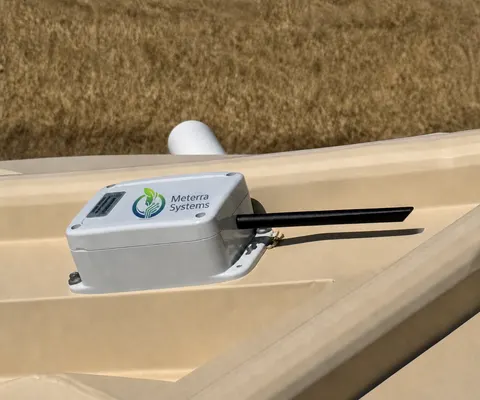
Monitoring sized for a small system
A rural water district carries the same responsibility as a big utility — keep the storage where it needs to be, know when something’s wrong, and have the records to show it — usually with a fraction of the staff and budget. And small is the norm, not the exception: about 91% of the nearly 50,000 community water systems in the U.S. serve 10,000 people or fewer, and the EPA notes these systems run lean, against aging infrastructure, operator turnover, and tight budgets. Driving the service area to read tanks, or finding out about a high or low level only when a customer calls, doesn’t scale, and a full SCADA build is more cost and wiring than many small systems can justify.
Meterra fills the gap. Wireless, non-contact sensors report your tank and reservoir levels to a phone or computer, alarm you the moment a level runs out of range — including after hours — and keep an exportable history, all without trenching, field power, or a control-system project.
What districts watch
- Storage and supply tanks — live level, percentage, and volume on every tank, with high- and low-level alarms. See water tank monitoring.
- Reservoirs and dams — remote level on open water, with a trend you can plan around.
- Wells and pump-fed tanks — pair level with pumping to avoid running a source dry or overflowing a tank.
- Stock and range water — districts managing grazing land can put the same sensors on remote stock tanks and troughs.
Non-contact, by design
Meterra senses the surface from above — the unit mounts over the tank and measures the distance to the water, so nothing sits in the stored supply. For a potable system that removes a category of worry: there’s no submerged probe to foul, corrode, or maintain inside the tank. The sensing is simply a level reading taken without contact. (It doesn’t replace your required testing or certifications — it gives you the level data, alarms, and records to run the system.)
Lighter and cheaper than SCADA
You don’t have to choose between flying blind and a six-figure control system. Meterra is the middle path: battery or solar sensors that report over Verizon NB-IoT cellular with no field wiring, install in about 15 minutes, and run 2+ years on a charge. You get live levels, configurable alarms, history charts, and CSV export for your records — as a standalone solution for a small system, or as an affordable supplement that puts eyes on the outlying tanks SCADA never reached.
Case study: Huntsville Town, Utah
Huntsville, a small town in northern Utah, stores its water in a million-gallon tank about a mile up a steep hill — remote, hard to reach, and monitored by an ultrasonic sensor wired directly into the town’s SCADA system. When that buried line was cut, the town lost its reading on the tank, and the quote to trench and replace the wire up that grade came in at $50,000 to $80,000.
Instead, Huntsville put a Meterra remote ultrasonic sensor on the tank. It reports the same numbers the wired sensor did — current depth, gallons, gallons to fill, depth to fill, and tank-level percentage — but wirelessly over cellular, with no line to cut and no trench to dig. The town got its million-gallon tank back on screen for a fraction of the cost of the wire it would have replaced.
Read the full Huntsville case study →
Records and alarms that hold up
Water you can’t see is water you can’t account for. Nationally, utilities lose nearly one in five gallons of treated water — about 19.5%, more than $6.4 billion a year by industry water-loss audits — before it ever reaches a meter, and you can’t fix a loss you can’t see. Level trends across your storage are often the first place an overflow, a stuck inlet, or a faster-than-normal drawdown shows up. Larger utilities chase the same problem by carving the network into district metered areas (DMAs) and measuring each zone continuously; storage-level trends give a small system that same early warning without the buildout.
Every reading is stored and chartable, and every sensor’s history exports to CSV over any period, so your operating logs are backed by data rather than a clipboard. Alarms reach the right person when a level runs high or low — at 2 a.m. as readily as at 2 p.m. — so a problem gets a response while it’s still small.
Getting started
Most districts start by putting one sensor on the tank or reservoir that’s hardest to keep eyes on, prove it out, and expand across the system. Tell us your sites and the coverage there, and we’ll map the right setup and a pilot.
The hardware for this job
Every device reports to the same Meterra dashboard and app.
Tell us about your operation and we'll map the right sensors and coverage.
Frequently asked questions
What can a water district monitor with Meterra?
The levels that matter to a small system — storage and supply tanks, reservoirs and dams, wells and pump-fed tanks, and stock or range water on district-managed land. Each point reports level, percentage, and volume to one dashboard, with alarms when a level runs high or low.
Is non-contact sensing safe for stored drinking water?
The sensor mounts above the water and reads the surface from a distance, so nothing is ever submerged in the stored water — no probe sitting in the tank to foul or to be a concern in a potable supply. It measures level without contact. (Meterra doesn't replace your required testing or certifications; it gives you the level data and records to manage the system.)
How is this different from SCADA?
SCADA is powerful and expensive — wired sensors, telemetry, and integration that many small districts can't justify. Meterra is a lighter, wireless approach — battery or solar sensors that report over cellular with no field wiring, giving you live levels, alarms, and exportable data at a fraction of the cost and effort, often as a stepping stone or a supplement to SCADA.
Can we export the data for reporting?
Yes. Every sensor's history is available as a chart and as CSV export, so you can pull level records over any period to support your operating logs and reporting. Alarms are logged as well.
Do we need power or communications at the tank?
No. Meterra sensors are battery or solar powered and report over Verizon NB-IoT cellular, so they need no mains power, no field network, and no hub — which is what makes a remote reservoir or an outlying storage tank practical to monitor. Where there's no cell coverage, satellite is the alternative; we can check the site first.
What does it cost?
In our US rollout, sensors start at $299 for the Tank Level Sensor, $399 for the Trough Level Monitor, and $499 for the Dam Level Monitor, each including three months of connectivity and full app access; connectivity is then from $10/month per device, with discounts on annual subscriptions. Costs scale with the number of tanks and reservoirs — tell us your sites, and we can start with a pilot on one tank.
Related Meterra pages
- Water Tank Monitoring: how remote level monitoring works on storage and supply tanks.
- Pond & Dam Monitoring: non-contact level on reservoirs and open water.
- Water Level Monitoring: the umbrella on remote level sensing.
- Tank Level Sensor: wireless ultrasonic monitoring for any storage tank.
- Lift Station Monitoring: wet-well level and high-level alarms on the sewer side of a small system.
- Ranches: stock and range water for grazing operations.
- Video: Pond Level Into a Legacy SCADA, Wirelessly: the reading arriving in an existing SCADA with no trenching.
- Reservoir Level Monitoring: irrigation and district reservoirs, with cable built to the site.