
Wireless tank monitoring. Know every level from your phone.
A wireless ultrasonic sensor that mounts on top of any tank and sends the level, plus a low-level alarm, straight to your phone. $299 with three months of connectivity included. No wiring, no electrician, no driving out to check.
Includes 3 months of connectivity and full dashboard + mobile app access. Connectivity then from $10/month per device; discounts on annual subscriptions.
Early adopter US launch pricing, expected to rise as the rollout grows. The price you order at is the price you pay.
In stock in the US. Orders ship within 1–2 business days.
$25 flat shipping per order by USPS (free when you order 2 or more), 2–5 business days in transit within the US. Shipping & returns
60-day money-back guarantee and a one-year warranty on every sensor.
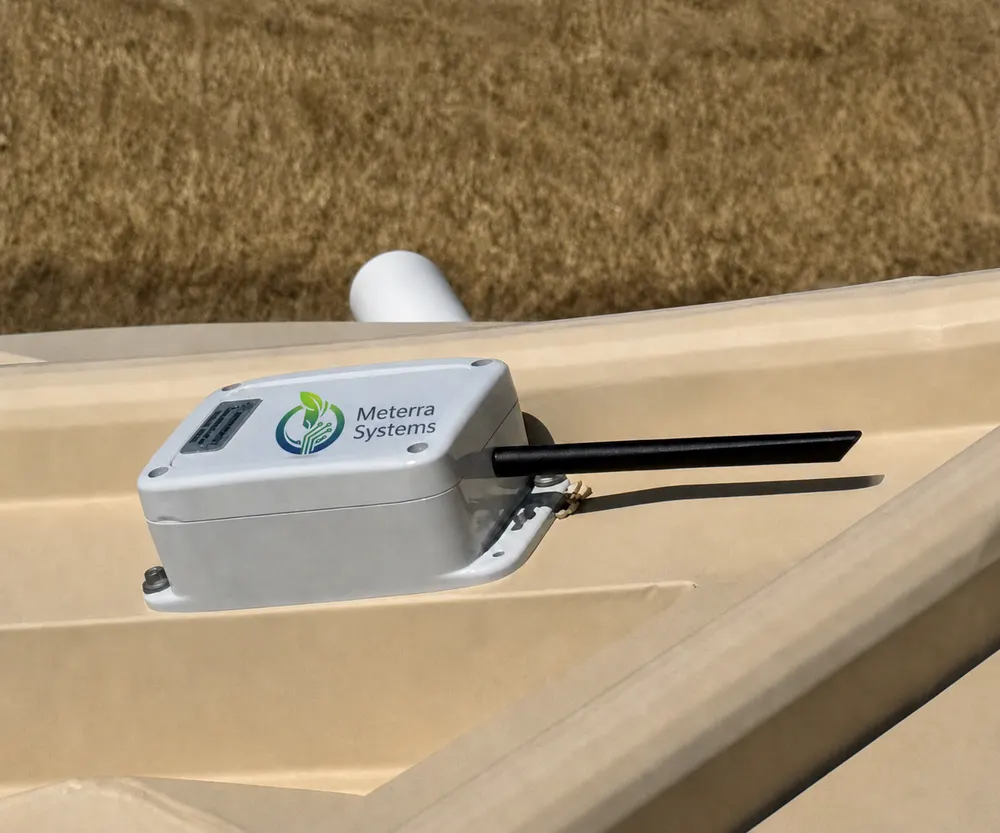
One wireless sensor for every tank on the place
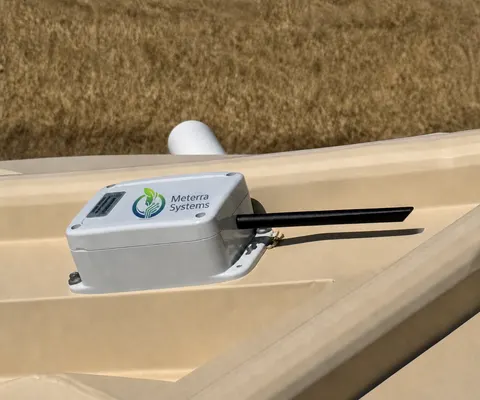
You know the routine. You drive out to check a tank, it’s fine, and the morning is gone. Or you skip the drive, and that’s the week a line lets go and the tank you were counting on runs dry. The Meterra Tank Level Sensor ends that trade for $299, three months of connectivity included. It sits on top of the tank, reads the surface with ultrasonic sensing, and sends the level to your phone every hour. The moment a tank runs low or a leak starts pulling it down, your phone knows before your boots do.
It’s built for the way ranches and farms actually work. No power at the tank? It runs for years on its own battery. No Wi-Fi for miles? It connects itself over the cellular network and starts reporting on its own. And because it simply measures the distance to a surface, one unit reads water, diesel, and liquid fertilizer; for grain and feed in a bin, the Silo Level Sensor uses the same ultrasonic sensing. That is exactly how wireless tank monitoring should be built, and after more than four years in the field with 2,000+ devices in service, we’ve had the time to get it right.
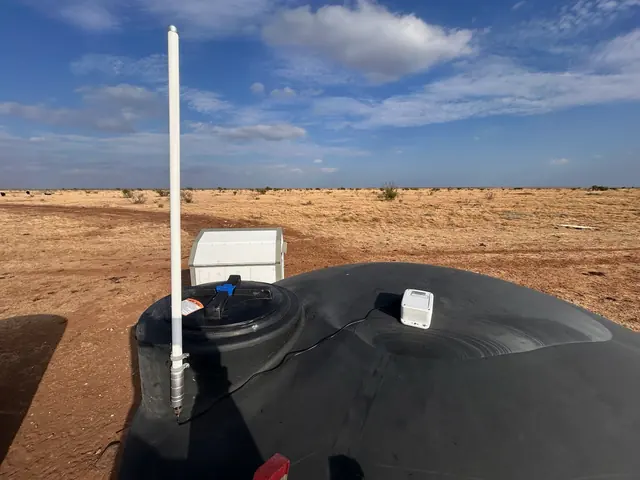
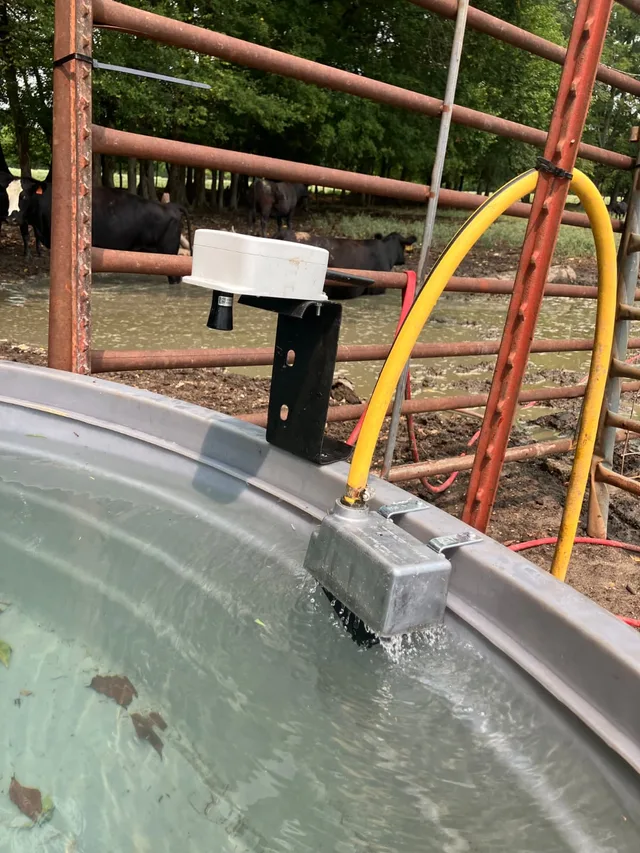
It earns its keep well past the fence line, too. The same sensor watches bulk chemical and dosing tanks at treatment and industrial sites, where you want the vessel sealed, the cost down, and operators refilling on a reading instead of a drive-by. One honest limit: for harsh, acidic, or freeze-prone liquids, our submerged pressure sensor is usually the better tool, and we’ll steer you to it. Here’s what both technologies look like in hand, on a real job:
And the reading can do more than sit on your phone. Pair the sensor with a pump controller and the tank runs its own refills: pump on at 40%, off at 95%, with no control wiring between them. That’s the heart of water system automation, and it’s how systems whose buried float-switch wiring has failed get their automation back.
What it fits, and what it doesn’t
The honest version, so you can rule it in or out before you spend anything.
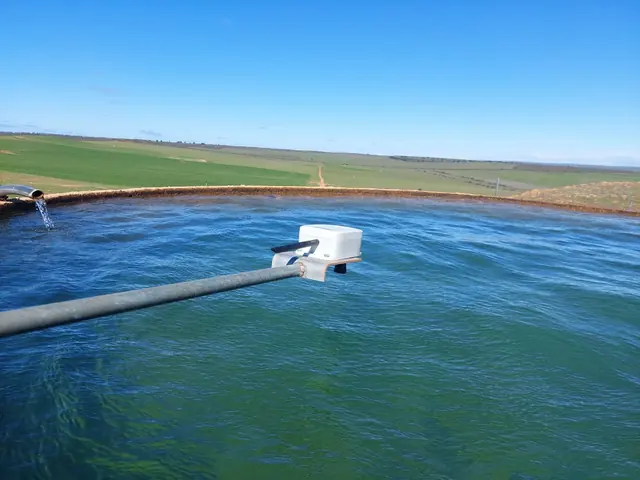
It fits a tank with a top opening and a clear path down to the surface: poly, steel, or concrete, upright or squat, one tank or fifteen. The measuring range runs from roughly 10 inches out to 23 feet, which is the distance from the sensor down to the surface it has to read. That covers the great majority of farm, yard, and supply tanks, IBC totes, cisterns, and rainwater storage. Because it measures a distance rather than dipping into anything, the same unit reads water, diesel, liquid fertilizer, and bulk chemical. Grain and feed in a bin take the Silo Level Sensor.
It does not fit four situations, and we would rather say so here than after you have paid:
- Deeper than about 23 feet from the sensor to the surface. Past that the reading is out of range and the job wants submerged pressure sensing, which is built to a cable length that matches the site. The ultrasonic vs. pressure guide covers the trade, and we scope the length with you.
- No top access, or something in the way. The sensor needs a mounting point above the liquid and an unobstructed path to the surface. A fill pipe, a baffle, or a ladder in the beam’s way is a problem to solve before install, not after.
- A tank that freezes over. Once a lid of ice forms, an above-water sensor reads the ice, because the ice is now the surface. On a stock tank the answer is a tank heater; on open water that ices over, the answer is the submerged sensor that keeps reading beneath it.
- Harsh, acidic, or freeze-prone liquids. Our submerged pressure sensor is usually the better tool, and we will steer you to it rather than sell you this one.
If you are not sure which side of that line your tank falls on, send the dimensions and a photo and we will tell you. We would rather lose the order than sell the wrong sensor.
What it replaces
Most tanks already have some way of telling you what is in them. Here is what each one actually gives you, and what changes when the reading goes wireless.
- A stick, or climbing up to look. Accurate enough, and free, but it only reports when you are standing there. You get one reading a day at best, and none at all on the days you did not make the drive.
- A sight gauge on the side. Same limitation as the stick, plus it has to be read in person and it tends to cloud, foul, or freeze. A wireless tank gauge gives you the same number hourly from wherever you are, along with the direction it is moving.
- A float switch. A float tells you the level crossed a point. It does not tell you the level, the trend, or how fast it got there, and floats stick. That last part is the single most common failure we hear about, which is why we wrote a guide on what a stuck float valve looks like.
- A hardwired level transmitter. These are accurate and they feed a control system properly, but they need a signal run and usually a power run back to a panel, which is a trench and an electrician. A wireless level transmitter skips both: the sensor runs on its own battery for 2+ years and reports over cellular, so the cost of adding the fifteenth tank is the same as the first. Where an existing control system does need the reading in its own language, that is a 4-20 mA or Modbus bridge rather than a trench.
The pattern in all four: the old methods tell you a level when you go and ask. This one tells you when something changed, which is the only version that helps at 2 a.m. or on the far side of the property.
The whole bill, in writing
$299 buys the sensor with three months of connectivity in the box; after that, plans start at $10/month per device. That is the entire cost, posted right here, backed by a 60-day money-back guarantee and a one-year warranty, and shipped from US stock within 1-2 business days. If you’re comparing vendors, get every total in writing before you spend a dollar. A vendor who’s proud of the total posts it, and ours is posted. If another column genuinely comes back better for your tanks, buy it. We’re comfortable saying that next to our price.
Put your tank count into the savings calculator to see what the drive-outs are costing you, then order the Tank Level Sensor and have it reporting this week. Or see it on real systems first: the customer installs page shows this sensor on an Arkansas stock tank and on dosing totes across five states.
What you get
Low- and high-level alarms to your phone
Set the thresholds that matter and get an alert the moment a tank runs low or overfills, before it becomes a problem.
Ultrasonic, nothing touches the liquid
The sensor reads the surface from above, so there's no probe to corrode or foul. Works on water, fuel, and fertilizer alike.
Solar or long-life battery
Ultra-low power draw means 2+ years on a battery, with no wiring to run and no power source to find at the tank.
Mounts on any tank in minutes
Top-mount fitting suits poly, steel, and concrete tanks. No plumbing, no electrician. Most customers install it themselves.
How it works
Mount it
Fix the sensor to the top of the tank pointing at the surface. About 15 minutes with a drill.
It connects itself
The sensor links to the cellular network on its own and starts reporting. No Wi-Fi or hub needed.
Watch it on your phone
Open the app to see live level, history, and set the alarms you want.
Watch them work together
The tank runs the pump. By itself.
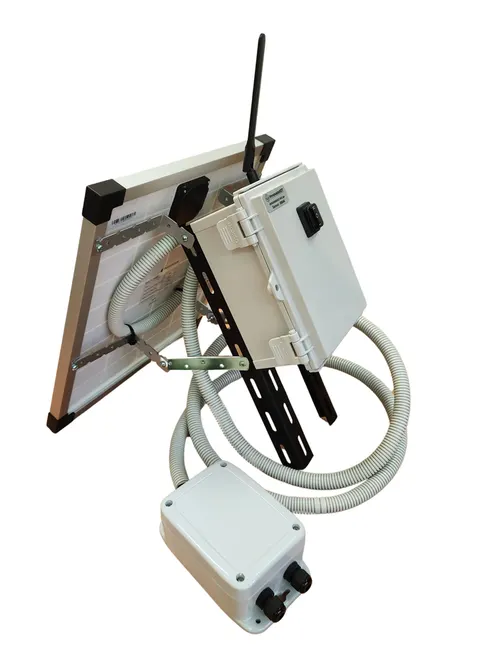
Every Meterra device is complete on its own. But sensors and controllers share one platform, so a reading can drive a pump — set the rule once, and the tank does the calling from then on. Here’s the loop, sped up:
Sped-up example — you set the start and stop levels in the Meterra app. Every rule stays a manual button in the app too, and a separate high-level alarm can back the stop rule up.
The products in this simulation
Every device reports to the same Meterra dashboard and app.
Send us your site details and we'll send back pricing and the right setup.
Specifications
| Sensing technology | Ultrasonic distance measurement |
|---|---|
| Measurement range | Approx. 10 in – 23 ft (250–7000 mm) |
| Battery life | 2+ years, ultra-low power |
| Alarms | Low level, high level, configurable thresholds |
| Mounting | Top-mount; suits poly, steel & concrete tanks |
| Reporting | Hourly data to the Meterra app, plus instant alarms |
| Readout | Level, percentage full, and volume for your tank's dimensions |
| Suitable contents | Water, diesel & fuel, liquid fertilizer, bulk chemical |
| Shipping | From US stock, 1-2 business days |
| Warranty | 60-day money-back guarantee, one-year warranty |
| Connectivity | Verizon NB-IoT cellular (coverage confirmed for your location) |
| Compliance | FCC compliant |
| Price | $299 |
| Connectivity plan | 3 months included, then from $10/month per device (discounts on annual subscriptions) |
Price includes the sensor and 3 months of connectivity. US connectivity plans from $10/month per device after the bundled period; discounts on annual subscriptions. Prices exclude any required taxes.
Guides & documentation
- Installation guide Tank Level Sensor installation guide
Mounting position, the hole to drill, waking the sensor, tank setup and alarms in the app, and troubleshooting for no data or odd readings.
- Installation guide Submersible Tank Level Sensor installation guide
The pressure sensor for tanks: the hole to make, waking the unit, mounting the communications box on top, and the cable lengths available.
All guides and sheets: Support.
Questions
Does it work on fuel and fertilizer, not just water?
Yes. Because the ultrasonic sensor reads the surface from above and never contacts what's in the tank, the same unit works on water, diesel, and liquid fertilizers like UAN. For grain, feed pellets, and other dry bulk in a bin, the Silo Level Sensor is built for the job and reports tonnage as well as level.
Do I need Wi-Fi or power at the tank?
No. The sensor is battery powered and reports over the cellular network on its own. There's nothing to plug in and no Wi-Fi to reach.
How hard is it to install?
Most people mount it themselves in about 15 minutes with a drill. There's no plumbing or wiring and no electrician required.
What does it cost?
The Tank Level Sensor is $299 in our US rollout, and that price includes three months of connectivity plus full access to the dashboard and mobile app: live readings, history, trends, and alerts. After that, connectivity plans start at $10/month per device, with discounts on annual subscriptions. That's the whole bill, posted in writing; if you're comparing vendors, ask each one to put its total in writing too. It ships from US stock within 1–2 business days and is backed by our 60-day money-back guarantee and a one-year warranty.
A practical place to start
Request pricing & availability
Share a few details and we’ll recommend the simplest setup that fits your operation, with clear pricing and coverage information.
60-day money-back guarantee and a one-year warranty on every sensor. In stock in the US. Orders ship within 1–2 business days.