Hold your freeboard. Catch the overflow before it's a violation.
For a small wastewater system, an overtopped stabilization lagoon is not just a mess. It is a permit violation and a discharge you have to report. Meterra puts a wireless level sensor on the lagoon and sends a high-level alarm before water reaches the top of the berm, so a thinly staffed utility gets warning in time to act, without the cost of full SCADA.
A thin-staffed utility can’t watch the berm all night
Small wastewater systems run lean, often with one or two operators covering everything. A lagoon is patient about it right up until it isn’t. Inflow and rain push the level up a fraction at a time, nobody sees a problem on the morning round, and then a wet week takes the freeboard that was left. By the time the berm is wet at the top, the options have narrowed to the expensive ones.
Remote monitoring buys back the hours between rounds. A sensor watches the level continuously and raises a high-level alarm with margin to spare, so the operator gets a call while there’s still time to draw down, move water, or get on site, instead of finding it after.
What Meterra watches
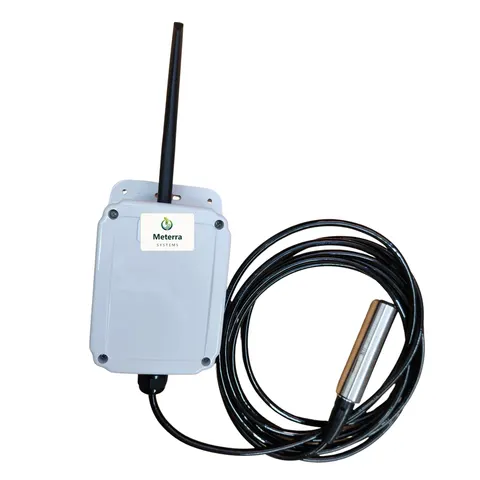
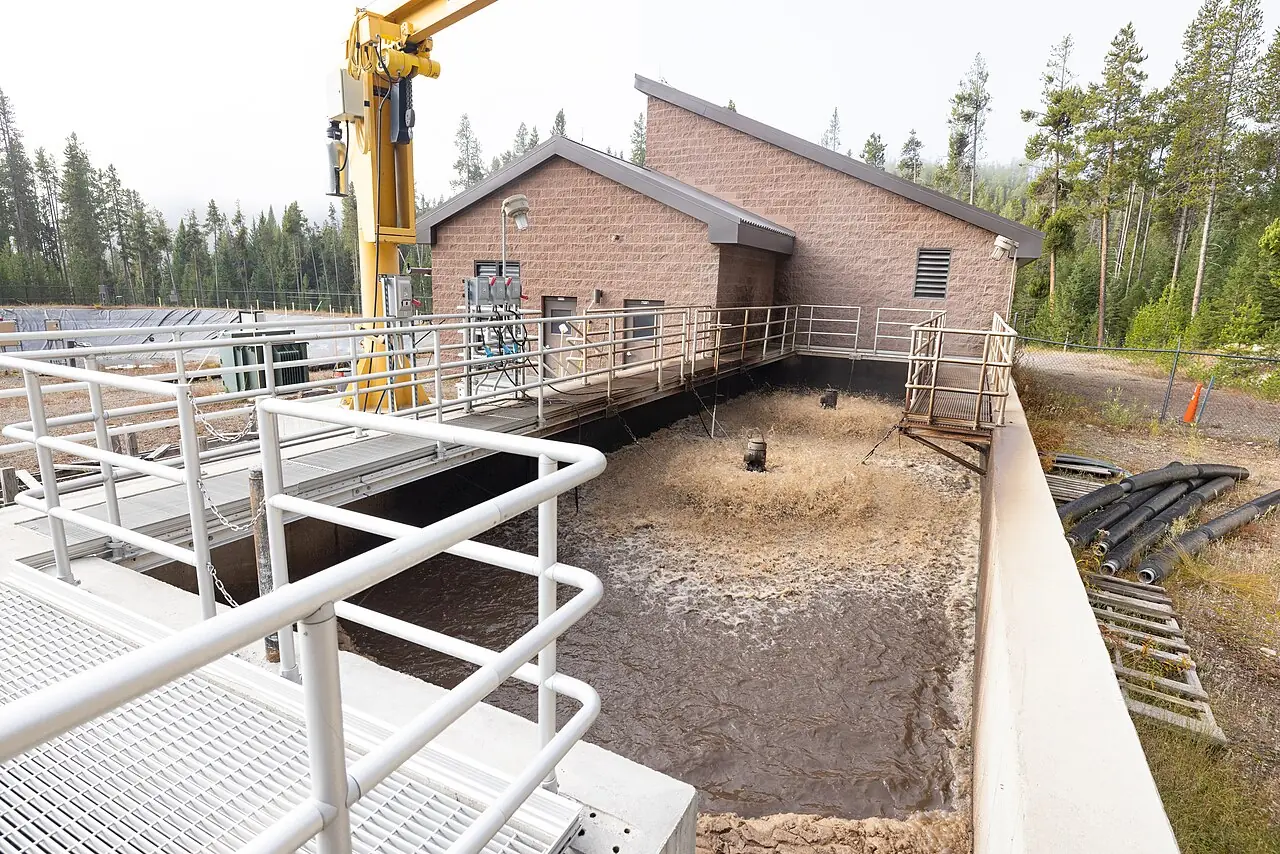
- Stabilization lagoons. A submerged pressure sensor reads the level and trend, with a high-level alarm that protects freeboard.
- Storage and equalization basins. Confirm the buffer in the system is where it should be, rather than assuming it.
- Transfer and polishing cells. A multi-cell lagoon can hide a stuck transfer for days; two sensors show which cell the water actually went to.
Everything reports to one dashboard with trend history, CSV export, and multi-user alarms.
Freeboard is a number, so measure it like one
Freeboard gets managed by eye at a lot of small systems: a mark on the berm, an operator’s judgment, and a round once a day. That works until the week it doesn’t, and the failure mode is always the same. Nobody saw the rate.
A continuous level record turns freeboard from a glance into a measurement. You get the level now, the level this time last week, and the slope between them, which is the part that says whether a wet forecast is a problem. It also gives you the record afterward: what the lagoon did, when it did it, and what the operator was responding to, exported for the file.
Monitoring without the SCADA bill
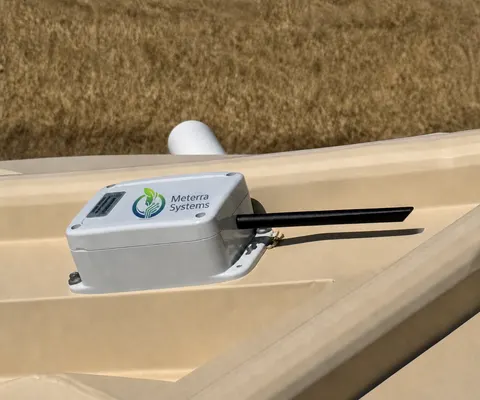
Meterra stands alone on a lagoon that has nothing today: battery or solar power, Verizon’s NB-IoT low-power cellular network (LEO satellite where there’s no coverage), no field wiring, and a 15-minute install. It’s the affordable middle ground between a clipboard and a full SCADA system.
Wet wells are a related job with a different shape, and they have their own page. If it’s the lift stations rather than the lagoons keeping you up, start at lift station monitoring.
A note on what this is, and isn’t
Meterra is a monitoring and alerting aid. It does not replace your NPDES permit monitoring, sampling, certified operators, or pump controls, and it doesn’t control equipment. It gives a small utility early warning and a clean record. Confirm your specific obligations with your permit and regulator.
Getting started
Start with the lagoon most likely to surprise you. Tell us the site and coverage, and we’ll set the sensor and the high-level alarm threshold with you.
The hardware for this job
Every device reports to the same Meterra dashboard and app.
Tell us about your operation and we'll map the right sensors and coverage.
Frequently asked questions
Why monitor a lagoon's level?
Stabilization lagoons have to keep freeboard, the margin between the water and the top of the berm, and overtopping is both an environmental problem and a permit violation. A level sensor reports the lagoon level continuously and alarms before freeboard is lost, so a rising trend from rain, inflow, or a stuck transfer gets caught while there's still time to draw down or move water. It supports the operator; it doesn't replace permit monitoring or sampling.
How much freeboard warning does an alarm actually give?
That depends on your berm and your inflow, which is why the threshold is yours to set rather than ours. What the sensor gives you is the level and the rate it is changing, so an alarm set a foot below your permitted freeboard arrives with the trend attached. A lagoon creeping up over three days of rain and a lagoon rising fast on a stuck transfer look completely different on the chart, and the difference is what tells an operator whether to drive out now or watch it.
Is this a SCADA system?
No, and that's the point for a small utility. Meterra is affordable remote monitoring and alerting: level, trend, history, and alarms to one dashboard, without the cost and infrastructure of a full SCADA build. It can stand alone on a lagoon that has nothing today, and it doesn't control your pumps, transfers, or gates.
Do you monitor lift stations too?
Yes, and lift stations have their own page under Solutions, Lift Station Monitoring. A wet well is a different job from a lagoon, with pump-cycle history, autodialer replacement on retiring copper phone lines, and bridging into an existing SCADA, so all of that lives there rather than here.
Will it work where there's no power or comms?
Yes. Sensors are battery or solar powered and report over Verizon's NB-IoT low-power cellular network, with LEO satellite where there's no coverage. No mains power and no field network needed, and we confirm coverage for the specific site first.
What does it cost?
In our US rollout, sensors start at $299 for the Tank Level Sensor and $499 for the Dam Level Monitor, each including three months of connectivity and full app access; connectivity is then from $10/month per device, with discounts on annual subscriptions. Tell us your lagoons and we'll size it. Every sensor is backed by a 60-day money-back guarantee and a one-year warranty.
Related Meterra pages
- Lift Station Monitoring: wet wells, pump-cycle history, and high-level alarms, on their own page.
- Water Districts: storage and infrastructure monitoring for small systems.
- Dam Level Monitor: the submerged pressure sensor for lagoons and ponds.
- Pond & Dam Monitoring: open-water level sensing and high-water alarms.
- Water Level Monitoring: how remote level sensing works.
- How a Sewer Lift Station Works: the wet well, the pumps, and the usual ways they fail.
- Video: Dam Level Sensor for an Evaporative Sewer Pond: why a shallow sewer pond gets a 165 ft sensor cable: reach, not depth.