
Know what's in the cistern without lifting the lid.
Hauled, caught, or pumped, the water sits out of sight until a tap sputters. Meterra puts the cistern level on your phone every hour, alarms before it runs dry, and flags a leak-fast drop. Buried or above ground. No power or Wi-Fi at the cistern.
Tank Level Sensor, $299, with three months of connectivity included, then plans from $10/month per device. 60-day money-back guarantee and a one-year warranty on every sensor. In stock in the US. Orders ship within 1–2 business days. 4+ years in the field, 2,000+ devices in service.
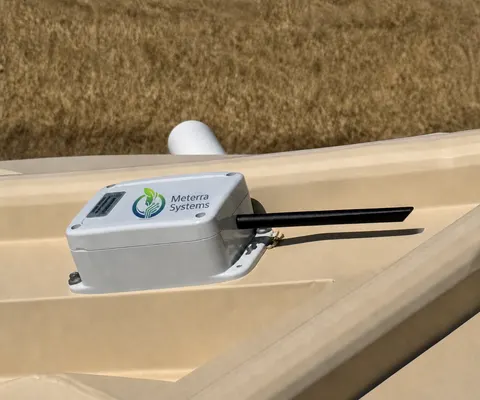
The most expensive water is the water you didn’t know was gone
If your place runs on a cistern, the level in that tank is the most important number on the property, and it’s usually the one nobody can see. Hauled water costs real money per load. Rainwater comes when it comes. A spring or well feed can slow down without a sound. The failure mode is always the same: the level was fine last time someone looked, and nobody looked this week.
Monitoring turns that into a boring problem. The cistern reports its level every hour, the trend shows how fast the household or the herd is actually drawing it down, and the alarm goes out while there’s still time to schedule a normal delivery instead of paying for a rushed one.

How it works on a cistern
Two proven ways, and we’ll help you pick:
- Non-contact ultrasonic. The Tank Level Sensor ($299) mounts inside the lid or access riser and reads the distance to the water surface from above. Nothing touches the water, which is why it’s the usual choice for drinking-water storage.
- Submerged pressure. The Dam Level Monitor (from $499) is a sealed sensor that sits on the cistern floor and measures the water column above it. It’s the fit for deep storage and for sites where a surface read is awkward.
Either way the sensor powers itself for years, connects over low-power cellular on its own, and reports to the same Meterra dashboard and app as every other sensor on the place. Set two alerts and stop thinking about it: a refill alarm with enough lead time for your hauler, and a rapid-drop flag for the overnight leak you’d rather catch in the morning than at the end of the month.
And if the cistern is filled by a pump, from a well, a spring, or a creek, the level reading can do more than report: Meterra’s controllers let the cistern start the fill pump at the low mark and stop it at full, with no control wire trenched between them.
Tell us what you’re storing water in, how it fills, and where it sits, and we’ll confirm the right sensor and coverage before anything ships.
Watch them work together
The tank runs the pump. By itself.
Every Meterra device is complete on its own. But sensors and controllers share one platform, so a reading can drive a pump — set the rule once, and the tank does the calling from then on. Here’s the loop, sped up:
Sped-up example — you set the start and stop levels in the Meterra app. Every rule stays a manual button in the app too, and a separate high-level alarm can back the stop rule up.
The products in this simulation
Every device reports to the same Meterra dashboard and app.
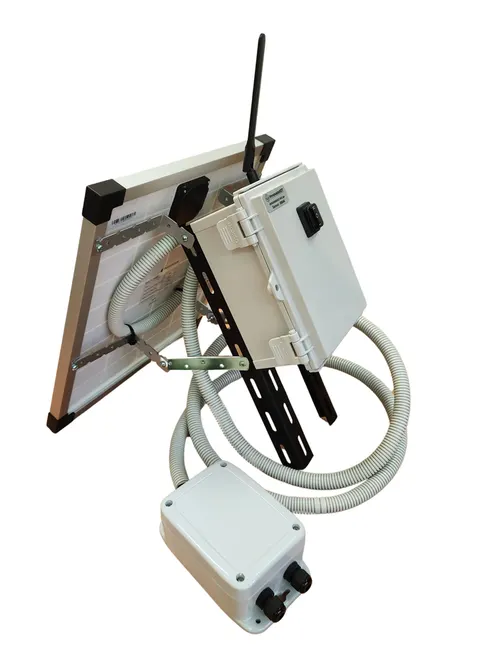
The hardware for this job
Every device reports to the same Meterra dashboard and app.
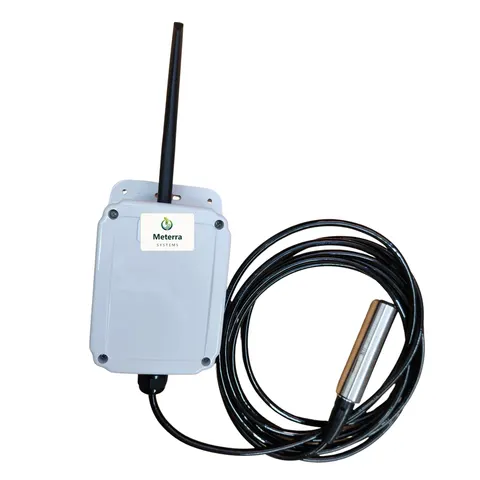
Tell us your site and we'll map the right sensors and coverage.
Frequently asked questions
Does it work on a buried cistern?
Yes. Most buried cisterns are monitored through the access riser or lid. The non-contact ultrasonic sensor mounts inside the headspace and reads the surface from above, or the sealed pressure sensor drops to the floor and reads the water column above it. Send us the cistern type, its access opening, and roughly where it sits, and we'll confirm the right fit before anything ships.
Which sensor do I want, ultrasonic or pressure?
They're the two technologies Meterra builds on, and both work in cisterns. The ultrasonic Tank Level Sensor ($299) never touches the water, which many owners prefer for drinking-water storage. The submerged pressure sensor (from $499) sits in the water and shines in deep or oddly shaped storage. If you're unsure, tell us about the cistern and we'll say which one we'd install.
Is the sensor safe for potable water storage?
The ultrasonic option is non-contact by design. It mounts above the waterline and nothing touches the water at all, so there's nothing in your storage to foul or taste. That's the configuration we usually suggest for household drinking-water cisterns.
Can it warn me before I need a water delivery?
That's the main job. Set the alarm at the level that gives your hauler comfortable lead time and the cistern texts you when it gets there. The hourly history also shows your real usage rate, so scheduled deliveries land on data instead of a guess and an emergency fee.
Will it tell me if the cistern is leaking?
You can set a rapid-change alert alongside the refill alarm. A cistern that drops overnight with nothing running is exactly the kind of thing you want to know about the next morning, whether the cause is a failed float, a stuck valve, or a crack.
Does it need power or Wi-Fi at the cistern?
No. The sensor runs for years on its own battery and reports over Verizon's NB-IoT low-power cellular network, with a satellite option for true dead zones. It includes three months of connectivity, then plans start at $10/month per device. Every sensor carries a 60-day money-back guarantee and a one-year warranty.
Related Meterra solutions
- Tank Level Sensor: the $299 non-contact ultrasonic sensor, the usual cistern pick.
- Dam Level Monitor: the submerged pressure sensor for deep storage, from $499.
- Well Water Level Monitoring: the well that fills the cistern, watched the same way.
- Water Tank Monitoring: every storage tank on the same dashboard.
- Water System Automation: let the cistern level start and stop the fill pump itself.