
Water Level Monitoring Systems, Explained
Water level monitoring is the remote measurement of how high the water is in a tank, dam, pond, or trough, with the reading and any alarms sent to a phone or computer. A sensor at each site reports the level on a schedule and alerts you when it crosses a threshold, so you manage water by exception instead of driving out to read a gauge.
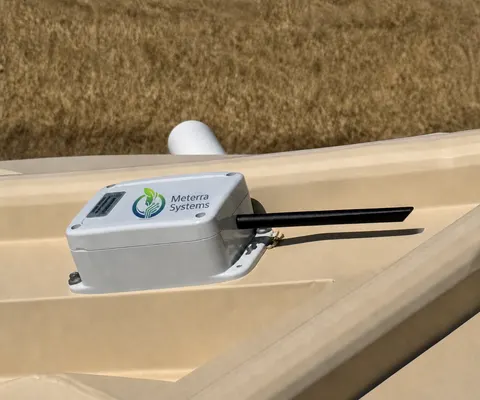
What is water level monitoring?
Water level monitoring measures the height of water at a site and reports it remotely, so the level is known continuously instead of checked on a round. A sensor records the level on a schedule and triggers an alert when it falls too low or rises too high. The same idea covers a 500-gallon stock tank and a multi-acre reservoir. Only the scale and mounting change.
It answers a question that otherwise costs time and fuel: how much water is there, right now, and which way is it heading? Where a gauge or a dipstick gives one reading at one moment, a monitor gives the trend and the warning.
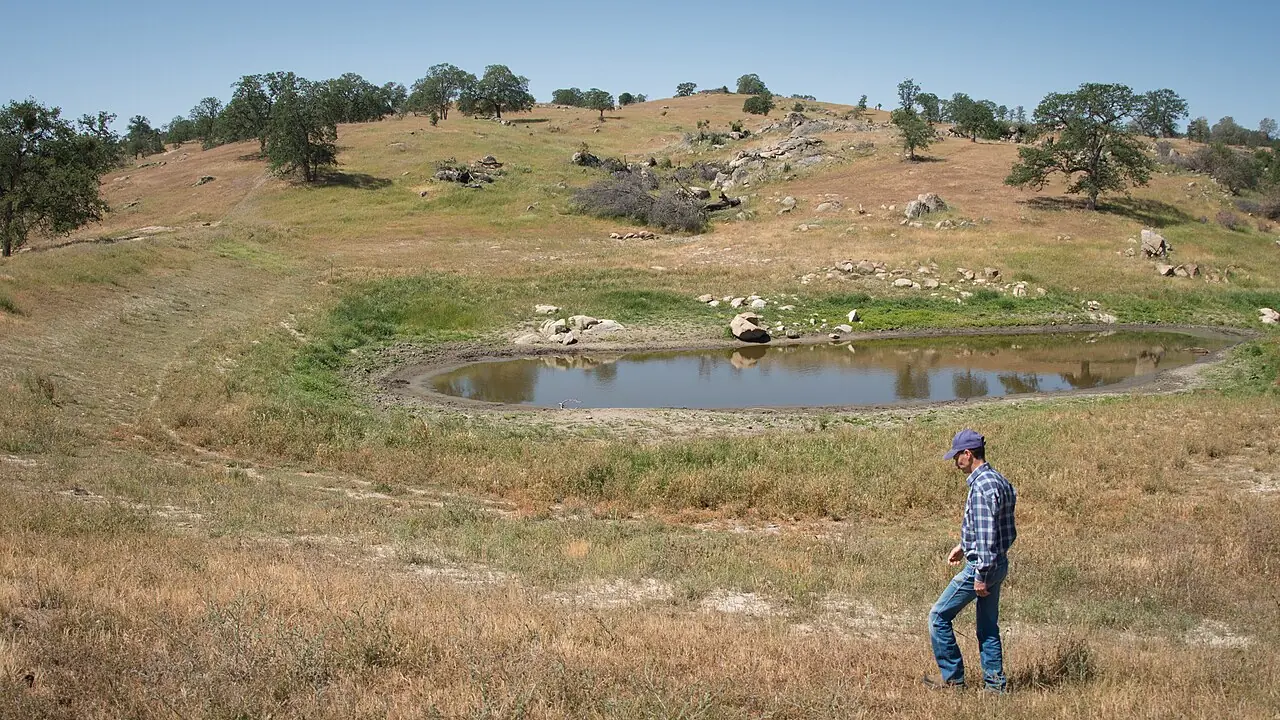
How remote water level monitoring works
A complete system has four parts:
The sensor
This is where systems differ most. The common methods:
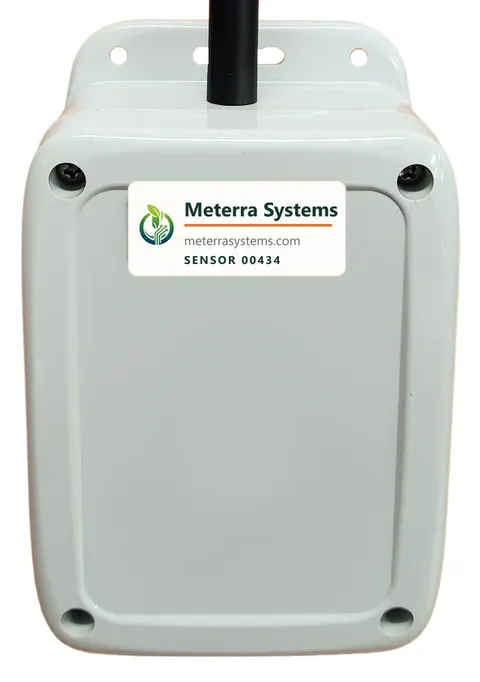
- Ultrasonic (non-contact). Mounted above the water, measuring the distance to the surface. Nothing is submerged, so nothing corrodes, fouls, or freezes. This is what Meterra uses on tanks.
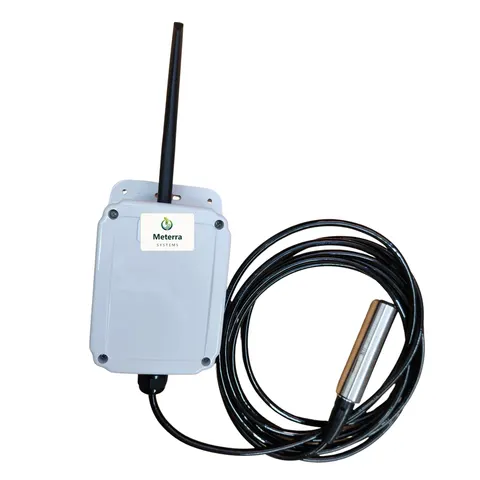
- Pressure transducer (submerged). A sealed probe in the water reads the pressure of the column above it. It sits in the water, but it reads depth directly and keeps reading beneath ice, which is why Meterra uses it on troughs, dams, and ponds.
- Float and reed switch. A float rises and falls with the surface. Simple and cheap, with moving parts that wear.
- Radar. Non-contact like ultrasonic, used mostly in industrial settings.
Connectivity
Readings travel over low-power cellular. NB-IoT is the standard designed for battery devices sending small amounts of data from remote sites, and LTE is available where needed at higher cost. No Wi-Fi, no hub, no power on site. For locations with no cell signal at all, low-orbit satellite is the alternative, with broader reach but more cost and less consistent coverage.
Alerts and reporting
Each sensor reports on a schedule and alarms the moment a level crosses a threshold you set, low for supply and high for overflow. Everything lands in an app and web dashboard: live level, percentage and volume, the trend over time, and export for records.
Go straight to the page for your water
This page is the general explanation. If you already know what you are watching, the page for it will be more use to you than this one, because each has the sensor choice, the mounting, the prices, and the failure modes for that specific job:
| What you are watching | The page you want |
|---|---|
| Tanks, troughs, and dams across a ranch | Livestock water sensors |
| Cattle stock tanks, including through winter | Stock tank monitoring |
| Storage, cistern, rainwater, off-grid supply | Water tank monitoring |
| A single tank, and you want the hardware | Tank Level Sensor, $299 |
| Ponds, dams, and reservoirs | Dam water level monitoring |
| A well, static level and drawdown | Well monitoring system |
| Diesel, fuel, and bulk chemical | Fuel tank monitoring |
| A wet well at a sewer lift station | Lift station monitoring |
| Reporting a diversion for a water right | Water rights telemetry |
| Feeding a reading into an existing SCADA | Wireless SCADA integration |
Everything below is the background: how the sensing actually works, and how to tell one system from another when you are comparing them.
How to choose a water level monitoring system
- Sensing method. Non-contact ultrasonic suits a tank you keep clear; a sealed submerged pressure sensor suits troughs, dams, and ponds, anywhere you read depth directly or beneath ice, or can’t see the surface from above.
- Connectivity and coverage. Match cellular or satellite to the signal at the actual site, and budget the connectivity plan alongside the hardware.
- Power and maintenance. Multi-year battery or solar, with as little in-water hardware as possible, keeps a remote site hands-off.
- Alarms. Confirm both low and high thresholds if overflow matters, not just low-water.
- One platform. Every site, whatever the water, should report into one account and one screen.
Why Meterra
Meterra matches the sensor to the site: non-contact ultrasonic on tanks, where keeping nothing in the water means nothing to silt, corrode, or foul; and a sealed submerged pressure sensor on troughs, dams, and ponds, where reading the depth, and reading it beneath the ice, is what the site needs. Two proven technologies, one app, level and trend and alarms over cellular on its own power, built for the way rural operations actually run.
The hardware for this job
Every device reports to the same Meterra dashboard and app.
Tell us your site and we'll map the right sensors and coverage.
Frequently asked questions
What is remote water level monitoring?
It is measuring water level at a site (a tank, dam, pond, trough, or reservoir) with a sensor that reports the reading remotely instead of someone checking it by hand. You see the live level and the trend, and get an alarm when the level is too low or too high.
What types of water level sensors are there?
The common methods are ultrasonic (non-contact, reads the surface from above), pressure transducers (submerged, read head pressure), floats and reed switches, and radar. Meterra uses non-contact ultrasonic so nothing sits in the water to foul, corrode, or freeze.
How is the data sent without Wi-Fi or power on site?
A low-power cellular network, NB-IoT, the standard built for sensors, lets a battery- or solar-powered sensor report from a remote site with no Wi-Fi, no hub, and no mains power. LTE is available where it's needed at a higher cost, and for sites with no cell signal at all, low-orbit satellite is the alternative, with broader reach but more cost and less consistent coverage. Confirming coverage at the specific site is the thing to do before buying.
How often does it report, and can it alert me?
Sensors report on a schedule, commonly hourly, and send an immediate alarm when a level crosses a low or high threshold you set. Reporting frequency can vary by device and setup.
What can I monitor with one system?
Tanks, stock tanks, troughs, dams, ponds, reservoirs, and wells, all into one app and dashboard, grouped by site, including across multiple properties.
Is non-contact sensing better than a submerged probe?
For most open and stored water it is more durable, because there is no probe in the water to silt up, corrode, foul, or freeze, and nothing to pull for cleaning. Submerged pressure sensors still have a place in deep or pressurized applications.
How accurate is it?
Ultrasonic sensing measures the surface distance and converts it to level, percentage, and volume for a defined tank or pond. It updates on a schedule and on alarm, so you see the trend, not just one reading.
How much does a water level monitoring system cost?
Most remote systems run from a few hundred dollars per site plus a connectivity plan; industrial and dam-safety systems cost more. Meterra's US rollout prices are $299 (Tank), $399 (Trough), and from $499 (Dam), each including three months of connectivity and full app access, with connectivity then from $10/month per device and discounts on annual subscriptions. Send your sites or call and we'll size the setup.
Related Meterra solutions
- Tank Level Sensor: non-contact ultrasonic level for tanks of almost any liquid or material.
- Trough Level Monitor: submerged pressure sensor with empty-trough alarms.
- Dam Level Monitor: depth in ponds and dams, down to 330 ft.
- Livestock Water Monitoring: ranch water, tanks and troughs and dams together.
- Stock Tank Monitoring: cattle stock tanks specifically.
- Water Tank Monitoring: storage, cistern, and off-grid tanks.
- Pond & Dam Monitoring: open water, with low- and high-water alarms.
- How to Choose a Remote Water Monitoring System: the questions that separate a good fit from a poor one.
- Video: Ultrasonic vs. Pressure, On a Job Site: both sensor types compared side by side.
- Reservoir Level Monitoring: irrigation and district reservoirs, with cable built to the site.