
Stock Tank Monitoring
A wireless sensor mounts over each stock tank and sends the water level and a low-water alarm to your phone. No Wi-Fi, no power at the tank, nothing in the water for cattle to wreck. $299, posted, with three months of connectivity included.
Tank Level Sensor, $299, with three months of connectivity included, then plans from $10/month per device. 60-day money-back guarantee and a one-year warranty on every sensor. In stock in the US. Orders ship within 1–2 business days. 4+ years in the field, 2,000+ devices in service.
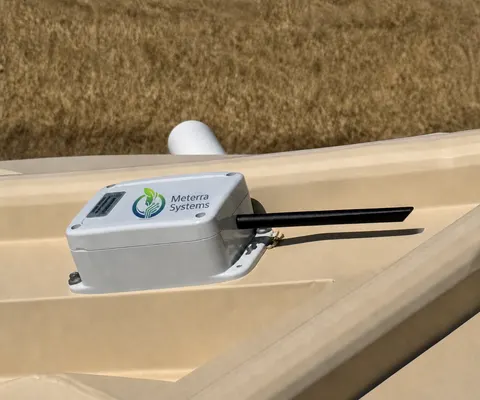
What is stock tank monitoring?
Stock tank monitoring is the continuous, remote measurement of water level in livestock tanks (the galvanized and poly tanks cattle and horses drink from), with the reading and any alarms sent to your phone. Instead of driving the pasture to eyeball each tank, you see the stock tank water level, the trend, and an alarm the moment a tank starts running low.
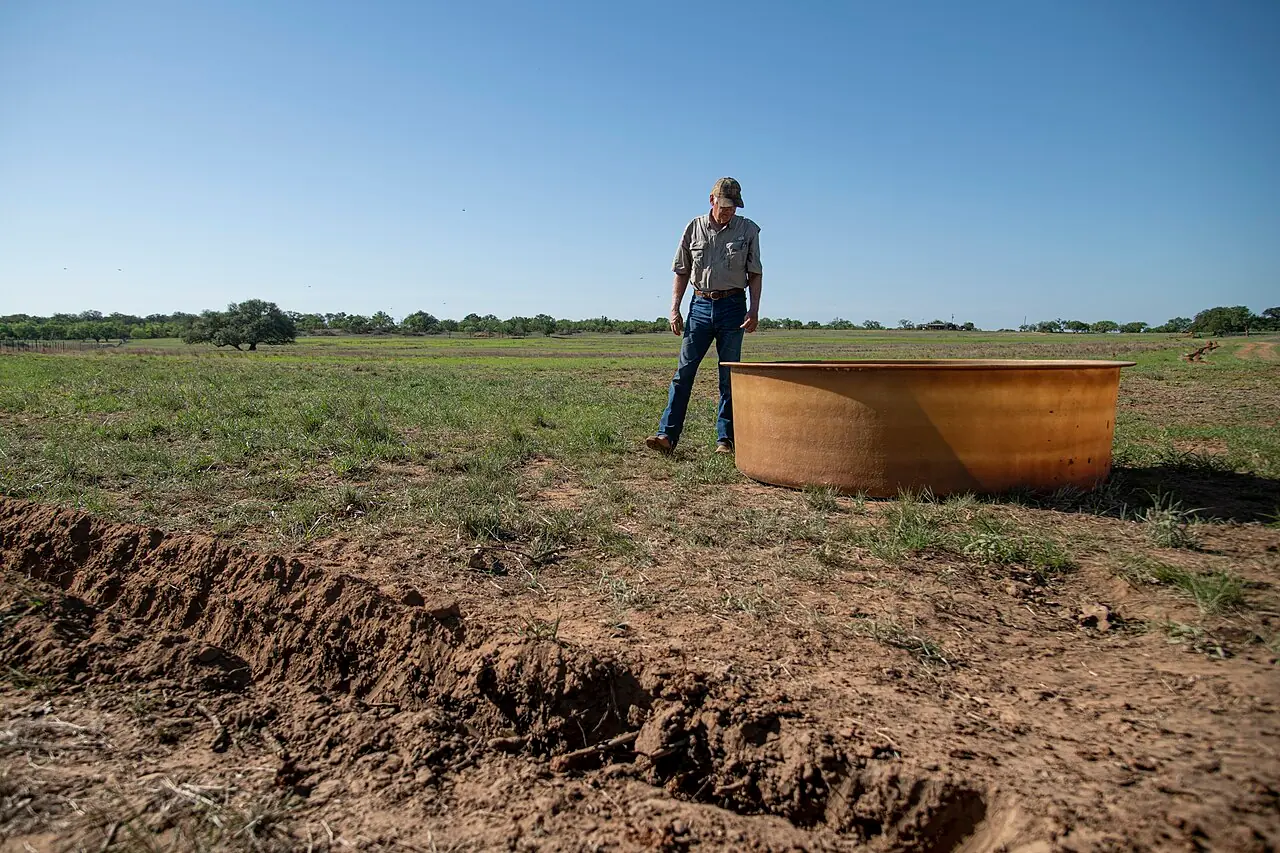
Every rancher knows the drive. Most days you burn the fuel and the hour to look at a tank that is doing exactly what it did yesterday. Then one day a float sticks or a line cracks, the tank drains between rounds, and you find out standing at the rim of a dry tank with thirsty cattle crowded around it, wondering how long it has been empty. Monitoring ends that. The daily loop becomes a glance at your phone, and a quiet failure becomes an alarm while there is still water in the tank and still time to act.
The price, posted
Here is the whole bill before you read another word. A stock tank water level sensor from Meterra, the Tank Level Sensor, is $299. The submerged option for troughs, the Trough Level Monitor, is $399. Each includes three months of connectivity, then plans run from $10/month per device, and every sensor carries a 60-day money-back guarantee and a one-year warranty. Sensors ship from US stock, tank sensors within 1 to 2 business days.
Most monitors in this category are sold by quote. Ours is sold by price tag, because a vendor who’s proud of the total posts it. Get any competing total in writing, put it next to ours, and if their column genuinely comes back better for your tanks, buy theirs. We post our numbers because we like how that comparison ends.
Why ranchers monitor stock tanks
The case comes down to labor, fuel, and the animals themselves:
- Stop driving to tanks that are fine. Drive out when a reading or an alarm says so, and only then. On a spread with water scattered across sections, that is real fuel and real hours back every week.
- Protect weight and welfare. Cattle off water in heat lose gains fast and are at real risk. An empty-tank alarm reaches you long before the next visual check ever would.
- Catch the failure while it is small. A stuck float, a cracked line, or a quit pump can drain or overflow a tank in hours. You want to hear about it while it is a repair, not a wreck.
University extension programs (UNL Beef, SDSU Extension) now cover remote water monitoring as standard ranch practice for exactly these reasons.
Monitoring stock tanks through winter
Winter is the hardest season for stock water, and it is the season most monitors are at their weakest. What the cold kills is the cheap hardware many stock-tank monitors put in the water: a plastic float or an unsealed probe freezes into the ice and fails right when you need it most. Meterra builds two sensors for two kinds of winter. The $299 Tank Level Sensor reads the surface with non-contact ultrasonic sensing from above, so there is nothing in the tank to freeze, crack, or get rubbed loose. The $399 Trough Level Monitor is a sealed pressure sensor that sits below the surface and keeps reading the water underneath the ice.
One limit, stated plainly: once a tank ices over, a surface sensor reads the ice, not the water beneath it. That is physics, and no surface sensor gets around it. So match the sensor to your winter. A heated tank, or one that stays open, takes the $299 ultrasonic unit, and the monitor tells you from the house on the coldest morning of the year whether the heater (from a submersible heater to a thermostatic system) is keeping up and the line is still feeding the tank. A tank that ices over and stays iced takes the $399 submerged unit, which reads the water through the ice cap. Either way: heater for the ice, monitor for the alarm, and the herd stays watered through a cold snap without a 5 a.m. drive.
How it works
A stock tank monitor has three parts worth understanding:
- The sensor. Ultrasonic and non-contact, mounted above the tank, reading the distance to the water surface. Nothing submerged to corrode or foul, and nothing for cattle to rub against.
- Connectivity. Verizon NB-IoT cellular. It needs no power or Wi-Fi at the tank, only rural coverage. Satellite is the alternative for sites with no signal at all.
- Alerts and history. Each sensor reports on a schedule and alarms the moment the level crosses a threshold you set. The Meterra app and dashboard hold live level, percentage and volume, and the trend over days or weeks.
Choosing a stock tank monitor
Five things separate a monitor that survives ranch duty from one that does not:
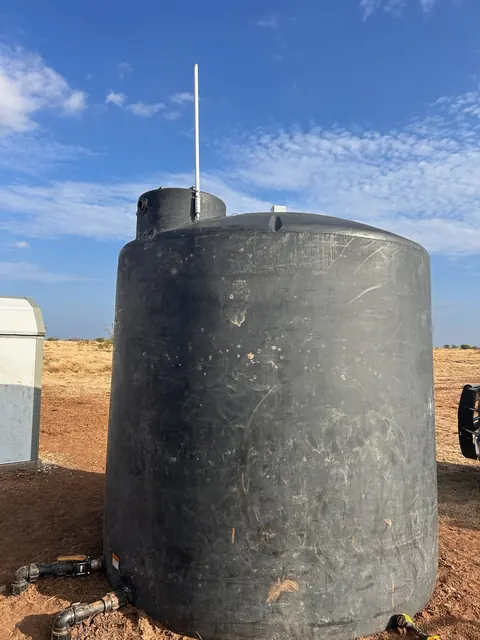
- Match the sensor to your winter. A tank that stays open or heated takes a non-contact surface sensor: nothing in the water to freeze, corrode, foul, or get rubbed loose. A tank that ices over and stays iced takes a sealed submerged sensor that reads the water beneath the ice. Cheap floats and unsealed probes do neither, and the difference shows up the first hard winter.
- Out of reach of stock. The unit must mount where cattle cannot rub or knock it. Anything they can reach, they will find.
- Power and battery. Multi-year battery or solar, with no wiring to run to the tank.
- Connectivity and coverage. Confirm cellular signal at the actual tanks, and insist on the connectivity plan in writing, not just the hardware price. Ours is posted, from $10/month per device.
- One account, every tank. Past a few tanks, or more than one place, everything should report into one screen.
Why Meterra
We think the right way to build a stock tank monitor for an open or heated tank is to keep the sensor out of the water, and we built ours that way on purpose. Non-contact ultrasonic means nothing to freeze, nothing to corrode, and nothing for cattle to wreck. It mounts above the tank and reports level, trend, and low-water alarms over cellular, on its own power, for years. It is the same sensor design Meterra has proven over four-plus years in the field, with 2,000+ devices in service, set up for the tank the herd drinks from. The price is $299, posted, with three months of connectivity in the box and a 60-day money-back guarantee to try it on the tank that worries you most.
Put your own tank count into the savings calculator and see what the checking drives cost you each year, or order the Tank Level Sensor and have it watching a tank this week.
This page is about the stock tank specifically. If you are watering out of troughs and dams as well and want the whole property covered, start from livestock water sensors.
The winter test
When the surface freezes over, we keep reading.
An ultrasonic sensor reads the first surface it hits, and in a hard freeze that’s the top of the ice. Meterra’s submerged pressure sensors read the water itself, so troughs, ponds, and dams keep reporting straight through winter, and a high-level alarm can still fire before an iced-over pond overflows.
One honest note: extreme cold shortens battery life on any electronics. We’ll help you plan for your climate.
The hardware for this job
Every device reports to the same Meterra dashboard and app.
Tell us your site and we'll map the right sensors and coverage.
Frequently asked questions
How do you monitor a stock tank remotely?
A sensor mounts above the stock tank, measures the water level without touching it, and sends the reading to your phone over the cellular network. You set a low-water threshold, and the moment the tank drops below it, the alarm is on your phone.
Will it work in winter when the tank can freeze?
The sensor itself handles the cold. Nothing is submerged to freeze, crack, or corrode the way the in-water probes many systems use will. Be clear on the one limit, though. Once a tank ices over on top, a surface sensor measures the ice, not the water below it, so it will not track the level under the ice. That is why winter monitoring pairs with a tank heater that keeps the water liquid. If your tanks ice over and stay iced, the $399 Trough Level Monitor is the submerged option that keeps reading the water beneath the ice. And the failures that have nothing to do with ice (a leak, a quit pump, a line that stopped filling) still trip the alarm all winter long.
Does the sensor get in the way of cattle?
No. It mounts above the water, out of reach, so stock cannot rub, scratch, or knock it the way they will with anything inside or beside the tank. Reading the surface from above keeps the hardware clear of the herd.
Will it catch a stuck float valve?
Yes, and that is exactly the failure it was built to catch. A float valve stuck open overflows the tank; stuck shut, the tank stops filling. Either way the level moves the wrong direction, and the alarm reaches you before the tank runs dry or runs over.
Does it need power or Wi-Fi at the tank?
No. It runs on battery or solar and reports over Verizon NB-IoT cellular, so it works on tanks far from any building, power line, or Wi-Fi signal.
How many stock tanks can I monitor?
As many as you put sensors on. Every tank reports into one app, so you check the whole outfit, and several properties, from one screen instead of driving each pasture.
How long does the battery last?
2+ years on a single battery, with solar as an option for indefinite runtime. There is no wiring to maintain at the tank.
How much does stock tank monitoring cost?
The prices are posted, not quoted. The Tank Level Sensor is $299 and the Trough Level Monitor is $399, each including three months of connectivity and full app access. After that, connectivity runs from $10/month per device, with discounts on annual subscriptions, and every sensor carries a 60-day money-back guarantee and a one-year warranty. That is the whole bill in writing, so run it against any quote you're handed. Send your details or call and we'll size a multi-tank setup for you.
Related Meterra solutions
- Livestock Water Monitoring: the full ranch-water picture, tanks and troughs and dams together.
- Tank Level Sensor: the non-contact sensor behind this application.
- Trough Level Monitor: the submerged option that keeps reading under ice, $399.
- Water Tank Monitoring: the same approach for storage, cistern, and off-grid tanks.
- How Much Water Do Cattle Drink Per Day?: what normal daily draw-down looks like, and what abnormal means.
- Trail Camera vs. Water Level Sensor: an honest comparison with the budget alternative.
- Do Water Sensors Need Power or Wi-Fi?: how battery and cellular sensors run where there is no outlet or router.
- Keeping Algae Out of Troughs: practical ways to keep stock water clean.