
Do Remote Water Sensors Need Power or Wi-Fi?
No. Meterra's wireless water sensors run on battery or solar and send their readings over the cellular network, so they need no mains power, no generator, and no Wi-Fi at the tank. That's exactly what lets them work on the back of the property, where there's no power line and no signal for miles. What they do need is cellular coverage at the watering point — which we confirm before you buy.
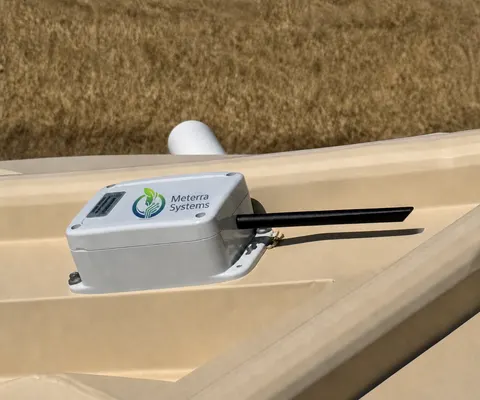
The short answer
A remote water sensor that needed a power line and a Wi-Fi signal would be useless where you most need it — the far tank, the back dam, the lease across the highway. So Meterra’s sensors are built to need neither. They carry their own power and their own connection, which is the whole point of “wireless.”
Why they don’t need power
The sensor runs on an internal battery sized for years of service — typically 2+ years — because both the ultrasonic electronics and the cellular radio are engineered for very low power draw. It wakes on a schedule, takes a reading, sends it, and goes back to sleep. Where you’d rather never touch a battery, a small solar option keeps it topped up indefinitely. Either way, there’s no mains power, no generator, and no wire to trench out to the tank.
Why they don’t need Wi-Fi
Instead of joining a local network, the sensor connects straight to the cellular network over NB-IoT — a low-power standard built for exactly this kind of device. There’s no router to reach, no hub to install at the tank, and no dependence on the farm’s internet. A Wi-Fi-based monitor would need a network within range of every tank, which simply doesn’t exist across a working property; cellular removes that constraint entirely.
What they do need
One thing: cellular coverage at the watering point. That’s the single requirement, and it’s a low bar — NB-IoT reaches further and pushes through obstacles better than a phone call, so spots that drop your calls often still carry sensor data. We confirm coverage at your exact locations before recommending hardware, and for the rare site with no signal at all, satellite is the fallback.
Why this makes installation easy
Needing no power and no network is what makes these sensors something you install yourself. With nothing to wire and nothing to configure, most level sensors go up in about 15 minutes with basic tools — no electrician, no trenching, no IT. Mount it over the water, let it connect, set your alarm thresholds, and it’s working. See the full walkthrough in how to monitor livestock water remotely.
The hardware this guide covers
Every device reports to the same Meterra dashboard and app.
Tell us what you need to keep an eye on and we'll map the right sensors and coverage.
Frequently asked questions
Do remote water level sensors need power?
No mains power. Meterra sensors run on an internal battery — typically 2+ years thanks to ultra-low power draw — with solar available where you want indefinite runtime. There's nothing to plug in and no wiring to run to the tank.
Do they need Wi-Fi?
No. The sensors report over Verizon NB-IoT cellular, which connects to a cell tower directly, so they don't use the farm's Wi-Fi or any router or hub at the tank. The farm's internet and the sensor's connection are completely separate.
Then what do they actually need?
Cellular coverage at the watering point. That's the one requirement, and NB-IoT reaches further than a phone call, so most rural sites are covered. We check coverage for your exact locations first; where there's none, satellite is the alternative.
How long does the battery last?
Most setups run 2+ years on a single battery because NB-IoT and the sensor electronics are designed for very low power. Solar is an option where you'd rather never change a battery.
How hard is the install without power or Wi-Fi?
Easier, not harder — with nothing to wire and no network to configure, most level sensors mount in about 15 minutes with basic tools. No electrician, no trenching, no IT setup.
Related Meterra pages
- Water Level Monitoring: how non-contact, wireless level sensing works.
- Tank Level Sensor: battery/solar ultrasonic sensor for any tank.
- Cellular vs. Satellite Water Monitoring: choosing the connection for off-grid sites.
- How to Monitor Livestock Water Remotely: the complete setup walkthrough.