
Cellular vs. Satellite for Remote Water Monitoring
For most farm and ranch water monitoring, low-power cellular is the better buy, and the reason is physics you can price: data costs less to move over a cell tower than over a satellite. The default is NB-IoT, a cellular standard built for sensors that draws very little power, costs the least to run, and works wherever there's rural coverage, with Meterra's plans posted from $10 a month per device. Standard LTE is available where you need it, at a higher cost. Low-orbit satellite is the option for truly off-grid sites with no cell signal at all: it reaches almost anywhere, but it costs more and tends to be less consistent. The right answer comes down to coverage at your specific watering points, and the right bill is the one you can read before you buy.
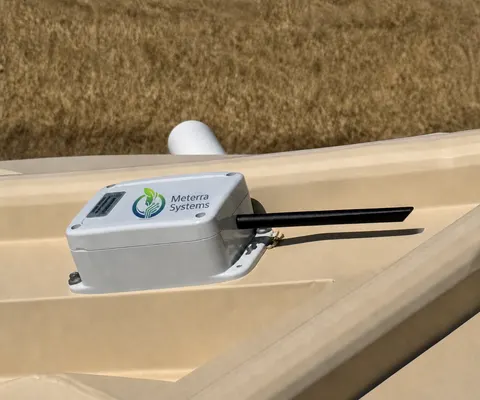
Three ways to get a reading off a remote tank
Every option does the same job: move a level reading from a remote tank to your phone. They just take different roads, and the roads are priced very differently.
- NB-IoT (the default). A narrowband, low-power cellular standard purpose-built for sensors. The device carries a SIM, talks to the nearest cell tower, and sends small packets of data on very little power. It’s the cheapest to run and the easiest on the battery. That’s exactly why it’s Meterra’s standard.
- LTE (where it fits better). The same cellular network your phone uses. It carries more data and often reaches more places, but it costs more and draws more power than NB-IoT. We use it where a site genuinely calls for it, not as a default.
- Low-orbit satellite (for true dead zones). The sensor sends its reading up to a passing satellite instead of a tower. No ground infrastructure needed, so it works almost anywhere with a clear view of the sky. You pay more for that reach, and you get less consistency.
Cost and power
This is where NB-IoT runs away with it for everyday use, and where satellite earns its premium:
- Hardware and subscription. NB-IoT devices and plans are the least expensive, up front and monthly. LTE costs more. Satellite costs the most. That’s the price of the reach.
- Power draw. NB-IoT is engineered for ultra-low power. That’s what lets a sensor run for years on a battery. LTE uses more, and satellite generally burns the most energy per message.
- Reporting frequency. Cheap, low-power messages mean cellular can report on a comfortable schedule. Satellite plans often meter messages tightly to keep the bill in check.
Here’s the part you can verify tonight: Meterra’s numbers are posted. Sensors are $299 (Tank), $399 (Trough), and from $499 (Dam), each with the first three months of connectivity included, then plans from $10/month per device. If a satellite-first quote lands on your desk, ask for its monthly number in writing and set it next to ours. A vendor who’s proud of the total posts it, and the cheaper way to move a water reading is the tower, not the sky.
Coverage and reliability
The only question that matters is what’s available at this exact spot. Here’s the trade, stated plainly:
- Cellular is consistent where it reaches. NB-IoT in particular reaches further and pushes through obstacles better than voice or smartphone data. A watering point that drops your phone call will often carry sensor traffic without a hiccup.
- Satellite reaches places cellular can’t, but it isn’t automatically the more dependable choice. A low-orbit network depends on a satellite being overhead when the sensor reports, and consistency varies. It solves “no signal at all.” That’s the job it’s for.
So check coverage at the actual location. Don’t assume a spot is a dead zone, and don’t assume satellite is a free upgrade. It isn’t.
How to choose
- List your watering points and roughly where each one sits.
- Check coverage at those points. Not the ranch headquarters. The actual tanks and dams.
- Use NB-IoT wherever it reaches, which on most operations is nearly everywhere.
- Step up to LTE where a particular site calls for it.
- Reserve satellite for the genuine dead zones with no carrier signal at all.
Our take. Cellular first, every time coverage allows, because the connectivity plan is the number you keep paying long after the hardware is a memory. Meterra runs on Verizon NB-IoT cellular by default, with LTE and satellite available where a site needs them, and the whole bill is in writing before you spend a dollar: sensors from $299 with three months of connectivity included, then plans from $10/month per device. See how to monitor livestock water remotely for the full setup, or whether sensors need power or Wi-Fi for the rest of the infrastructure question. Then tell us where your watering points sit, we’ll check coverage before you buy, and run your tank count through the savings calculator to see what the cellular-first math does for your operation.
The hardware this guide covers
Every device reports to the same Meterra dashboard and app.
Tell us what you need to keep an eye on and we'll map the right sensors and coverage.
Frequently asked questions
Is cellular or satellite better for remote water monitoring?
Cellular wins for most operations. Lower cost, lower power, and reliable wherever there's rural coverage. The default is NB-IoT, a low-power cellular standard built for sensors. Standard LTE is available where a site needs it, at a higher cost. Satellite is the right call only where there's no cell signal at all. The deciding factor is coverage at your actual watering points, not a blanket rule.
What's the difference between NB-IoT and LTE?
Both are cellular. NB-IoT is a narrowband, ultra-low-power standard purpose-built for sensors that send small amounts of data. It's the most economical, the easiest on a battery, and Meterra's default. Standard LTE carries more data and reaches more places, but it costs more to run and draws more power, so we use it where it's genuinely the better fit for a site.
Will cellular work on the back of my property?
Usually, yes. NB-IoT is built for exactly this. It reaches further and punches through obstacles better than the signal on your phone, so spots that drop your calls often still carry sensor data just fine. We confirm coverage for your location before recommending hardware.
When do I actually need satellite, and what's the catch?
Use satellite when a watering point has no cellular coverage whatsoever. Think deep canyons, remote back-country, or far-flung leases beyond any carrier. The catch is cost and consistency. The hardware and the plan cost more, and low-orbit coverage depends on a satellite being overhead when the sensor reports. It's the right tool for true dead zones, not a default.
Does cellular monitoring need the farm's Wi-Fi?
No. Cellular sensors connect to the carrier network directly, so there's no Wi-Fi, router, or hub at the tank. Your farm's internet never enters the picture.
How do I find out which one I need?
Tell us where your watering points are. We check coverage for those exact locations and recommend NB-IoT where it reaches, LTE where it's the better fit, and satellite only where there's no cell signal at all. You never pay for more connectivity than the site requires.
Related Meterra pages
- Water Level Monitoring: how remote level sensing works end to end.
- Tank Level Sensor: the cellular ultrasonic sensor for any tank.
- How to Monitor Livestock Water Remotely: the full setup, start to finish.
- Do Water Sensors Need Power or Wi-Fi?: the rest of the no-infrastructure question.