
Trail Camera vs. Water Level Sensor for Checking Stock Tanks
A cellular trail camera pointed at a stock tank genuinely works: a camera in the $100 class sends you a photo every morning, and extension programs document ranchers checking water exactly this way. Its limits are just as real. You have to look at every photo, there is no alarm when the level crosses a line, no number or trend history, and it can't start a pump. The job decides this one. One close tank you pass daily, a camera is fine; scattered tanks, winter, or automation, that is territory for the $299 sensor.
If you’ve got one tank on a road you drive anyway, a cellular trail camera pointed at it is a reasonable tool, and this isn’t a page that pretends otherwise. The honest comparison starts by giving the camera its due — then being just as straight about where it stops.
Give the camera its due
A cellular trail camera costs anywhere from $50 to several hundred dollars, straps to a T-post in ten minutes, and sends a photo of your tank to your phone on a schedule — sunrise and evening are the usual picks — or when motion trips it. That photo answers the question you’d otherwise burn diesel to answer: is there water, and are cattle on it. This isn’t a hack we’re grudgingly acknowledging; SDSU Extension documents both approaches and notes research indicates producers may spend over $1,500 a year on fuel just checking water. A camera that cuts half those trips pays for itself the first season.
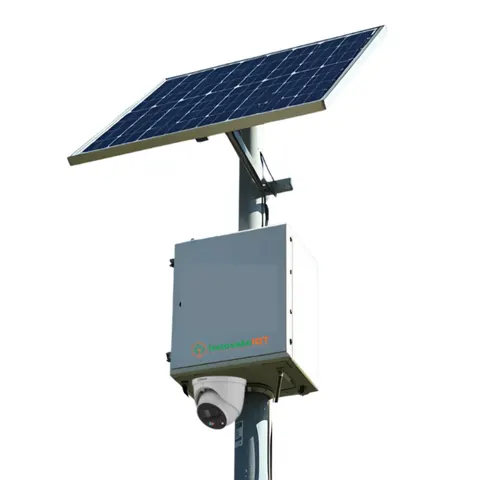
It also does the one job no level sensor will ever do: it shows you things. The heifer standing in the tank. The elk that have been hammering your trough every night. The truck that has no business on your place at 2 a.m. If eyes on the property are part of why you’re shopping, that’s a real point for the camera — it’s the same reason cameras anchor the farm security side of a ranch setup, which is their actual job.
Where the photos stop helping
The limits are just as concrete, and they’re worth naming one at a time.
You have to look. The camera sends photos whether or not anything is wrong. The morning photo of a tank that quit filling overnight arrives with the same quiet buzz as every other morning’s photo, and if you’re branding, hauling, or just human and skip a day, nothing chases you down. There is no 2 a.m. alarm because the camera doesn’t know what a water level is.
No number, no trend. A photo tells you “looks about half.” It cannot tell you the tank dropped 14 inches since yesterday — which is the difference between cattle drinking and a split line. SDSU’s write-up puts it flatly: with cameras there are “no metrics or additional data collection available besides images.” You can’t graph a photo, and you can’t see the signature of a leak — a drain that runs around the clock at a near-constant rate — versus drinking, which clusters in daylight. That trend line is the whole diagnostic.
Night, fog, glare, and frost. Infrared over open water at night mostly gets you glare. Fog and a frosted lens blank the image entirely. The conditions where you most need to see a tank — a January night, a socked-in morning — are the ones a camera sees worst.
Cell service, at that exact spot. A photo takes real bandwidth, so the camera needs solid cellular signal right where the tank sits. A level reading is a few bytes — narrowband cellular gets through where photos won’t, and satellite covers the places nothing else reaches.
It can’t do anything. A photo of a tank running over is still just a photo. The camera cannot close a valve, start a pump, or stop one. If the answer to a bad reading is a 40-minute drive either way, you’ve only automated the noticing.
What a sensor changes
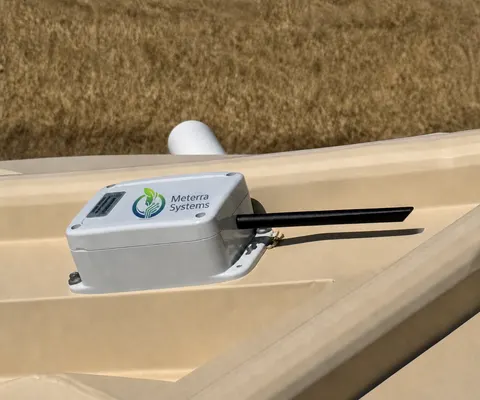
Name the job first. You’re not hiring a gadget to show you the tank; you’re hiring it to know the water is failing before the cattle do, and then to do something about it. That is the job the $299 Tank Level Sensor is built for, price posted, three months of connectivity in the box.
A level sensor replaces “looks about half” with a number and a timestamp. That gets you three things a camera structurally can’t do: an alarm the moment the level crosses a line you set — at 2 a.m., not at breakfast when you get around to the photo; a trend history that tells you why the level is moving, not just that it did; and control — the same tank sensor can drive a pump or valve controller for auto-fill and shutoffs, with manual control from the app always there. It runs on its own battery and cellular or satellite link — no farm Wi-Fi, no utility power — which is the point on a tank three pastures out. The full picture of how this works across a place is on the stock tank monitoring page.
Now the honest limit of our side of this comparison: a sensor gives you numbers, not eyes. It will tell you the tank dropped two feet since Tuesday; it cannot tell you whether that’s a leak, a float stuck open, or the neighbor’s cattle through the fence. It will never show you a predator, a trespasser, or a cow in trouble. If you need to see, you need a camera, and there’s nothing wrong with running both — camera for eyes, sensor for numbers. That’s a complementary setup, not a redundant one.
The cost math, straight
Run it over three years, since both tools should last that long.
Camera: a $100-class unit plus a photo plan — some bill by image volume, some flat monthly. Give it the same $10 a month a sensor plan costs and you’re at roughly $460 over three years. A lighter plan, less.
Sensor: the Tank Level Sensor is $299 with the first 3 months of connectivity and the dashboard included, then plans from $10 a month — about $629 over three years, with a 60-day money-back guarantee and a 1-year warranty on the hardware. (Worth noting: SDSU’s write-up puts commercial monitoring systems at $500 and up.)
So the camera wins on cash, most ways you run it. The roughly $170 difference is what you’re paying for threshold alarms, real numbers, trend history, and pump control. For the full math across multiple tanks and setups, see the cost guide.
Notice that both columns above are complete, because we posted them. The sensor’s whole bill has no quote step: $299, three months of connectivity included, then plans from $10 a month, with a 60-day money-back guarantee as the exit if it disappoints. If the camera’s column wins the job on your one close tank, buy the camera. We can afford to say that in public because on every other setup, the sensor does the parts of the job a camera can’t do at any price: the 2 a.m. alarm, the trend line, the pump.
Which one fits your setup
One close tank you drive past anyway — a camera is fine, and we’ll say it plainly. If you’re already passing it daily, you may not need either.
Scattered tanks and long drives — sensor. The fuel and hours are the real cost, and alarms mean you drive only when something’s wrong.
Winter — sensor, submerged-pressure type, which keeps reading under the ice while a camera fights frost and glare.
Off-ranch job or absentee ground — sensor. If nobody’s looking at photos by mid-morning, photos aren’t monitoring.
Any automation — sensor, full stop. A camera will never start your pump.
Both — legitimate. Camera for eyes, sensor for numbers, and the two cover each other’s blind spots. If you’re still weighing the whole landscape, the remote livestock water guide walks the full decision.
Tell us your setup: how many tanks, how far out, what cell service looks like there, and we’ll map the right sensors to it. If the honest answer for your place is a $100 camera on a T-post, we’ll tell you that too. If it isn’t, the $299 Tank Level Sensor is posted, ships from US stock in 1 to 2 business days, and carries the 60-day guarantee: run your tank count through the savings calculator and see what the checking drives are costing you now.
The hardware this guide covers
Every device reports to the same Meterra dashboard and app.
Tell us what you need to keep an eye on and we'll map the right sensors and coverage.
Frequently asked questions
Can I use a trail camera to monitor my stock tank?
Yes, and it's a legitimate approach. A cellular trail camera strapped to a post with the tank in frame will send you a scheduled photo that answers the basic question of whether there's water. Extension programs document ranchers doing exactly this. Just go in knowing it's a visual check, not a monitoring system. No alarms, no numbers, no history.
Will a trail camera alert me when the water gets low?
No. A camera sends photos on a schedule or when motion trips it. It has no idea what the water level is, so it can't tell you when the level crosses a threshold. The photo of a nearly empty tank arrives with the same quiet notification as the photo of a full one, and if you skip checking for a day, you miss it. A level sensor exists precisely to send that alarm.
How does the cost compare over a few years?
The camera usually wins on cash. A $100-class camera plus a photo plan comes in under a $299 Tank Level Sensor with service at $10 a month after the included first 3 months, roughly $460 versus $629 over three years if you give both the same monthly rate. The difference buys you threshold alarms, real numbers, trend history, and the ability to run a pump or valve. Whether that's worth it depends on your setup, not on marketing.
Can a water level sensor replace a camera for security?
No, and we'd rather say so plainly. A sensor reports numbers. It will never show you a trespasser, a predator, or the heifer standing in your tank. If eyes on the property matter, that's a camera's job, and running both is a perfectly sensible setup rather than overkill.
Which handles winter better?
The sensor, if it's the right kind. A submerged pressure sensor reads true depth and keeps reading under ice, while a camera fights lens frost, fog, and infrared glare off snow at exactly the times you most need to see. One honest caveat. A non-contact ultrasonic sensor reads the top of the ice once a tank caps over, so for hard-freeze country you want the submerged type.
Related Meterra pages
- How to Monitor Livestock Water Remotely: the full decision guide, camera to sensor to automation.
- Remote Water Monitoring Cost: the complete cost math across setups and herd sizes.
- Tank Level Sensor: the $299 sensor in the comparison, specs and pricing.
- Farm Security: where cameras genuinely earn their keep.