
Ultrasonic vs. Pressure Water Level Sensors: Which Is Better?
The core difference is contact. A pressure (submerged) sensor sits in the water and reads the weight of water above it; an ultrasonic sensor mounts above the water and measures the distance down to the surface. On a tank you keep clear, non-contact ultrasonic is usually the better choice, because nothing is submerged to corrode, foul with algae, or crack in a freeze. That's why Meterra uses it on tanks. A submerged pressure sensor earns its place wherever you need to read the water itself: troughs and open water that ice over, where reading beneath the surface beats reading the top of the ice, plus deep wells and pipes you can't see into from above. Meterra uses a submerged sensor on troughs, dams, and ponds for exactly that reason.
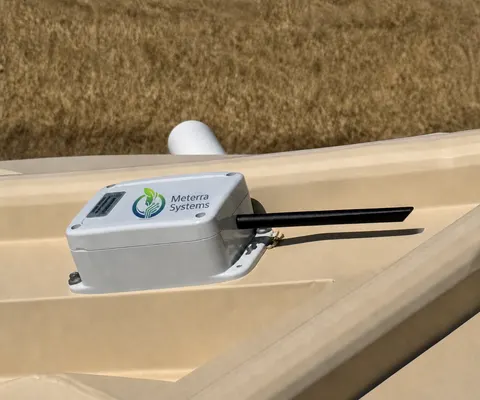
How each one works
The two technologies measure the same thing, water level, from opposite directions.
- Ultrasonic (non-contact). The sensor mounts above the water and fires a pulse of sound straight down. It times the echo off the surface, converts that distance to level, and reports percentage full and volume for your tank’s dimensions. Nothing ever touches the water.
- Pressure (submerged / hydrostatic). The sensor sits at the bottom and reads the weight of the water column above it. More water means more pressure, and pressure converts directly to depth. The probe lives in the liquid full-time.
They also differ in what they can measure. Ultrasonic reads the distance to a surface, any surface. Water, diesel, liquid fertilizer, even dry, granular material like grain or feed in a silo. A pressure sensor needs a liquid column pressing down on it, so it reads liquids and nothing else. Think of ultrasonic as the swiss-army-knife and pressure as the liquid specialist.
Both are accurate when they’re working. The real question is what shape each one is in after months in the field.
Here are all three side by side on a real job site: the ultrasonic sensor, the 15 ft pond sensor, and a 165 ft dam level sensor.
Why contact is the deciding factor
A farm sensor has to survive algae, sediment, livestock, sun, and frost. That fight goes very differently depending on whether the hardware sits in the water or above it:
- Fouling. Algae, scale, and sediment coat a submerged probe and drift its readings. A non-contact sensor never touches any of it.
- Corrosion. Constant immersion eats at submerged hardware, and fertilizer or brackish water eats faster. Above the surface, there is nothing to corrode.
- Freeze durability. A shallow submerged probe can freeze into the ice and crack. On a tank, the above-surface ultrasonic unit is simply the tougher hardware. The catch: an above-water sensor reads the top of the ice, while a submerged sensor keeps reading the water underneath it. That is exactly why Meterra puts a sealed submerged sensor on troughs, dams, and ponds that freeze (more on that below).
- Damage and access. A submerged sensor and its cable sit in the water, where they can foul or be disturbed. An above-mounted unit sits clear of all of it. You accept that trade only where it pays: when you need to read the water itself, under ice or out of sight from above.
Where a pressure sensor still wins
Non-contact needs a clear shot at the surface. Where there isn’t one, pressure is the right tool, full stop:
- Deep, narrow wells and bores. No line of sight to the water means no ultrasonic reading. This is how Meterra reads bore and groundwater depth.
- Inside pipes and pressurized lines, where there is no open surface at all.
- Troughs and open water that ice over. Stock troughs, dams, and ponds in winter. A surface sensor reads the top of the ice; a submerged depth sensor keeps reading the actual water beneath it. Meterra’s trough, dam, and pond monitors use a submerged sensor for exactly this reason.
- Water you need to read away from the bank. An above-water sensor has to be mounted over the spot it reads, which means building something over the water. A submerged sensor goes wherever you can get it, and its cable carries the reading back to the communication box on dry ground. That is why cable length is a question of reach as much as depth: we are putting a 165 ft cable on a pond only a few feet deep, so the sensor can sit out in the middle while the box stays on the shoreline.
Which should you choose?
Here’s our take, and it’s the one we build to. For an above-ground tank, ultrasonic wins. Nothing submerged to foul, corrode, or crack in a freeze, and the same unit reads water, diesel, and fertilizer. Reach for a submerged depth sensor where the whole point is to read the water itself: troughs, dams, and ponds that ice over, plus deep wells, bores, and closed pipes you can’t see into from above. That is precisely how Meterra deploys them, non-contact ultrasonic on tanks and submerged pressure on troughs, dams, and ponds. Match the sensor to the vessel and both technologies do their best work.
The winter test
When the surface freezes over, we keep reading.
An ultrasonic sensor reads the first surface it hits, and in a hard freeze that’s the top of the ice. Meterra’s submerged pressure sensors read the water itself, so troughs, ponds, and dams keep reporting straight through winter, and a high-level alarm can still fire before an iced-over pond overflows.
One honest note: extreme cold shortens battery life on any electronics. We’ll help you plan for your climate.
The hardware this guide covers
Every device reports to the same Meterra dashboard and app.
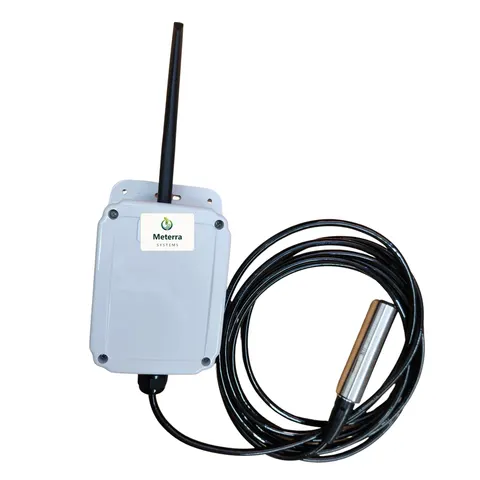
Tell us what you need to keep an eye on and we'll map the right sensors and coverage.
Frequently asked questions
What's the difference between ultrasonic and pressure water level sensors?
An ultrasonic sensor mounts above the water and measures the distance to the surface with sound, so nothing ever touches the liquid. A pressure (hydrostatic) sensor sits submerged and measures the head of water above it. Ultrasonic is non-contact, pressure is in the water, and that one difference drives nearly everything that matters in the field. Fouling, corrosion, freeze behavior, and what each can measure. Meterra builds both technologies because neither wins on every site, and selling both is what lets us tell you straight which one your water needs.
Which is better for stock tanks, troughs, and dams?
Match the sensor to the vessel. On a tank you keep clear, ultrasonic wins, no submerged probe to foul with algae, corrode, or freeze and crack. That is Meterra's $299 Tank Level Sensor. On troughs, dams, and ponds Meterra uses a submerged pressure sensor instead, the $399 Trough Level Monitor (on a standard 10 ft cable) and the Dam Level Monitor (from $499) for open water, because a sensor in the water keeps reading beneath the ice, exactly when those sources are hardest to check and most critical to watch. Every one of those prices includes three months of connectivity, and every one is posted.
When is a pressure sensor the right choice?
When you can't get a clear shot at the surface from above. Deep, narrow wells and bores, inside pipes, or any water that ices over. There, a submerged pressure sensor is often the only practical option, and depth sensors are exactly how Meterra reads bore and groundwater levels. It also reaches where non-contact never will, and reach means two things here. Depth is the obvious one, and the Dam Level Monitor (from $499) reads open water to about 330 ft (100 m) of water column, from a stock pond to a serious reservoir, on one posted price. Placement is the one most spec sheets never mention. The sensor goes in on a cable instead of needing a post or frame built over the water, so it can sit out in the middle of a pond or in the corner that always gives you trouble, with the cable carrying the reading back to the communication box on dry ground. We build that cable to any length up to about 330 ft, which is why we are putting a 165 ft cable on a pond only a few feet deep.
Does ultrasonic work on fuel and fertilizer, not just water?
Yes, and it goes beyond liquids. Because it simply measures the distance to a surface, ultrasonic sensing reads water, diesel, and liquid fertilizers like UAN, plus dry, granular materials like grain or feed in a silo. A pressure sensor works by the weight of the water column above it, so it reads liquids only. That reach is why the $299 Tank Level Sensor covers so many liquid jobs beyond water, why the $450 Silo Level Sensor uses the same technology for grain and feed, and why ultrasonic is the more versatile of the two.
Do ultrasonic sensors work in freezing weather?
The hardware handles cold well. With nothing submerged, there is no probe to freeze in and crack. But once the surface freezes over, an ultrasonic sensor reads the top of the ice, not the water beneath, so it won't track the level under a sheet of ice. For a heated tank that's fine. For troughs, dams, and ponds that ice over, a submerged depth sensor that reads beneath the surface is the better tool, which is exactly what Meterra puts on those sites. If you're choosing for a specific site, put one sensor on it and let a winter prove it. Every Meterra sensor is backed by a 60-day money-back guarantee and a one-year warranty, so the worst outcome is a refund.
Related Meterra pages
- Water Level Monitoring: how non-contact level sensing works across all your water.
- Tank Level Sensor: the ultrasonic sensor for tanks, fuel, and fertilizer.
- Dam Level Monitor: submerged pressure level for dams and ponds.
- How to Monitor Livestock Water Remotely: putting the sensor to work across a property.
- Video: The Pressure Sensor, Explained On Site: the dam level sensor and how submerged pressure sensing works.
- Video: Ultrasonic vs. Pressure, On a Job Site: both sensor types compared side by side.