How Much Water Do Cattle Drink Per Day?
The working rule from extension research is about 1 gallon per 100 pounds of body weight in cool weather and close to 2 gallons per 100 pounds in the hottest weather — roughly double. In real terms, a 1,300-lb lactating cow drinks around 15 gallons a day at 50°F and 22 or more at 90°F, and her calf adds 5–10 gallons of its own in high heat. Those numbers set your storage and refill math; the day-to-day pattern on a level chart tells you whether the water is going into cattle or into the ground.
Reviewed by Dr. Nicole Sorensen, DVM · Mtn Green Animal Hospital · Agave Animal Hospital · August 2026
The numbers, by class and temperature
Start with the rule of thumb from University of Nebraska–Lincoln extension: about 1 gallon of water per 100 pounds of body weight in cold weather, and nearly 2 gallons per 100 pounds in the hottest weather. Non-lactating cows and bulls sit at the low end; growing animals and lactating cows need the full 2 gallons per 100 lb once it’s hot.
The Alabama Cooperative Extension tables put real gallons on that, per head per day:
- Growing steers or heifers, 600 lb — 6 gallons at 50°F, 8 at 70°F, 13 at 90°F
- Dry, pregnant cows, 1,100 lb — 7 at 50°F, 10 at 70°F, 17 at 90°F
- Lactating cows, 1,300 lb — 15 at 50°F, 20 at 70°F, 22 at 90°F
- Mature bulls, 1,600+ lb — 10 at 50°F, 13 at 70°F, 22 at 90°F
Two things jump out. Lactating cows drink close to double what dry cows do — milk is mostly water, and it has to come from somewhere. And heat moves the number more than class does: that dry cow’s 7 gallons at 50°F becomes 17 at 90°F, well more than double. In a drought summer, the hot-weather column is the only one that matters.
Calves drink too — don’t leave them out of the math. UNL figures a spring-calving cow at 20–24 gallons a day in high heat, plus 5–10 gallons for her calf. A pair in serious summer heat is a 25–30 gallon-a-day animal unit.
Sizing storage and refill: 50 pairs at 95°F
Here’s the worked example. Say you’re running 50 pairs on a summer pasture where afternoons hit 95°F.
Daily demand. The 90°F table says 22 gallons for a 1,300-lb lactating cow; at 95°F with a calf drinking 5–10 gallons alongside her, plan on about 30 gallons per pair. That’s 1,500 gallons a day for the herd — every day, without a miss.
Storage. Storage is your insurance against the well quitting or a haul running late. Two to three days of buffer means 3,000–4,500 gallons — say a 3,000-gallon tank at minimum, 5,000 if the site is remote enough that a failure takes a day to even discover. That discovery lag is exactly what remote livestock water monitoring removes: you find out the morning the refill fails, not on your next drive-by.
Refill. Check that supply actually covers demand. A well delivering a steady 4 gallons per minute produces 5,760 gallons a day — comfortable. A 2-gpm well produces 2,880 — still fine, but only if the pump runs when it should, which is worth verifying with a flow monitor rather than assuming. Hauling with a 1,000-gallon trailer means a load and a half every single day; the math on cutting hauling trips is its own guide.
Access. Gallons in the tank don’t help if cattle can’t reach them. South Dakota State extension figures cattle need about 3 linear inches of waterer space per animal in summer — for 50 cows, that’s roughly 12–13 feet of accessible trough rim before you count the calves.
What normal draw-down looks like, and what it doesn’t
Once a trough or tank sensor is reporting, the daily chart becomes the most honest census of the numbers above. A normal day has a shape: the level stair-steps down while cattle are drinking — clustered after sunup and again toward evening, when they come to water — then goes nearly flat overnight. Refills show as sharp rises when the float or pump does its job.
The failures each break that shape in their own way:
- A steady decline that runs all night at a near-constant rate is a leak, not thirst. Cattle sleep; split lines don’t. A draw-down that looks the same at 2 a.m. as at 2 p.m. is water going into the ground.
- Consumption that suddenly halves can mean a stuck float upstream starving the trough, fouled water the cattle are refusing, or simply half the herd moved to another pasture. The chart flags it; you sort out which.
- A refill that never comes — the level drops and drops with no recovery step — is a quit pump or a dead line, and it’s the one to catch before the buffer you sized above runs out.
None of this needs invented thresholds. It’s the same engineering logic as the tables: drinking follows cattle behavior and daylight; leaks follow physics and run around the clock. The remote-monitoring setup guide covers getting those charts and alerts onto your phone.
What the tables and a sensor can’t tell you
Two honest limits. First, published intake figures are averages across research herds. They’re the right way to size storage and refill capacity, but they aren’t your herd on your feed: cattle on lush green forage (up to 80 percent water, per the Alabama publication) drink noticeably less from the trough than cattle on dry hay, and your genetics, minerals, and shade all move the number. Use the tables for the math, then let a few weeks of level data tell you what your cattle actually drink.
Second, a level sensor tells you water is disappearing — it can’t tell you why, and it can’t taste the water. A chart that says “something changed” still deserves a look with your own eyes: the leak you find, the algae bloom cattle are refusing, the float jammed with debris. The sensor’s job is to make sure you take that look on the right day, not three days late.
Tell us your setup — head count, the water points, and how each one fills — and we’ll map the right sensors for it, with a 60-day money-back guarantee on every one.
The hardware this guide covers
Every device reports to the same Meterra dashboard and app.
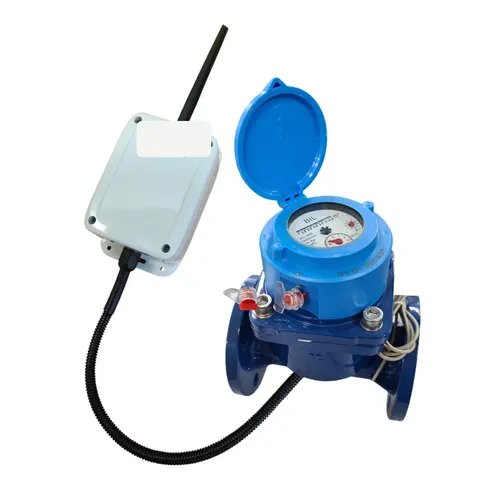
Tell us what you need to keep an eye on and we'll map the right sensors and coverage.
Frequently asked questions
How long can cattle go without water?
Not long — extension guidance is that cattle survive only a few days without water, and they start hurting well before that. Feed intake and performance drop within hours of running dry, and in hot weather dehydration turns dangerous much faster than the calendar suggests. Treat any dry tank in summer as an emergency, not a chore for tomorrow.
How much more do cattle drink in hot weather?
Roughly twice as much. University of Nebraska extension puts it at about 1 gallon per 100 lb of body weight in cold weather and nearly 2 gallons per 100 lb in the hottest weather. The Alabama Extension tables show the same climb — a dry pregnant cow goes from 7 gallons a day at 50°F to 17 at 90°F.
How big a tank do I need for my herd?
Multiply your hot-weather daily rate by head count, then by the days of buffer you want. Fifty pairs at roughly 30 gallons per pair per day in serious heat is about 1,500 gallons a day, so a 3,000–4,500 gallon storage tank buys you two to three days of slack if the well quits or a haul gets missed. Size for your worst week, not your average one.
Do calves drink water, or is milk enough?
They drink — even nursing calves take water alongside milk, and it climbs with the heat. University of Nebraska extension figures a calf at 5–10 gallons a day in high temperatures on top of what the cow drinks. If your trough rim is set for cows, make sure calves can reach it too.
Does a lactating cow really drink twice what a dry cow does?
Close to it — extension sources put a lactating cow at nearly double a dry cow's intake, since a good share of what she drinks leaves as milk. That is why herd math built on dry-cow numbers runs short the moment you turn out pairs.
Related Meterra pages
- Livestock Water Monitoring: the full picture across tanks, troughs, and dams.
- Trough Level Monitor: the sensor built for drinking points.
- Water Flow Monitor: measure what the line delivers, not just what the tank holds.
- How to Monitor Livestock Water Remotely: the setup guide for checking water from the house.
- Stock Pond Drying Up? Calculating Days of Water Left: turning a falling level into days of water remaining.
- Weaned Calves Not Drinking: why newly weaned calves miss water and how to spot it early.