Stock Pond Drying Up? How to Figure the Days of Water You Have Left
A drying stock pond is a math problem you can do in an afternoon. Estimate the acre-feet you have left — surface acres times average depth, and average depth runs about 0.4 times the deepest point — then subtract what the herd drinks and what a hot sky evaporates, and you get a rough count of days. Then set trigger points before you need them — fence off before bog, pump to a trough before the last usable foot, line up hauling or destocking if the math doesn't reach fall — and a level sensor turns the estimate into a trend line you check from the house.
Start with what the pond actually holds
Two numbers get you a workable estimate: surface area and average depth. Pace off the pond’s length and width and multiply — an acre is about 43,560 square feet, so a pond 300 feet by 150 feet is right at an acre. For depth, you could sound the whole pond from a boat, but there’s a shortcut that’s plenty good for this job. Penn State Extension’s pond-measurement guide puts the average depth of a typical bowl-shaped pond at about 0.4 times the maximum depth. Volume in acre-feet is surface acres times average depth, and one acre-foot is 325,851 gallons.
Worked example: say the pond is about an acre of surface with 5 feet of water at the deepest point by the dam. Average depth is 0.4 × 5, or 2 feet. Volume is 1 acre × 2 feet — 2 acre-feet, call it 650,000 gallons. Write that number down. Everything else is subtraction.
Figure the daily draw
Two things empty a pond in summer: the herd and the sky. (Three, if it leaks — more on that below.)
The herd first. Per University of Nebraska–Lincoln extension figures, at a 90-degree daily high a lactating cow needs about two gallons of water per 100 pounds of body weight — 20 to 24 gallons a day for a spring-calving cow, plus another 5 to 10 for her calf. Call a pair 30 gallons a day. A hundred pairs is 3,000 gallons a day.
Evaporation is bigger than most people expect. University of Missouri Extension puts common hot-summer evaporation at a quarter-inch a day, with hot, dry, windy stretches reaching a half-inch. An acre-inch of water is about 27,000 gallons, so a quarter-inch off a one-acre pond is roughly 6,800 gallons a day — more than double what those hundred pairs drink. At a half-inch, it’s around 13,600.
Now divide. 650,000 gallons at 3,000 + 6,800 per day is about 66 days on the milder end; at 3,000 + 13,600 it’s about 39. So the paper answer for this pond is somewhere between five and nine weeks — a mid-July estimate that may not reach fall rain. In a drought summer like this one — the U.S. Drought Monitor had over 46 percent of the lower 48 in drought as of mid-July 2026 — that’s the arithmetic a lot of outfits are quietly running.
Why the paper number flatters you
Treat that estimate as your best case, for three reasons.
First, geometry. A pond is a bowl, so the top foot of water covers far more area — and holds far more gallons — than the bottom foot. A pond that has dropped to half its depth has lost well more than half its water, and the daily drop in inches speeds up as the surface shrinks.
Second, seepage. The same Missouri guide considers up to 2 inches a month of seepage normal for a well-built pond, and plenty of older or poorly sealed ponds lose more. Your pond may be leaking on top of evaporating.
Third, the last foot isn’t water you’d use. It’s warm, muddy, and increasingly foul — as a pond shrinks, everything dissolved in it concentrates, and algae gets going. Plan around the usable water above your cutoff, not the gallons on paper.
The trigger points ranchers learn the hard way
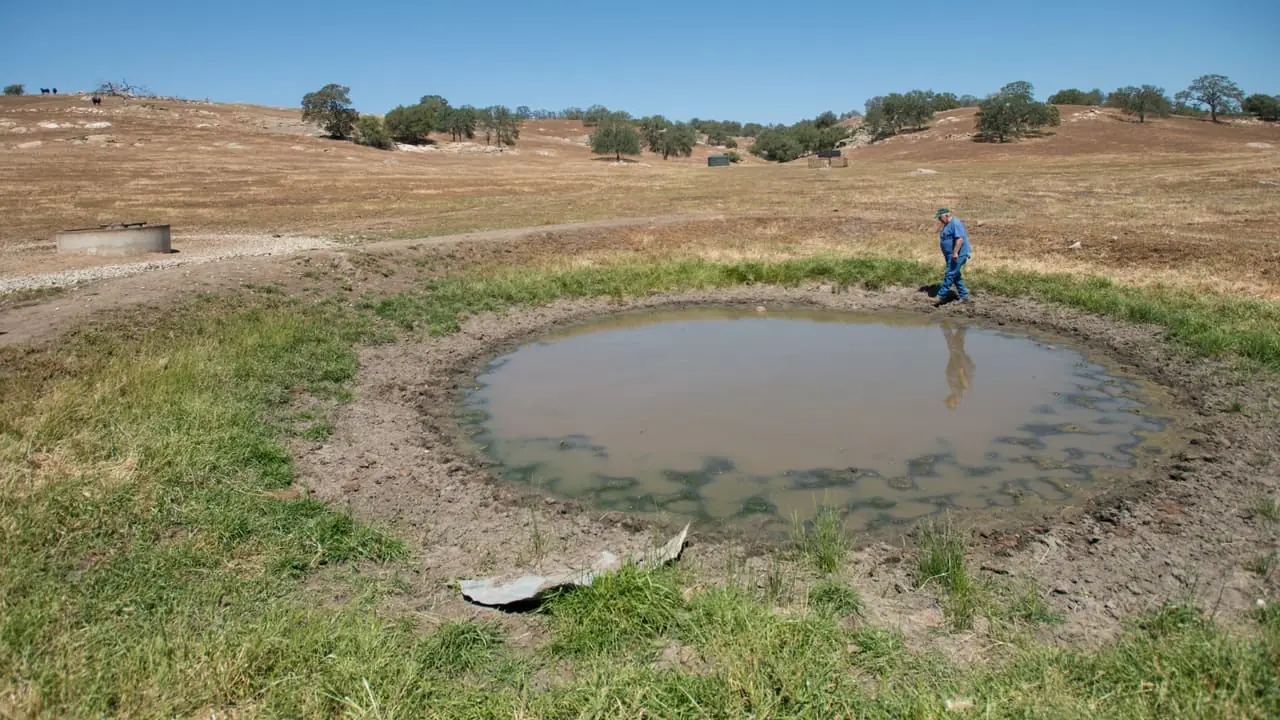
Fence off before the mud decides for you. As banks recede they turn to exposed flats, and cattle wade out after the remaining water — churning it, fouling it, and bogging down. A calf stuck in pond mud is a bad afternoon at best. The time to fence is when the banks first go to flats, not after the first stuck animal.
Move drinking to a pumped trough before the last usable foot. A suction line to the deepest hole and a pump to a trough on firm ground lets the herd drink cleaner water without wading, and it stretches the pond because they stop churning it. A trough monitor tells you the pump is keeping up; a level-triggered controller can run the fill automatically, with manual control from the app whenever you want it.
Decide the hauling question early. If the arithmetic doesn’t reach the season’s rain, the remaining choices are hauling water or destocking — and hauling is a numbers game of its own. Either decision made in July is manageable. Made in late August, standing at a mud bog, both are worse.
Turn the estimate into a measurement
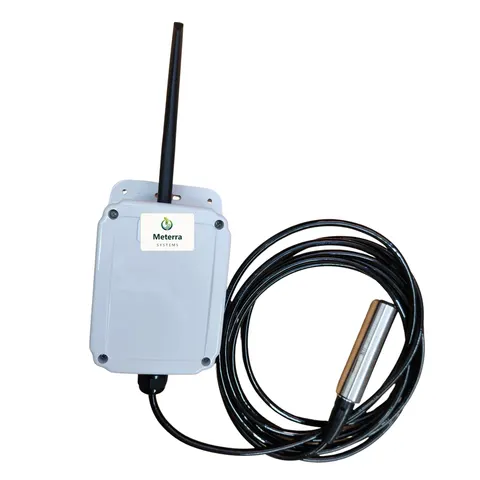
The arithmetic above rests on guesses — how hot, how windy, how leaky. A dam and pond level monitor replaces the guesses with the pond’s own burn rate. A submerged pressure sensor reads true depth around the clock, reporting over cellular — or low-orbit satellite where there’s no signal — with no power or Wi-Fi needed at the pond. A week of readings gives you the actual daily drop, drinking and evaporation and seepage combined, and the trend line answers the only question that matters: how many days at this rate. Set alerts at your trigger levels — the fence-off level, the switch-to-troughs level — and the pond tells you when you’ve hit them, from the house. The monitor starts at $499 with the first three months of connectivity included; see pond and dam monitoring for how outfits set it up.
What a sensor won’t do
A sensor buys lead time; it does not make water. It reads depth, not quality — it can’t see algae or tell you the remaining water is still fit to drink. And in a bad enough summer, the plan is still hauling or destocking; the data just moves that decision earlier, to when you have more options and a calmer market. That’s the honest case for monitoring a drying pond — not that it saves the pond, but that it converts a guess you check by driving out into a number you check over coffee, and takes the surprise out of the worst week of the summer.
Tell us your setup — how many ponds, how far apart, what the herd looks like — and we’ll map the right sensors and alert levels for it. Every sensor carries a 60-day money-back guarantee and a 1-year warranty, so putting one on your worst pond is a low-risk way to find out what it’s really losing.
Watch them work together
The dam calls for its own refill.
Every Meterra device is complete on its own. But the dam sensor and a pump controller share one platform, so a falling level can start a transfer from another storage — set the rule once, and it refills without anyone driving out. Here’s the loop, sped up:
Sped-up example — you set the start and stop levels in the Meterra app. Every rule stays a manual button in the app too, and a separate high-level alarm can back the stop rule up.
The products in this simulation
Every device reports to the same Meterra dashboard and app.
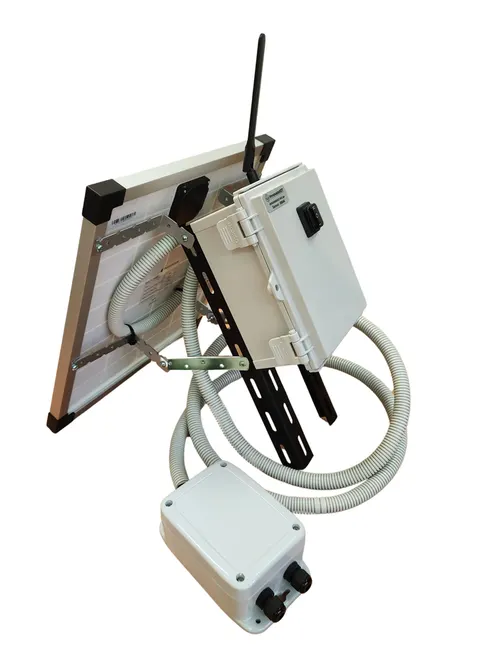
The hardware this guide covers
Every device reports to the same Meterra dashboard and app.
Tell us what you need to keep an eye on and we'll map the right sensors and coverage.
Frequently asked questions
How fast does a stock pond evaporate in summer?
University of Missouri Extension puts common hot-summer evaporation at about a quarter-inch a day, with hot, dry, windy stretches reaching a half-inch. On a one-acre pond, a quarter-inch is roughly 6,800 gallons a day — often more than the herd itself drinks. Heat and wind drive it, which is why drought summers empty ponds so much faster than the herd count alone suggests.
How much water do cattle drink in hot weather?
At a 90-degree daily high, a lactating cow needs about two gallons per 100 pounds of body weight — 20 to 24 gallons a day, plus another 5 to 10 for her calf, per University of Nebraska–Lincoln extension figures. A workable planning number is about 30 gallons per pair per day. Dry cows need roughly half what lactating cows do.
When should I fence cattle out of a drying pond?
When the banks first turn to exposed mud flats — before the first bogged animal, not after. Wading cattle churn and foul the shrinking water, and calves can get stuck in soft pond mud. Fence it off, then pump to a trough on firm ground so the herd still drinks the pond's water without standing in it.
Can a sensor tell me when my pond will go dry?
It can measure the real daily drop — drinking, evaporation, and seepage combined — and project the trend, which beats any estimate. What it can't do is see the future — a rain, a heat wave, or moving the herd all change the rate. Treat the projection as a rolling forecast you re-check weekly, not a fixed date.
Is the last foot of pond water safe for cattle?
Plan as if it isn't. As a pond shrinks, everything dissolved in it concentrates and algae growth picks up, so the warm, shallow remainder is the worst water on the place — and the mud around it becomes a bogging hazard. Set your cutoff above the last foot and switch to pumped troughs or hauled water before you get there.
Related Meterra pages
- Pond & Dam Monitoring: how pond and dam monitoring works in the field.
- Dam & Pond Level Monitor: the submerged sensor built for open water.
- Water System Automation: level-triggered pumps and valves, run from the app.
- Reduce Water Hauling Trips: making hauling pay when it's the only option.
- Pond Losing Water: Leak or Evaporation?: telling a leak from ordinary summer loss.