Electric Fence Faults: Find the Break Without Walking the Line
An electric fence fails silently and looks exactly the same afterward — the first sign is usually stock standing where they shouldn't be. Finding the fault then means walking or driving the line, testing as you go, on the fence's schedule instead of yours. This guide covers why fences die, how to hunt a fault quickly when you have to, and how continuous voltage monitoring changes the whole job — you learn the fence dropped the hour it happened, and the history usually tells you what kind of problem you're walking toward.
The problem: a dead fence keeps its poker face
Nothing about a fence looks different when it’s dead. The wire sits there, the posts stand straight, and from the truck a shorted fence is identical to a hot one. Stock, on the other hand, figure it out fast — cattle in particular seem to know within a day — and a fence that quit overnight is loose animals by morning.
So fence trouble is really two problems stacked: knowing the fence has dropped, and finding where. Most of the cost lives in the first one — the gap between when the fence died and when you found out.
Why fences die
Almost every fault is one of these:
- Vegetation load. Grass and brush growing into the wire bleed voltage to ground — the classic slow decline that tracks the growing season.
- Failed insulators. A cracked insulator leaks to the post, worse in wet weather. Often audible as a snap if you walk it — which is the problem, you have to walk it.
- Broken or sagging wire. Wildlife strikes, fallen limbs, a snapped tie — the wire grounds out or the circuit opens entirely.
- Gates. A handle left off after moving stock, or a gate section shorting — disproportionately common because gates are where hands touch the fence.
- Underground runs. Buried lead-out cable with damaged insulation fails invisibly and reads like a dead short.
- The energizer. Tripped, unplugged, dead battery, failed unit — the whole fence reads cold.
- Poor grounding. In dry or sandy conditions a weak earth system makes the whole fence read soft even with nothing wrong on the line.
Finding a fault the fast way
When you do have to hunt one, the method that beats walking the whole line is halving:
- Test at the energizer first — on its own terminals, disconnected from the fence. Hot there means the problem is on the line; cold there means the hunt is over before it started.
- Split the fence with cutout switches at junctions and gates. Switch a section out; if the voltage comes up, the fault is in the section you dropped. If not, it’s in what’s still connected.
- Keep halving until the remaining section is a short walk.
- Use a directional fault finder if you have one — it reads current flow and points toward the drain, which turns halving into following an arrow.
Cutout switches cost little and repay themselves the first time — a fence you can section from a few standing points is a fence you can diagnose in minutes.
What monitoring changes
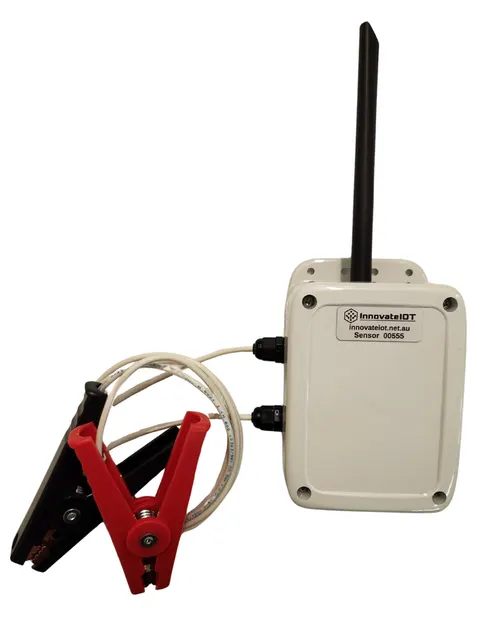
A fence monitor sits on the line and watches voltage around the clock. It changes the job in two ways.
It closes the knowing gap. The fence drops — branch, short, tripped energizer — and your phone gets the alert the same hour. The overnight failure becomes a morning fix instead of a morning gather; on rotational grazing, it’s what makes a single-wire break trustworthy enough to sleep behind.
The history tells you what you’re walking toward. A voltage that fell off a cliff at 3 am is a hard fault — a break, a big limb, a dead energizer. A voltage that’s sagged a little more each week is load — grass coming up into the wire, or an insulator on its way out. You leave the house knowing whether to bring the chainsaw or the weed-eater, and the slow declines become scheduled maintenance instead of surprises.
The monitor doesn’t find the fault’s GPS point for you — the halving method still does that. What it removes is the expensive part: the day and a half you didn’t know there was a fault at all.
The hardware this guide covers
Every device reports to the same Meterra dashboard and app.
Tell us what you need to keep an eye on and we'll map the right sensors and coverage.
Frequently asked questions
What causes an electric fence to lose voltage?
The usual suspects, roughly in order — vegetation load (grass and brush touching the wire), a cracked or failed insulator leaking to the post, a broken or sagging wire touching ground, a gate handle left off or shorting, a failed underground section, or the energizer itself tripped or dead. Dry, sandy ground can also weaken the earth return, which reads as a weak fence everywhere.
What's the fastest way to find a fence fault?
Split the fence and test in halves. Start at the energizer and confirm it reads hot on its own terminals; then use your cutout switches (or disconnect at junctions) to isolate sections. Voltage good with a section switched out means the fault is in that section — keep halving until the walk is short. A fault finder that shows current direction speeds this up; it points toward where the power is draining.
How does a fence monitor help?
It watches voltage around the clock and alerts your phone the moment the fence drops below your threshold — so you learn about the 2 am branch at 2 am, not at sunrise with stock on the road. The hourly history also separates problem types at a glance, since a hard break, a growing grass load, and a failing insulator each leave a different pattern.
Will it work with my energizer and fence setup?
It's designed to work with any energizer brand and the common fence configurations — permanent boundary fence or temporary rotational-grazing breaks. Tell us your setup and we'll confirm the right configuration before anything ships.
Related Meterra pages
- Electric Fence Monitor: continuous voltage monitoring with drop alerts.
- Farm Security: gate and access monitoring for the same boundaries.
- Cattle Ranch Monitoring: fences, water, and gates on one dashboard.
- Catching a Stuck Float Valve Early: the same idea applied to watering points.