
Meterra vs. RanchBot: an honest comparison
RanchBot and Meterra both put remote water monitoring on a rancher's phone, and both are run from the US, so if you're weighing one against the other, the question isn't which is "better," it's which fits your operation. This is our honest take: where each one is the stronger choice, where they overlap, and the real differences in connectivity, price, and what they cover. We name the places RanchBot is the better fit, because a comparison that pretends otherwise isn't worth reading.
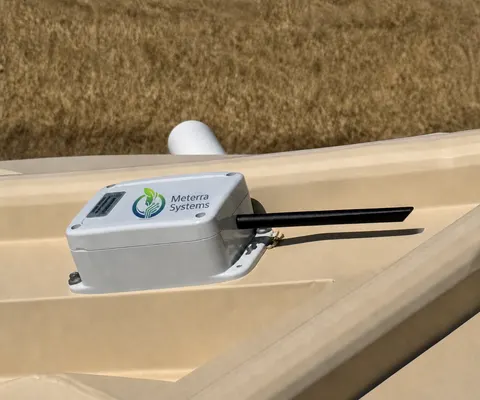
Two honest starting points
Both companies solve the same core problem: knowing your water without the drive. RanchBot, per their own site (August 2026), is an Australian company with US operations at a Fort Worth, Texas address, says its monitors are made in the United States, and reports 12,000+ ranchers.
Here’s ours. Meterra has spent over four years in the field with 2,000+ devices in service, across a fourteen-product ecosystem: tank, trough, and dam levels, flow, rain, weather, soil, fence, and power monitoring, plus cameras and pump and valve controllers. Every device works on its own, and all of them interconnect. It’s built that way because a ranch is a system, not a single tank.
The two diverge on the four things that decide this purchase: how the data gets out, what you pay, how much system you can build on top, and how far it reaches beyond the ranch. On all four, we like our side of the table. Here’s the side-by-side.
At a glance
| Meterra | RanchBot | |
|---|---|---|
| Primary connectivity | Verizon NB-IoT cellular by default; satellite added wherever a site needs it | Satellite or cellular (3G/4G), per their FAQ (Aug 2026) |
| Hardware pricing | Published: $299 Tank · $399 Trough · from $499 Dam | Not listed on site |
| Availability | Tank, trough, and dam sensors ship from US stock; tank sensors in 1–2 business days (August 2026); the rest of the range ships to order | Direct, plus ~20 authorized reseller companies, Texas to Hawaii (their reseller page, Aug 2026) |
| Connectivity plan | From $10/mo per device (3 months bundled) | Not posted on their site |
| Sensing | Two technologies: ultrasonic (any material, incl. dry feed) + submerged pressure (reads under ice) | Level, trough, and flow/pressure sensors |
| Product ecosystem | 14 products (levels, flow, rain, weather, soil, fence, power, cameras, pump & valve control); each standalone, all interconnect | 6 lines (tank levels, trough, rain gauge, weather station, flow/pressure, pump control), plus Lite and Trough Direct variants |
| Depth range | About 1 ft to ~330 ft / 100 m of water, troughs and open water alike (same pressure sensor as the Dam Level Monitor) | Trough monitor to ~5 ft; Lite rated for tanks to ~19 ft (their site, Aug 2026) |
| Remote pump control | Yes, shipping US setups now, configured per site (longer lead time than off-the-shelf) | Yes; start/stop + automation |
| Flow metering | Turbine flow meters for GPM + total volume with leak alerts (from $388) | Yes, dedicated GPM flow/pressure sensor |
| Applications | Ranching plus fire/public-safety, compliance, mining, aquaculture, specialty ag, feed & grain | Ranch & livestock water, incl. a CattleMax herd-software integration |
| Guarantee | 60-day money-back + 1-year warranty | 60-day money-back + 2-year hardware warranty (their FAQ, Aug 2026) |
RanchBot details are drawn from ranch-bot.com only, re-verified 2026-09-24, and may change. Confirm specs with each company.
That table is the whole decision for most ranches. If it already reads your way, request pricing below or call (385) 534-8200 and get your number in writing today. The details on each row follow.
Where Meterra is the stronger choice
- A recurring bill you can see before you buy. Meterra’s connectivity plans start at $10/month per device, with the first three months bundled into each sensor’s price. The numbers are posted, so you can run the per-tank math tonight. RanchBot doesn’t post subscription pricing; you’ll have to ask. Meterra is also cellular-first (Verizon NB-IoT), and cellular data generally costs less to move than satellite data. See cellular vs. satellite.
- A hardware price you can see too. Our US prices are public: $299 Tank, $399 Trough, from $499 Dam, each including three months of connectivity. Budget the whole system without waiting on a quote. RanchBot’s site posts no prices at all, not the hardware and not the plan: their FAQ describes the cost as “the upfront cost of the hardware and the Service and Access Plan” without a figure (checked Aug 2026), so a number means contacting them or a dealer. Here’s the full cost breakdown.
- Cold-country water, at any depth. Submerged pressure sensing reads the true level under ice, where an above-surface reading sees only the ice cap. Fair note: any submerged sensor gets that benefit in a trough, RanchBot’s included. Meterra’s difference is that its pressure sensing doesn’t stop at trough depth. Dams and ponds stay readable under the ice too.
- A fourteen-product ecosystem that automates. Every Meterra device works standalone; buy one sensor and it just works. Connect them and the system starts working for you: a tank sensor can run a pump controller, a rain gauge can hold irrigation valves shut, and everything reports to one dashboard. Any of it can be added at any time, so the sensor you buy today is the first piece of that system two years from now, not a dead end. That’s system-building headroom across the whole property, not just the water points. RanchBot goes deep in the other direction, pushing water and rainfall data into CattleMax for herd management; if that’s your software, weigh it. Watch the live demo below, or see water system automation.
- More than tanks and troughs. The same sensors read any material: water, fuel, fertilizer, dry feed, grain. The same platform runs fire and public-safety water, stormwater and wastewater compliance, mining, aquaculture, and specialty ag. If your monitoring goes past livestock water, this ground is uncontested.
- Depth, shallow to deep. From about 1 ft of water in a trough on one end to ~330 ft (100 m) of open water on the Dam Level Monitor on the other. On troughs and storage tanks the two are comparable (their trough monitor is rated to 5 ft, their Lite to about 19 ft). It’s dams, ponds, and reservoirs where the gap opens up.
Where RanchBot has the edge
Three things, and we’d rather you hear them from us:
- A longer hardware warranty. Their FAQ lists a two-year hardware warranty inside the Service and Access Plan (checked August 2026). Ours is one year. The 60-day money-back window matches, but on warranty length they beat us outright.
- A buy-local dealer network. Their site lists roughly twenty authorized resellers across Texas, California, Oregon, New Mexico, Arizona, Hawaii, and Nebraska (checked September 2026). If you’d rather buy from a counter you already know, walk in and ask. Meterra ships direct instead, from US stock for its tank, trough, and dam sensors, which is faster for those but isn’t the same as a dealer down the road.
- A herd-software integration. Their site documents a CattleMax integration that pushes water level and rainfall data into that herd-management platform. If you already run CattleMax, that’s a real convenience Meterra doesn’t match today.
Where Meterra pulls ahead is the money: posted prices instead of a quote, a typically cheaper cellular-by-default bill, greater depth, and a fourteen-product ecosystem that automates. The basic job of sensing water and getting it to your phone overlaps.
Price the whole property, not one tank
The question that actually separates quotes is not what one monitored tank costs. It is how many of your water points end up monitored at all.
When the cost per point runs high, monitoring gets rationed. You cover a worst tank or two, keep driving to the rest, and the failure that hurts is usually at a tank that did not make the list. A partly monitored place still gets driven, and still goes wrong quietly.
Meterra’s posted prices change that math. Seven tank sensors, enough to put every water point on many working ranches on your phone, is $2,093 in hardware, three months of connectivity included with each, then from $10 a month per device. Troughs ($399) and dams (from $499) are posted the same way. You are not deciding which tanks deserve monitoring. You are outfitting the property.
So before you compare columns, make any quote cover the same ground. One point against one point tells you almost nothing. Every water point against every water point tells you what your days will look like. Put your own tank count in the savings calculator and see the whole-property number tonight.
And since a lower posted price sometimes gets read as lesser gear: it is not a corners story. The same platform has spent more than four years in the field with 2,000+ devices in service, and it runs on our founders’ own properties. The price is set where it is so the whole property can afford to report in. That is the business we chose, and the About page says why.
How to decide
- Decide how fast you need automation hardware. The sensors won’t be the wait either way; Meterra ships tank sensors from US stock in 1–2 business days. The timing question is automation. Both offer pump control in the US: RanchBot lists it as a standard product sold direct and through its dealers, while Meterra configures each setup to the site, which takes longer but fits odd distances and existing gear. A standard product favors RanchBot; a setup matched to your site is what Meterra’s configuration time buys you.
- Check coverage at your watering points. Both run on satellite where there’s no cell signal, so coverage rarely decides it. Wherever there is cell service, Meterra’s NB-IoT default is the cheaper monthly bill.
- Compare total cost, not headline cost. Hardware plus connectivity, per site, for every point you’ll watch. Meterra’s numbers are published. Ask RanchBot for theirs, then run both columns side by side.
- Look past the ranch, and past monitoring. A fire pond, a compliance basin, a feed bin, a remote weather station, or sensors that run pumps and valves on their own. If any of that is in your future, that breadth belongs to Meterra.
Put both totals on one page
The number that decides this purchase is the whole bill: hardware plus the monthly service, for every point you’ll watch. You should have that number in writing from both companies before you spend a dollar. Ours is already in writing: $299 tank, $399 trough, from $499 dam, three months of connectivity in the box, then from $10/month per device. No quote call, no sales sequence. RanchBot’s total comes by quote, so ask them for it. A vendor who’s proud of the total posts it, and ours is posted. Run the two columns, then put your own tank count into the savings calculator, request pricing below, or call (385) 534-8200 and get the total from a person. If their column genuinely comes back better for your sites, buy theirs. Notice which company is comfortable saying that in public, next to its posted prices.
A note on this comparison
We wrote this because “RanchBot alternative” is a fair thing to search, and you deserve a straight answer from the vendor writing the page. Everything above about RanchBot comes from their own site as of August 2026 and may have changed since; check with them directly. Meterra is not affiliated with or endorsed by RanchBot, and “RanchBot” belongs to its owner. If you want the same straight answer about your specific sites, tell us what you’re monitoring and we’ll give you one, even if that answer is that the other system fits you better.
The bigger picture
One pond, one pump, one tank, one storm — zero drives.
Every device below works alone. Linked on one platform, they run the place: the tank calls the pump at the pond, the safety level decides when irrigation is allowed, and the rain gauge overrules everything the moment real rain falls. Watch the rules fire, sped up:
Sped-up example — every level, threshold, and rule shown here is the kind you set yourself in the Meterra app, and each one stays a manual button too. Devices connect over cellular independently, so the pond, the tank, and the sprinklers can be miles apart.
The products in this simulation
Every device reports to the same Meterra dashboard and app.
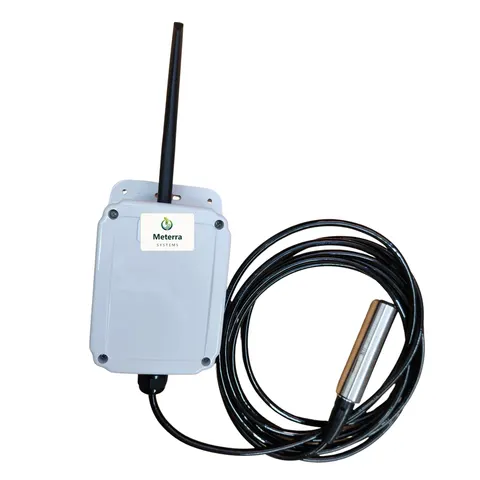
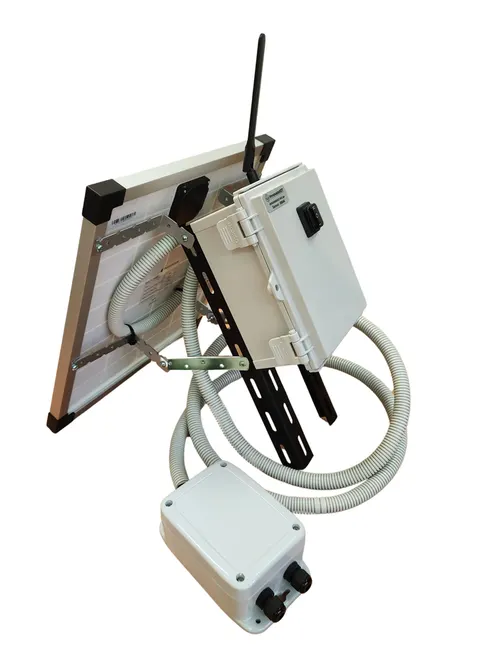
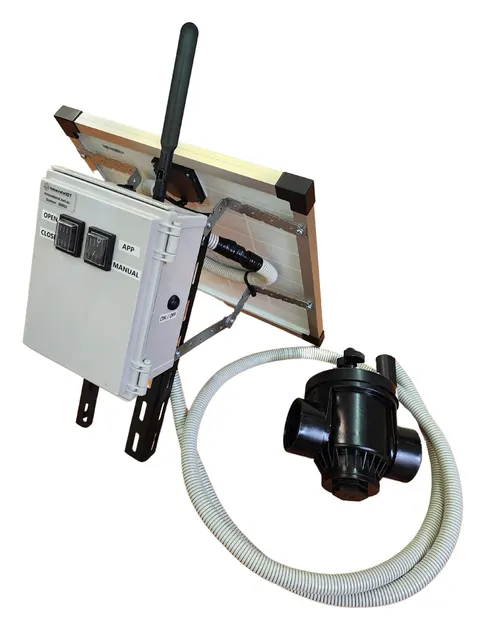
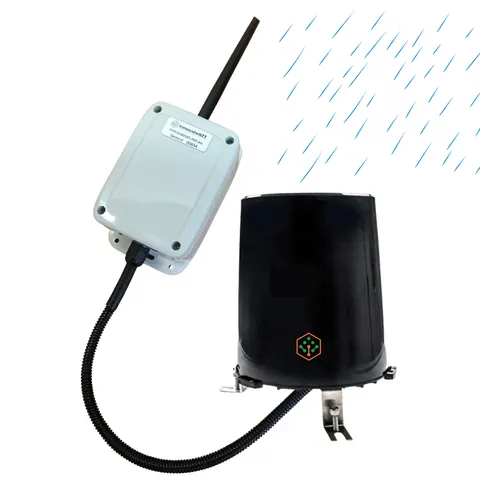
The hardware this guide covers
Every device reports to the same Meterra dashboard and app.
Tell us what you need to keep an eye on and we'll map the right sensors and coverage.
Frequently asked questions
Is Meterra a good alternative to RanchBot?
We think so. RanchBot's own site describes an Australian company with US operations and US-made monitors; Meterra is US-run and brings more than four years in the field with 2,000+ devices in service. Meterra defaults to low-power cellular, which generally costs less to run than satellite and covers most areas. It publishes its hardware prices, senses to about 330 ft (100 m) on the Dam Level Monitor, and runs a fourteen-product ecosystem covering tank, trough, and dam levels, flow, rain, weather, soil, fence, power, and cameras, plus pump and valve controllers. Every device works standalone and all of them interconnect for automation and reporting. Meterra's tank, trough, and dam sensors go out from US stock, with tank sensors shipping within 1–2 business days of ordering (August 2026); the rest of the range ships to order, and Meterra configures each US automation setup to the site, which takes longer. Two honest points go to RanchBot. Their plan carries a two-year hardware warranty against our one, and they sell through roughly twenty authorized dealers across seven states if you'd rather buy locally. On everything else, we like our case.
What's the main difference between Meterra and RanchBot?
Price transparency, depth, and how much system you can build. Both run satellite and cellular. RanchBot's FAQ says their monitors use satellite or cellular (3G/4G), and Meterra defaults to Verizon NB-IoT cellular because it costs less and reaches most areas, then adds satellite wherever a site needs it. Meterra also publishes its hardware prices (RanchBot's site does not), senses far deeper, and runs a fourteen-product ecosystem of sensors and controllers that work standalone or interconnect for automation, well beyond ranching. The basic water-watching job overlaps; the system you can build around it is where Meterra pulls away.
Does Meterra offer remote pump control like RanchBot?
Yes, and Meterra is shipping these US setups now. The remote pump controller works alongside the sensors, so you can start and stop pumps from your phone and automate them off tank levels. Current US builds include restoring automation to systems whose buried control wires have failed, with a sensor triggering the pump controller wirelessly instead. The practical difference is how you buy it. RanchBot sells pump control through its dealer network as well as direct; Meterra configures each setup to the site, so lead times run longer.
Which is cheaper to run?
Meterra's NB-IoT plans start at $10/month per device after the three months bundled with each sensor, and cellular service generally costs less to run than satellite. RanchBot doesn't post subscription pricing on its site (as of August 2026), so ask them for current rates and compare directly. Hardware tells the same story. Meterra publishes US prices ($299 Tank, $399 Trough, from $499 Dam); RanchBot's site does not list hardware pricing. We post ours because the math holds up. Run it against any quote you get.
How deep can each system measure?
Per ranch-bot.com (August 2026), RanchBot's trough monitor is rated for tanks 5 ft deep or less, and their Lite monitor is rated for tanks up to about 19 ft. Meterra's Trough Level Monitor uses a submerged pressure sensor on a standard 10 ft cable that reads from about 1 ft of water, and the same pressure sensing on the Dam Level Monitor reads open water to about 330 ft (100 m). Compare like for like on troughs and tanks; on open water, dams, and reservoirs, Meterra reaches far deeper.
Does Meterra do satellite like RanchBot?
Yes. Meterra runs a site on satellite whenever there's no cell coverage. It just isn't the default, because NB-IoT cellular costs less and reaches most rural areas. RanchBot's FAQ says their monitors use satellite or cellular too, so both companies cover a site with no cell signal. Ask each one which connection your sites would actually use, and what that connection costs per month, because that is where the bills diverge.
Is Meterra's lower price a sign of lower quality?
No. The price is a deliberate choice, not a corners story. The platform behind Meterra has spent more than four years in the field with 2,000+ devices in service, it runs on our founders' own properties, and every sensor carries a 60-day money-back guarantee. The price is set low so a ranch can monitor every water point instead of choosing which tanks deserve watching; seven tank sensors is $2,093, posted. If the gear were lesser, posting prices in public next to a money-back guarantee would be a poor strategy.
Are Meterra and RanchBot affiliated?
No. This is an independent comparison written by Meterra, based on RanchBot's publicly available information as of August 2026. "RanchBot" is a trademark of its owner, used here only for honest comparison. Specs change, so confirm current details with each company before you buy.
Related Meterra pages
- What Does RanchBot Cost?: what their site says the bill is built from, and the questions that get you a real number.
- Tank Level Sensor: the $299 ultrasonic sensor the comparison centers on.
- Trough Level Monitor: the submerged option for troughs, at $399.
- Meterra Product Range: the full fourteen-product ecosystem: the three US-stocked sensors and their prices, plus everything they connect to.
- All Competitors Compared: Meterra vs. RanchBot vs. Gallagher vs. LoneStar in one table.
- Livestock Water Monitoring: how Meterra watches tanks, troughs, and dams across a ranch.
- Cellular vs. Satellite: why connectivity is the biggest cost-and-coverage decision.
- What Remote Water Monitoring Costs: Meterra's published pricing and the per-tank math.