Delta-T and Spray Windows, Explained
Every sprayer knows the feeling of a job that didn't stick — chemical that drifted on a morning that seemed calm, or evaporated on an afternoon that seemed fine. Delta-T is the single number that predicts most of that. It combines temperature and humidity into a measure of how fast spray droplets evaporate, and it tells you whether the window is open before you fill the tank. Here's what it means, the ranges to watch, and why the number has to come from your ground, not an airport forty miles away.
What Delta-T actually is
Delta-T is the gap between two temperatures: the dry-bulb temperature (what a normal thermometer reads) and the wet-bulb temperature (what that thermometer reads with a wet sock on it, cooled by evaporation). Dry air evaporates water fast, so the wet bulb runs much cooler and the gap is wide. Humid air barely evaporates anything, so the two read nearly the same.
That gap is a direct measure of the air’s drying power — which is exactly what a spray droplet cares about. A droplet leaves the nozzle and starts evaporating immediately; the question is whether it reaches the leaf as a droplet or shrinks into a fine particle that goes wherever the air goes. Delta-T answers that question in one number, which is why it’s printed on spray charts and weather apps across the industry.
The ranges that matter
Guidance from agricultural extension services and chemical manufacturers lands on broadly the same bands. Product labels come first — but as a rule of thumb:
- Below about 4 °F (2 °C): too humid. Droplets barely evaporate; fine ones stay airborne and drift long distances. These conditions — still, damp, early morning or evening — are also when temperature inversions form, which carry suspended spray somewhere you didn’t aim it.
- About 4–14 °F (2–8 °C): the preferred window for most spraying. Droplets survive the flight, deposit, and dry at a reasonable rate.
- About 14–18 °F (8–10 °C): marginal. Evaporation is eating your finer droplets; coarser setups and larger droplet sizes buy some margin.
- Above about 18 °F (10 °C): the window is generally closed for most products — a meaningful share of what leaves the boom won’t arrive as spray.
The frustrating property of Delta-T is how fast it moves. A morning that starts in the window at 8 am can be out of it by 11 as the day heats and dries — the window isn’t a day, it’s hours.
Why the number has to be local
Delta-T is built from temperature and humidity, and both are stubbornly local — a river bottom, an irrigated circle, and a dry bench a few miles apart can be in three different spray windows at the same moment. A regional forecast or an airport station forty miles away tells you what conditions were like somewhere else. The droplets fly through the air over your field.
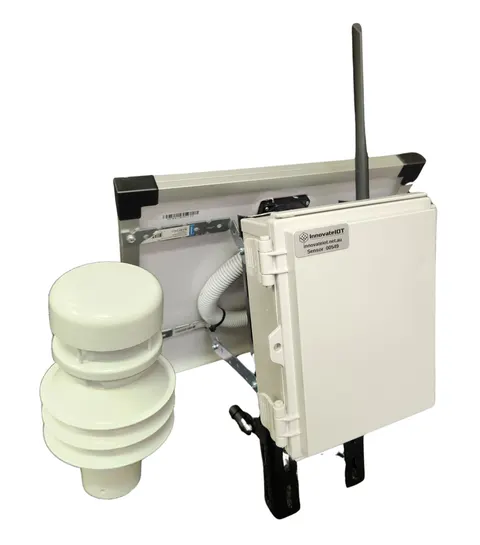
That’s the case for reading it off your own ground. A weather station on-site reports live Delta-T alongside the other two numbers that govern the decision — wind speed and direction — so “spray or wait” gets made on actual conditions, from the truck, before the tank is filled. And because it’s logged hourly, you also get the record: what conditions were when the job went on, which is worth having if a result ever gets questioned.
Reading the whole panel
Delta-T is the evaporation gauge, not the whole dashboard. The working checklist stays: label first (rates, buffers, and conditions on the product label override everything), wind within the label’s range and blowing away from what’s sensitive, no inversion — be wary of the still, cool edges of the day, and Delta-T in the window for the droplet size you’re running. An on-site station covers the measurable three from one pole; the label and your judgment cover the rest.
The hardware this guide covers
Every device reports to the same Meterra dashboard and app.
Tell us what you need to keep an eye on and we'll map the right sensors and coverage.
Frequently asked questions
What is Delta-T in spraying?
Delta-T is the difference between the air's dry-bulb temperature (a normal thermometer) and its wet-bulb temperature (a thermometer cooled by evaporation). It's a direct measure of the air's drying power — the bigger the gap, the faster a spray droplet shrinks between the nozzle and the target.
What Delta-T range is good for spraying?
Guidance published by agricultural extension services and chemical manufacturers generally puts the preferred window around 4–14 °F (2–8 °C), with caution above that and a hard stop for most products around 18 °F (10 °C). Very low Delta-T brings its own risk — droplets barely evaporate, fine ones hang in the air, and those conditions often coincide with temperature inversions. Always follow the product label first.
Why not just use the weather forecast or a nearby station?
Delta-T shifts hour by hour and place by place — it can swing from a fine morning window to a closed afternoon in the time it takes to finish a tank. A regional forecast or an airport station averages away exactly that. A station on the paddock you're spraying reads the actual conditions the droplets will fly through.
Does Delta-T replace watching the wind?
No — it's one gauge on the panel, not the whole panel. Wind speed and direction still govern where drift goes, and inversion conditions still matter on their own. Delta-T covers the evaporation side of the problem; a weather station on-site gives you all three from the same pole.
Related Meterra pages
- Weather Station: live Delta-T, wind, temperature, and humidity from your own site.
- Remote Weather Monitoring: on-site conditions across every property.
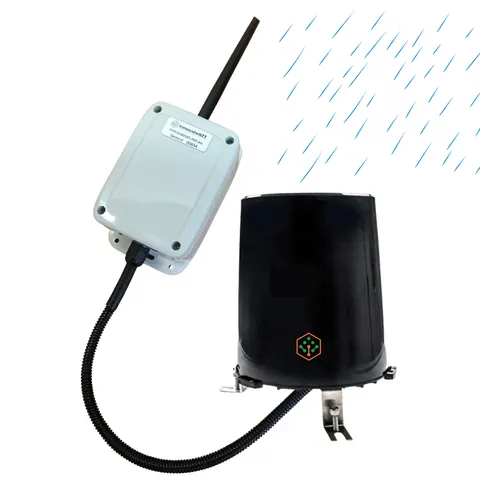
- Rain Gauge: the rainfall side of the weather picture.
- Tracking Rainfall Across Multiple Properties: the same logic; local numbers beat regional guesses.