
Meterra vs. LoneStar Tracking: an honest comparison
LoneStar Tracking is a Texas GPS-tracking company that also sells a water tank level monitor; Meterra is a water-monitoring specialist. Both are US companies, both publish their prices, and both will put a tank level on your phone — so the real question is what else you need around that reading. This is our honest side-by-side: where LoneStar's monitor is genuinely the better buy, where the two overlap, and where a dedicated water platform pulls away.
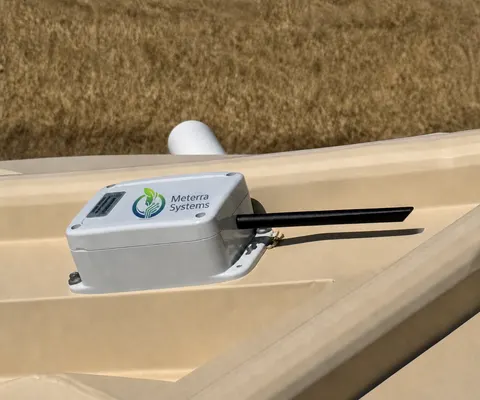
Two honest starting points
LoneStar Tracking is a GPS-tracking company out of San Marcos, Texas, with a broad tracker catalog — vehicles, trailers, cattle ear tags, dumpsters — and, in that catalog, one water product: the Water Tank Level Monitoring System, a $250 submerged pressure sensor with the first year of service included (per lonestartracking.com, July 2026). It’s a straightforward offer from a real US company that publishes its prices and its limits — their site plainly states the sensor is accurate to about 10%, and that kind of candor deserves respect.
Meterra comes at the same tank from the opposite direction: water monitoring is the whole business. Four-plus years in the field, 2,000+ devices, a fourteen-product ecosystem — tank, trough, and dam levels on two sensing technologies, flow, rain, weather, soil, fence, and power monitoring, plus cameras and pump & valve controllers — where every device works standalone and all of them interconnect on one dashboard.
So this comparison is really a question: do you need a tank reading, or a water system? Here’s the side-by-side.
At a glance
| Meterra | LoneStar Tracking | |
|---|---|---|
| Core business | Remote water monitoring & automation | GPS tracking (water monitor is one catalog item) |
| Water lineup | Tank, trough, and dam sensors; flow meters; rain, weather, soil, power; pump & valve controllers | One product: Water Tank Level Monitoring System |
| Hardware pricing | Published: $299 Tank · $399 Trough · from $499 Dam | Published: $250 (cellular or satellite) |
| Service plan | From $10/mo per device (3 months bundled) | First year included, then $99/yr (per their site) |
| Primary connectivity | Verizon NB-IoT cellular default; satellite added where needed | 4G Cat-M1 cellular or satellite, same price |
| Sensing | Two technologies — ultrasonic (any material, incl. dry feed) + submerged pressure (reads under ice) | Submerged hydrostatic pressure |
| Depth range | About 1 ft to ~330 ft / 100 m of water, on troughs and open water alike | Up to 15 ft (custom depths on request, per their site) |
| Remote pump/valve control | Yes — pump & valve controllers, sensor-driven automation | Not listed on their site |
| Applications | Ranching plus fire/public-safety, compliance, mining, aquaculture, specialty ag, feed & grain | Ranch/ag tank levels (plus a separate GPS-tracking business) |
| Guarantee | 60-day money-back + 1-year warranty | 1-year warranty; 30-day return policy |
LoneStar Tracking details are drawn from lonestartracking.com, accessed July 2026, and may change. Confirm specs with each company.
Where LoneStar has the edge
Being fair, here’s what LoneStar genuinely does better today:
- Entry price. $250 with the first year of service included is a lower first-year cost than any Meterra sensor. For a single tank where “about right” is good enough, that’s real money saved.
- Satellite at no premium. Their satellite variant costs the same $250 as cellular. Meterra adds satellite where a site needs it, but LoneStar making it a same-price checkbox is a genuinely clean offer.
- One vendor for trackers and a tank read. If you’re already buying cattle GPS ear tags, trailer trackers, or dash cams from them, adding their water monitor keeps one supplier and one support line for all of it. Meterra doesn’t do GPS tracking, and won’t pretend otherwise.
- Published candor. Their site states the ~10% accuracy figure and satellite’s limits plainly. We’d rather compete with a company that publishes its limits than one that hides them.
Where Meterra is the stronger choice
- The sensors can act, not just report. A Meterra tank sensor can drive a pump controller or valve controller directly — auto-fill, dry-run protection, remote start from your phone. LoneStar’s site lists monitoring only (as of July 2026). If a low tank should ever do something — not just text you — this is the whole ballgame. See water system automation.
- Depth, shallow to deep. Their unit is rated to 15 ft; Meterra’s Dam Level Monitor reads open water to ~330 ft (100 m). Ponds, dams, fire reservoirs, and deep storage are simply out of a 15-ft sensor’s reach.
- Two sensing technologies. Submerged pressure for true under-ice readings and non-contact ultrasonic that reads any material — water, fuel, fertilizer, even dry feed and grain. One supplier covers vessels a pressure-only lineup can’t.
- A system, not a SKU. Levels, flow, rain, weather, soil, fence, power, and cameras on one dashboard, every device standalone but interconnectable. LoneStar’s water monitor lives in its own app (LST Vita), separate from their GPS platform — fine for one tank, but not a base to build a water system on.
- A specialist’s track record on water. 4+ years in the field, 2,000+ devices, and water monitoring as the entire company — not one catalog line among twenty tracking products.
- A longer trial of the decision. Every Meterra sensor carries a 60-day money-back guarantee on top of the 1-year warranty. LoneStar’s published return window is 30 days. Two full months of real readings is a better test of a monitoring habit than one.
Beyond water: where the catalogs cross
A few other lines brush against each other, and they’re worth naming honestly (all LoneStar details per their site, July 2026):
- Temperature. LoneStar sells a wireless temperature-and-humidity system built around sensors plus a required gateway — aimed at coolers, freezers, and enclosed spaces. Meterra’s Weather Station is a standalone solar-and-cellular unit for open-field conditions: temperature, humidity, wind, rainfall, fire-danger rating, and Delta-T for spray windows. The temperature and humidity readings overlap on paper; the jobs are different in practice.
- Security. Their catalog runs to vehicle dash cams and a Bluetooth door sensor; Meterra’s Farm Security systems are property cameras for gates, yards, and sheds, with person, vehicle, and plate detection over 4G. Adjacent, not equivalent — theirs center on vehicles and doorways, ours watch whole places over cellular.
- GPS tracking. Cattle ear tags, trailers, vehicles, dumpsters — that’s LoneStar’s core business and genuinely their ground. Meterra doesn’t do GPS tracking, full stop.
How to decide
- Will a level ever need to trigger anything? Pump, valve, auto-fill, dry-run shutoff — if yes, Meterra; LoneStar publishes no control hardware.
- How deep is your deepest vessel? Under 15 ft of water, both reach it. Ponds, dams, or deep storage — Meterra only.
- Count total cost for YOUR sites. One shallow tank, tightest budget: LoneStar’s $250-with-first-year-included is honestly hard to beat. Several vessels, mixed types, or anything you’ll automate later: price the Meterra system it grows into.
- Already a LoneStar GPS customer? Consolidating on one vendor has real value — weigh it against the platform you’d rather build the water side on.
A note on this comparison
We wrote this because “LoneStar Tracking water tank monitor” is a fair thing to search and a one-sided pitch helps no one. Everything above about LoneStar Tracking comes from their public information as of July 2026 and may have changed since — check with them directly. Meterra is not affiliated with or endorsed by LoneStar Tracking, and “LoneStar Tracking” belongs to its owner. If you want the same honesty applied to your sites, tell us what you’re monitoring and we’ll give you a straight answer — even if that answer is that a $250 single-tank monitor fits you better.
The bigger picture
One pond, one pump, one tank, one storm — zero drives.
Every device below works alone. Linked on one platform, they run the place: the tank calls the pump at the pond, the safety level decides when irrigation is allowed, and the rain gauge overrules everything the moment real rain falls. Watch the rules fire, sped up:
Sped-up example — every level, threshold, and rule shown here is the kind you set yourself in the Meterra app, and each one stays a manual button too. Devices connect over cellular independently, so the pond, the tank, and the sprinklers can be miles apart.
The products in this simulation
Every device reports to the same Meterra dashboard and app.
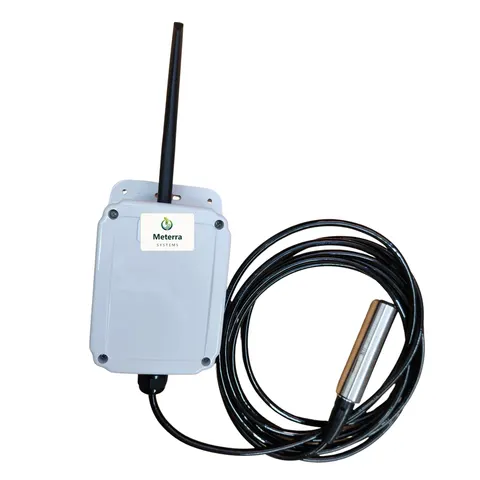
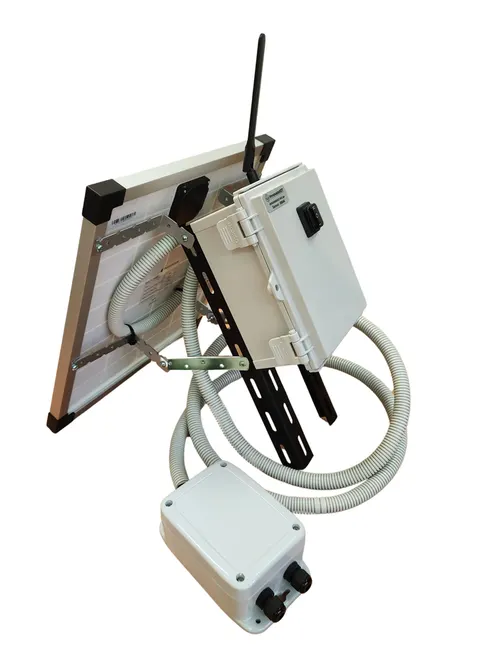
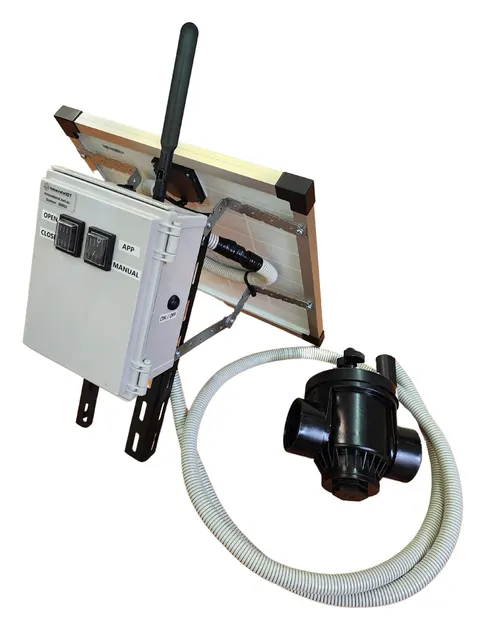
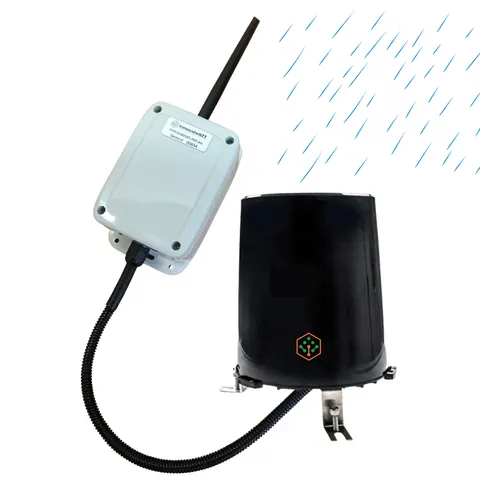
The hardware this guide covers
Every device reports to the same Meterra dashboard and app.
Tell us what you need to keep an eye on and we'll map the right sensors and coverage.
Frequently asked questions
Is Meterra a good alternative to LoneStar Tracking's water tank monitor?
It depends on how much system you need around the reading. LoneStar's Water Tank Level Monitoring System is a single product — a $250 submerged pressure sensor (per lonestartracking.com, July 2026) that reports a tank level to their LST Vita app, with the first year of service included. Meterra is a water platform — tank, trough, and dam sensors on two sensing technologies, flow, rain, weather, and power monitoring, plus pump and valve controllers, all on one dashboard, backed by 4+ years in the field and 2,000+ devices. If you want one affordable level reading, LoneStar is a fair pick. If the water system itself is what you're managing, that's Meterra's ground.
Which is cheaper, Meterra or LoneStar Tracking?
At entry, LoneStar — and we'll say it plainly. Per their site (July 2026), the monitor is $250 with the first year of service included, then $99 a year, which works out to roughly $448 over three years. A Meterra Tank Level Sensor is $299 with 3 months of connectivity included, then plans from $10 a month — about $629 over the same three years. The difference buys a fourteen-product ecosystem, much deeper sensing, automation that can run pumps and valves, and a 60-day money-back guarantee. Whether that's worth ~$180 over three years depends entirely on your setup.
Does LoneStar Tracking offer remote pump control?
Not that their site shows. As of July 2026, lonestartracking.com lists monitoring products only — we found no pump controller, valve controller, or automation hardware anywhere in their catalog. Meterra sells both a pump controller and a valve controller that the sensors can drive directly, so a tank level can start a pump or close a valve without you in the loop. If automation is anywhere in your plans, that difference decides it.
How deep can each system measure?
Per lonestartracking.com (July 2026), their sensor is rated for water up to 15 feet, with custom depths available on request. Meterra's Trough Level Monitor and Dam Level Monitor use the same submerged pressure sensor, rated from about 1 ft up to about 330 ft (100 m) of water, so for ponds, dams, and deep storage, Meterra reaches roughly twenty times further.
Do both work where there's no cell service?
Yes. LoneStar sells a satellite variant of its monitor at the same $250 price as cellular — a genuinely nice touch — reporting about four times a day per their site. Meterra defaults to Verizon NB-IoT cellular (typically the cheaper way to move data, with reach across most rural areas) and adds satellite wherever a site has no coverage. Either way, a dead zone doesn't rule out monitoring.
Are Meterra and LoneStar Tracking affiliated?
No. This is an independent comparison written by Meterra, based on LoneStar Tracking's publicly available information as of July 2026. "LoneStar Tracking" is a trademark of its owner, used here only for honest comparison. Specs and prices change — confirm current details with each company before you buy.
Related Meterra pages
- Meterra vs. Trough D Tech: a sourced, price-for-price comparison with SensorTech's trough monitor.
- Tank Level Sensor: the $299 Meterra sensor in the comparison.
- Pump Controller: the automation piece the comparison turns on.
- Meterra Product Range: the full fourteen-product ecosystem and posted prices.
- All Competitors Compared: Meterra vs. RanchBot vs. Gallagher vs. LoneStar in one table.
- Meterra vs. RanchBot: the same honest treatment of another competitor.
- What Remote Water Monitoring Costs: Meterra's published pricing and the per-tank math.