
Finding Water Leaks with Flow Data
The leaks that cost the most are the ones that never surface — a cracked buried line, a weeping fitting, a valve that doesn't quite seat. They bleed for months while the well pumps extra hours to keep up, and the first visible sign might be a power bill or a green stripe across a dry pasture. Flow data finds them differently: not by looking for water, but by noticing water moving when nothing should be running. Here's how the methods work.
Why leaks win for so long
A buried leak has every advantage. It’s invisible, it’s silent, and it’s usually slow enough that the system compensates — the pump just runs more hours, the tank still fills, and everything looks normal from the surface. Meanwhile the meter that would have caught it, if there was one, is the mechanical totalizer at the wellhead that nobody reads twice a day.
What finally surfaces a leak is usually the bill for it: pump hours, power, a well drawing down faster than it used to. By then it’s been bleeding for months. The point of flow monitoring is to shrink that timeline from months to a day.
Method one: the night-flow check
The oldest trick in leak detection, and still the best: in the quiet hours, flow should be zero. No trough filling, no irrigation set running, no washdown — between roughly midnight and 4 am most farm and stock systems should sit dead still. A flow monitor logging hourly makes that check automatic: pull up the overnight hours and a healthy line reads zero-zero-zero, while a leaking one shows a steady trickle that never stops.
Water districts run their whole leak program on this idea (they call it minimum night flow). On a ranch system it’s even simpler, because legitimate night use is rare — one glance at the overnight history answers the question.
Method two: alarms for both speeds of leak
Leaks come fast and slow, and each needs its own tripwire:
- High-flow alarms catch the sudden failure. A burst line or a valve stuck wide open pushes the flow rate past your threshold and the alert fires that hour — instead of the leak announcing itself as a washout or an empty tank.
- Volume-over-time alerts catch the slow bleed. A small leak never looks alarming as a rate; it looks alarming as a total. “This line moved 400 gallons today and nothing was scheduled to run” is the sentence that finds weeping fittings and unseated valves.
Both alarms ride on the same meter and report to the same app as the rest of the system.
Method three: flow versus level
One meter tells you water left the source. A tank level sensor tells you whether it arrived. Between the two sits the cross-check that brackets a leak to a section of line: if the meter says 600 gallons went down the line and the tank only rose by 450, the missing 150 went into the ground somewhere along that run. No digging on a hunch — you know which section, which direction, and roughly how bad.
This is also the layout that catches the failure a pump-side view can’t see: pump running, power draw normal, flow normal at the source — and a tank that still isn’t filling. That’s a line problem, and you knew it from the kitchen table.
What it looks like in practice
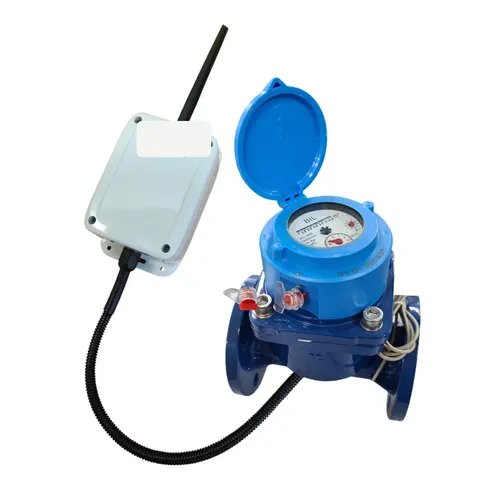
For most systems the starter layout is one meter where the water enters the system — at the well or the pressure tank — plus level sensors on the storage it feeds. That single meter gives you night-flow checks, both alarm types, usage records for the season, and the flow-vs-level cross-check downstream. Systems with long runs or multiple branches add meters at the branch points, which shrinks the bracket a leak can hide in. Either way it’s the same dashboard, and the leak’s first appearance is an alert on your phone instead of a stripe of green across dry ground.
The hardware this guide covers
Every device reports to the same Meterra dashboard and app.
Tell us what you need to keep an eye on and we'll map the right sensors and coverage.
Frequently asked questions
How does a flow meter detect a leak?
By catching water moving when nothing should be using it. The clearest version is the night-flow check — in the quiet hours when no stock trough is filling and no irrigation is running, flow through the line should be zero. A steady overnight trickle that never stops is the signature of a leak, and hourly flow history makes it visible at a glance.
What's the difference between a high-flow alarm and volume-over-time?
A high-flow alarm catches the sudden failure — a burst line or a stuck-open valve pushes the flow rate past a threshold and your phone hears about it that hour. Volume-over-time catches the slow failure — a small leak never trips a rate alarm, but "the line moved 400 gallons on a day nothing ran" does. You want both, because leaks come in both speeds.
Can flow data tell me where the leak is?
It narrows it down. One meter tells you the leak is downstream of that point; a meter at the source and a level sensor on the tank bracket the section between them — if the meter says water left the well but the tank didn't rise to match, the difference went into the ground somewhere along that run. From there it's a shorter walk with a shovel.
What size lines does this work on?
The turbine meters fit 1/2", 1", and 2" lines out of the box, with custom sizes on request — which covers most well, stock-water, and irrigation supply plumbing. Tell us the pipe and we'll confirm fit before anything ships.
Related Meterra pages
- Water Flow Monitor: the turbine meter with high-flow and volume-over-time alerts.
- Tank Level Sensor: the other half of the flow-vs-level cross-check.
- Water Tank Monitoring: storage-side monitoring for the same system.
- Knowing the Moment a Well Pump Stops: the upstream failure this guide's methods complement.
- Pond Losing Water — Leak or Evaporation?: the same overnight-slope logic applied to open water.