
Signs Your Stock Well Is Going Dry (Before the Pump Sucks Air)
A stock well rarely quits overnight — it fades. The classic signs are a pump that sputters air, water that turns cloudy with sediment, and a well that takes longer and longer to recover after heavy drawdown, worst in late summer at groundwater's seasonal low. The earlier tells live in your data — pump runtime creeping up week over week, tank refills that keep getting slower. Catch the trend early and a dry well becomes a planned project instead of an emergency.
Going dry and breaking down are different problems
If your water stopped suddenly — full flow yesterday, nothing today — that’s usually a pump, a pressure switch, or a power problem, and it deserves a different playbook. We cover that in how to know when your well pump stops. A well going dry looks nothing like that. It’s a slow fade: the well still makes water, just less of it, and the shortfall only shows itself when demand is highest. That slowness is what makes it dangerous — every individual bad day has an excuse, and by the time the excuses run out, you’re hauling water in August.
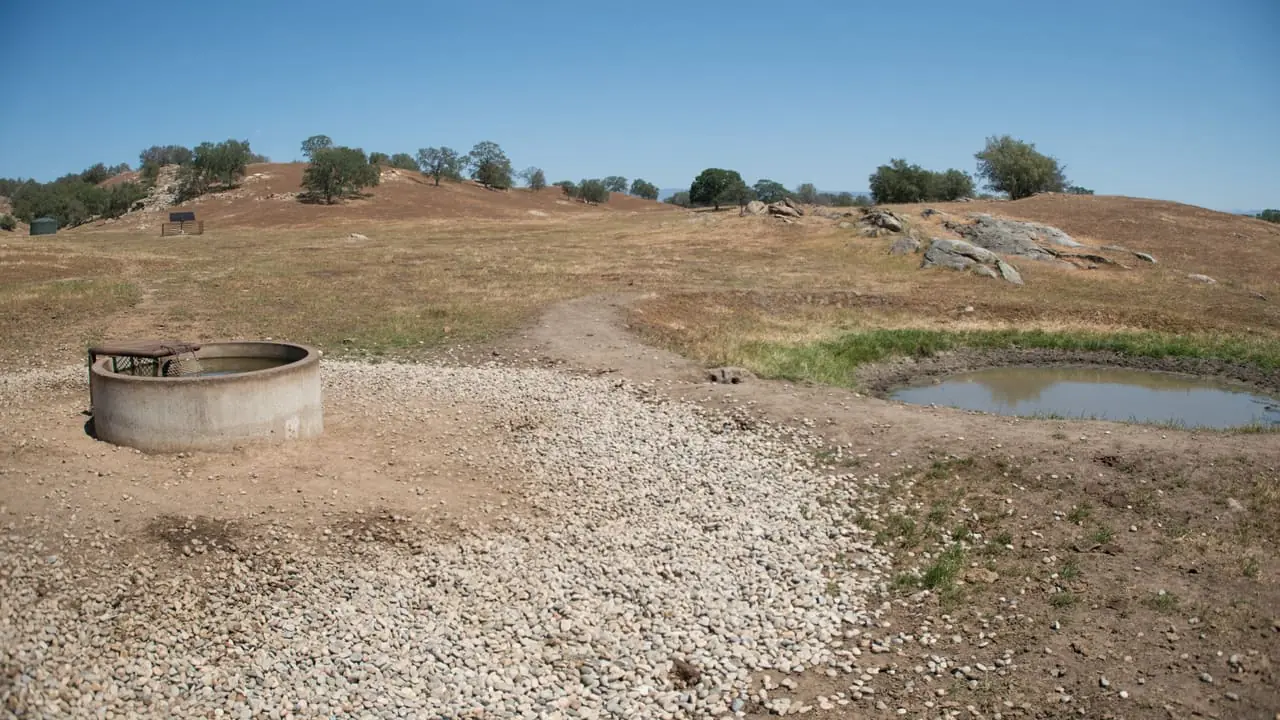
The classic signs: real, but late
These are the symptoms every well contractor will ask about, roughly in the order they tend to show up:
- Sputtering or spitting. Air in the line means the water level in the well is drawing down close to the pump intake. On a stock system you may notice it as a float valve that coughs and surges instead of flowing steady.
- Sediment and cloudy water. As the water column shrinks, the pump pulls from nearer the bottom of the well, where fines and sediment sit. Troughs that suddenly need scrubbing more often are telling you something.
- Longer recovery after drawdown. The well used to bounce back in an hour after filling the tank; now it needs an afternoon. Recovery time is the most direct window you have into the aquifer’s condition.
- Weaker flow at peak demand. Everything works fine at dawn, then sags by evening after the herd has been drinking all day.
Two things make these signs worse than they look. First, they cluster in late summer: Penn State Extension notes that most well problems occur in late summer or early fall, when natural groundwater levels reach their lowest point — typically late September or October — after peaking with snowmelt and spring rain in March and April. Second, they’re late-stage. By the time a pump sucks air, the water column above the intake is nearly gone. You’re not getting an early warning; you’re getting a final notice.
Shallow wells feel all of this first. Extension guidance is consistent that shallow and hand-dug wells are the most susceptible to drought, and they’re common on older stock setups.
Why late summer is when it bites
Groundwater runs on a seasonal cycle. Recharge happens mostly in the cold months — winter snowmelt and spring rain, before plants wake up. Through the growing season, vegetation takes most of what falls before it ever reaches the water table, so levels decline all summer regardless of what your well is doing. A drought year doesn’t change that cycle; it stacks a deficit on top of it, so the seasonal low comes earlier, dips deeper, and lingers longer. In a drought summer like this one, it’s worth checking your county’s status at drought.gov before you write off a struggling well as a one-time fluke — if your area has been running dry for two or three seasons, next year’s spring recharge starts from a lower floor.
The data that shows it weeks earlier
The classic signs are what a fading well looks like from the trough. From the data, it shows up sooner, because the trends move before the symptoms do:
- The level in the casing slides. The most direct read of all. A well monitoring system hangs a sealed pressure sensor in the casing and reports the water column hourly, so a static level that sits a little lower every week, or a drawdown that bites deeper every time the pump runs, shows up on a chart long before the pump starts sucking air.
- Pump runtime creeps up. A well delivering less water needs more minutes of pumping to move the same gallons. A power monitor on the pump circuit turns that into a week-over-week number: if the herd hasn’t grown and the weather hasn’t turned, runtime that keeps climbing means yield that keeps falling.
- Tank refills slow down. A tank level sensor logs every refill as a rising line. The slope of that line is your delivered flow rate — and a slope that flattens month over month is a well quietly losing ground.
- Recovery gaps stretch out. If your system cycles — pump down the well, rest, pump again — the rest periods your well needs between cycles will lengthen as the aquifer’s recharge into the borehole slows.
A worked example, with round numbers: say your pump has historically pushed about 8 gallons a minute into a 2,500-gallon storage tank, so a refill from half-full — 1,250 gallons — takes about two hours and 40 minutes. If by August that same half-tank refill is taking three and a half hours, your delivered rate has slipped to roughly 6 gallons a minute. Nothing sputtered. No sediment yet. But the well just told you, plainly, that it’s down a quarter of its output — weeks before the symptoms arrive, while you still have time to plan.
What to actually do, honestly ranked
- Pay a well contractor to measure the well. Static level, pumping level, and tested yield — these are the numbers every other decision depends on, and you can’t get them from the surface. If you have the original drilling log, the comparison tells you exactly how much water column you’ve lost.
- Add storage. More storage lets a weak well run slow and steady around the clock and bank its full 24-hour output against the herd’s concentrated drinking hours. Be clear-eyed about what it is: a buffer. Storage smooths delivery — it does not add yield.
- Stage hauling before you need it. Know your tank access, your hauler or your own tank-and-trailer plan, and the trigger level that starts it. Cutting hauling trips is a lot easier when hauling is a scheduled supplement instead of a panic.
- Chase cost-share. NRCS programs have long helped fund livestock wells, pipelines, and storage tanks — the grants and funding guide covers where to start and how the applications actually work.
- Deepen or re-drill last. It’s the most expensive option, and extension guidance warns that deepening an existing well may not increase its yield and can change water quality. Do it with the contractor’s measurements in hand, not on a hunch.
What monitoring can’t do here
An honest limit, stated plainly: no sensor adds a gallon of yield, recharges an aquifer, or deepens a well. If the water table under your place is dropping, monitoring will not stop it — and anyone who implies a gadget solves a supply problem is overselling it. What monitoring does is convert a surprise into a planned project. A well that fails in August with no warning means emergency hauling, stressed cattle, and whatever driller can fit you in. The same well, flagged in June by a runtime trend, means a scheduled contractor visit, a storage tank bought at your convenience, and maybe a cost-share application filed in time. That’s the whole value — and in a dry year, it’s worth a lot.
Tell us your setup — well depth if you know it, tank sizes, herd count, and how far the nearest power and cell service are — and we’ll map the right sensors to watch your water and flag the trend before the pump ever sucks air.
The hardware this guide covers
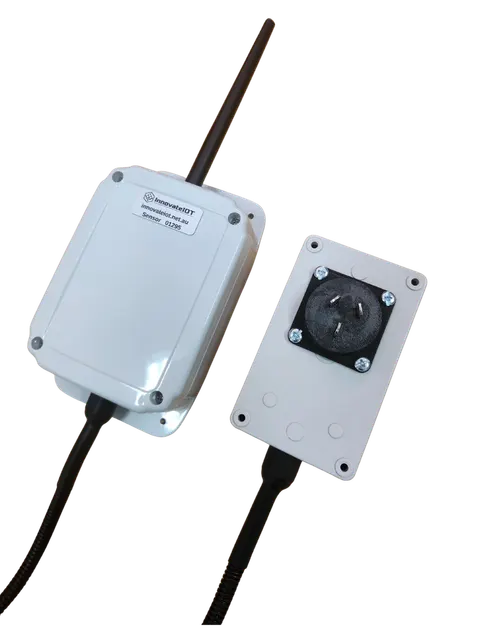
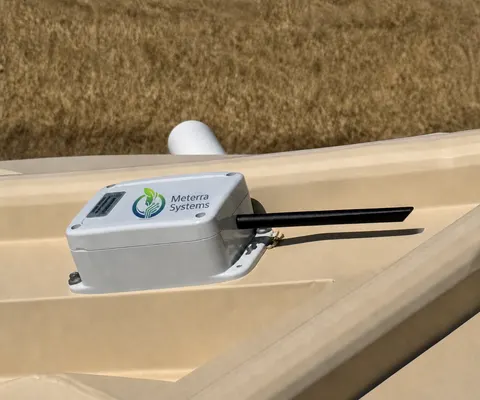
Every device reports to the same Meterra dashboard and app.
Tell us what you need to keep an eye on and we'll map the right sensors and coverage.
Frequently asked questions
How do I tell whether it's the well going dry or the pump failing?
Timing is the biggest clue. A failing pump usually quits abruptly — full flow one day, nothing the next — while a drying well fades gradually, with sputtering, sediment, and slower recovery that get worse over weeks. If flow comes back after the well rests a few hours and then dies again under heavy use, that points to the water level, not the pump.
Does a well that's going dry recover on its own?
Often, yes — seasonally. Groundwater is typically highest in early spring and lowest in early fall, so a well that struggles in August may be fine by April. But in a multi-year drought, each spring recharge starts from a lower baseline, and the late-summer struggle comes earlier and lasts longer each year. Seasonal recovery is a reprieve, not a fix.
Will deepening my well fix a declining yield?
Not always. Extension guidance is blunt about this — deepening an existing well may not increase its yield, and it can change the water quality you get. Before spending on drilling, pay a well contractor to measure the static level, pumping level, and actual yield so you know what you're working with.
How much storage should I add for a weak well?
Enough to carry your stock through the gap between what the herd drinks in a day and what the well can deliver in 24 hours of slow, steady pumping. Storage lets a low-yield well run gently around the clock instead of being hammered at drinking time. Just be honest about what it does — storage smooths out a weak well's delivery, it does not add a single gallon of yield.
Can a sensor tell me my well is going dry?
Indirectly, and that's usually enough warning. Sensors watch the symptoms — a power monitor sees pump runtime creeping up, a tank sensor sees refills slowing down — and those trends typically move weeks before you hear air in the line. Measuring the well itself (static and pumping level) is still a job for a well contractor with a sounder.
Related Meterra pages
- Well Water Level Monitoring: static level, drawdown, and recovery from inside the casing, hourly.
- Know When Your Well Pump Stops: sudden failure is a different problem; catch it the same day.
- Power Monitor: watches pump runtime, the earliest signal of a fading well.
- Tank Level Sensor: refill-rate trends show declining yield from the house.
- Grants & Funding: cost-share programs for wells, pipelines, and storage.