Slow Well Recovery: How to Measure Your Well's Recovery Rate
A well's recovery rate is how fast the water level climbs back after the pump stops, and it is the number that tells you how hard you can safely run that well. Static level, drawdown, and recovery can be measured by hand with a weighted tape and a stopwatch, or read automatically by a continuous level sensor in the casing. Either way, the payoff is the same: a pumping schedule and a days-of-water estimate that match what the well can actually give, instead of what you hope it can.
By Meterra Systems · Published
What recovery rate actually measures
Recovery rate is how fast the water level in a well rises back toward its resting point after the pump stops. It is usually expressed as how many feet the level climbs per hour, or how long it takes to reach a set percentage of the level the well had before pumping started. A well with a fast recovery rate can be pumped hard and bounce right back. A well with a slow one needs to be pumped gently, rested, or backed up with storage so demand never outruns what the aquifer can refill.
Static level, drawdown, and recovery, defined
Three numbers describe what a well does under use, and USGS uses them the same way well contractors do. Static water level is the level in the well before any pumping starts. Pumping lowers that level, forming what USGS calls a cone of depression around the well, and the amount the level falls is the drawdown. Once the pump stops, the level climbs back as the surrounding aquifer resupplies the casing, and how fast it climbs, and how close it gets back to the static level, is the recovery.
Measuring recovery by hand
The standard hand method uses a weighted, chalked steel tape lowered down the casing. USGS’s field procedure has the crew coat the last several feet of tape with carpenter’s chalk, lower it until the chalked section goes under water, then read the depth to water from where the wetted chalk mark lines up against a fixed measuring point at the top of the casing. Done before pumping starts, that reading is the static level. Done again right after the pump shuts off, and repeated on a schedule, it traces the recovery curve.
The Missouri Department of Natural Resources lays out the schedule a formal pump test uses for recovery: readings every minute for the first ten minutes after the pump stops, every five minutes out to fifty minutes, then every ten, then every thirty, then hourly, continuing until the level is back to where it started or six hours have passed, whichever comes first. A rancher checking by hand does not need that much precision, but the shape holds: check often right after the pump stops, when the level is changing fastest, and less often as it levels out.
What continuous monitoring shows instead
A tape and a stopwatch capture one recovery, on one day. A well monitoring system captures every one of them, because the sealed pressure sensor in the casing reports the water column every hour on its own. Over a season that adds up to the same static level, drawdown, and recovery numbers a hand measurement gives, but automatically, every time the pump runs, so a recovery that is quietly stretching from an hour to an afternoon shows up as a trend instead of a surprise. It is the same kind of data the signs of a dry well build on for months before a pump ever sucks air.
Turning recovery into a pumping schedule and a days-of-water number
Once you know how fast the well refills, you can size how hard to run it. The New York State Department of Health frames well yield in terms that translate directly: a well’s sustainable yield in gallons per minute, multiplied by how many minutes a day you let it pump, is the water it can deliver without pushing the level past where it recovers. Their guidance treats 5 gallons per minute as a reasonable sustainable yield for typical peak household demand, and for wells that produce less, it sets out downstream storage to match: roughly 100 to 250 gallons for a well making 3 to 5 gpm, 150 to 300 gallons for 1 to 3 gpm, and 200 to 250 gallons for a well making a half gallon to 1 gpm.
The same math gives you a days-of-water estimate: multiply your well’s sustained gpm by the minutes you can safely pump each day given its recovery, and compare that to what your storage, your herd, or your household actually uses. A well that recovers in an hour after a two-hour pumping run can likely be run on that same two-hours-on, one-hour-rest schedule day after day. A well that takes all afternoon to recover after the same run cannot, no matter what the pump is rated for. Pumping through that recovery window just drives the level down further, and risks the same losing-prime and dry-run problems covered in why a well pump short-cycles.
When to reduce pumping, add storage, or call a driller
Three responses cover most slow-recovery wells, roughly in order of cost.
- Pump less at a time. Shorter runs with a rest between them let a slow well recover before you ask it for more, often the least expensive fix there is.
- Add storage. A tank sized to the numbers above lets the well refill it slowly around the clock instead of being hammered at the moments demand peaks.
- Call a well contractor. If recovery has been getting slower season over season, not just running slow on one hot day, that is a question for someone who can measure the static level, the pumping level, and the well’s tested yield against its drilling record: the same three numbers this guide has been describing.
None of this changes what the aquifer can give. What it changes is whether you find out about a slow recovery from a chart or from a dry tank.
Tell us your well’s depth and what you know about its recovery, and we can help you turn hourly level readings into a pumping plan you can actually trust.
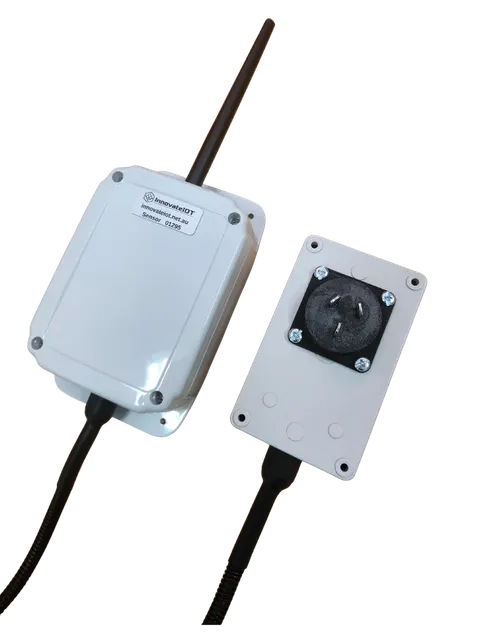
The hardware this guide covers
Every device reports to the same Meterra dashboard and app.
Tell us what you need to keep an eye on and we'll map the right sensors and coverage.
Frequently asked questions
What is a well's recovery rate?
It is how fast the water level in the well climbs back toward its resting point after the pump stops, usually described as how many feet the level rises per hour or how long it takes to get back to a set percentage of the pre-pumping level. A fast recovery rate means the well can be pumped hard and bounce right back. A slow one means the well needs to be pumped gently, rested, or backed up with storage.
How do I measure my well's recovery time by hand?
Lower a weighted, chalked steel tape down the casing to measure the depth to water before you start pumping. That is your static level. Run the pump for a known period, measure again right after it stops to get the drawdown, then measure repeatedly afterward, often at first and less often as the level settles, until it stops rising or returns to the static level. The time that takes is your recovery time.
How much recovery time is normal?
There is no single normal number; it depends entirely on the aquifer and the well. What matters is whether your well's recovery time is getting longer season over season for the same pumping run. A well that used to recover in an hour and now takes an afternoon is telling you something real, even if both numbers would be considered slow or fast somewhere else.
What is a days-of-water estimate and how do I calculate it?
It is your well's sustainable pumping rate, in gallons per minute, multiplied by the minutes per day you can run it without outrunning its recovery, compared against what your storage and your herd or household use in a day. A well that recovers fully in an hour after a two-hour pumping run can likely repeat that schedule daily; one that takes all afternoon to recover cannot, no matter what the pump itself is rated for.
When should I call a well driller about slow recovery?
Call when the slowdown is a trend, not a single hot day, or when pumping less and adding storage have not brought your water needs back within what the well recovers in time to give. A driller or pump installer can measure the static level, the pumping level, and the well's tested yield against its original drilling log, which tells you whether the aquifer itself has changed.
Related Meterra pages
- Well Water Level Monitoring: the sensor that reads static level, drawdown, and recovery automatically, hourly.
- Signs Your Stock Well Is Going Dry: the late-stage symptoms a slow recovery is often building toward.
- Knowing the Moment a Well Pump Stops: a different problem, the pump quitting outright instead of running slow.
- Power Monitor: pump runtime data that pairs with level readings to show the full picture.
- Well Pump Short-Cycling: What It Means and What the Water Level Shows: what a rapid on-off pattern shows about the well versus the pressure system.
Newest guides
- Tank Level Indicator, Gauge or Monitor: Which Do You Need?: What a level indicator, a gauge and a remote monitor each do, where each one fails, and a simple rule for which to buy for a poly tank, cistern, stock tank or tote.
- Well Pump Short-Cycling: What It Means and What the Water Level Shows: A rapid on-off pattern can mean a waterlogged tank, a bad switch, a leak, or a well running low, and the water level during cycling tells you which.
- How Accurate Are Water Level Sensors?: What accuracy specifications actually mean, the field errors that dwarf them, and the federal answer to how much precision each job really requires.